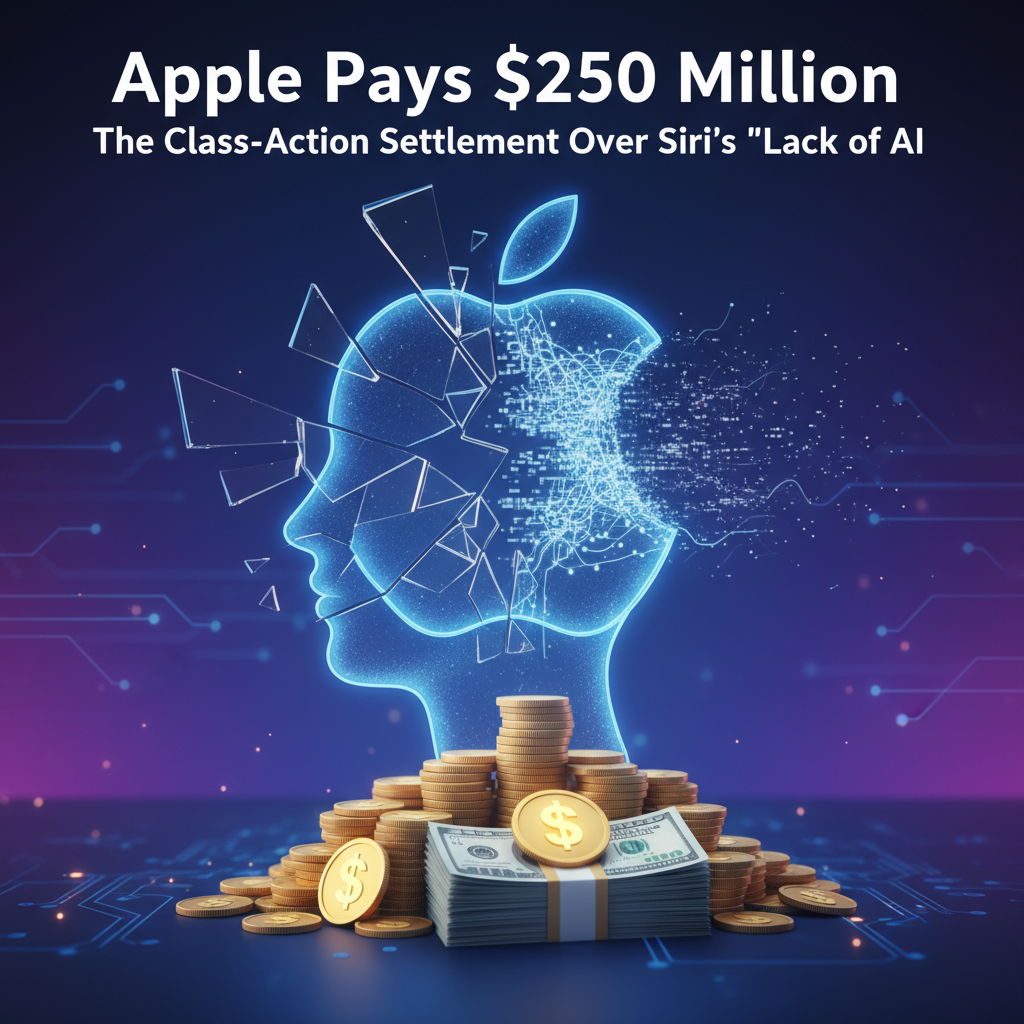
Apple, a company often lauded for its groundbreaking technology and sleek user experiences, has found itself in the spotlight for a different reason: a significant class-action lawsuit settlement. The tech giant has agreed to pay a staggering $250 million to iPhone owners, stemming from allegations that its much-hyped digital assistant, Siri, failed to deliver on its promised “artificial intelligence” capabilities.
This settlement marks a crucial moment for both consumers and tech companies, highlighting the increasing scrutiny over AI marketing claims and the expectations placed on digital assistants. Let’s delve into the details of this landmark case and what it means for the future of AI and consumer rights.
The Promise vs. Reality: Siri and the Dawn of AI Expectations
When Apple first introduced Siri with the iPhone 4S in 2011, it was presented as a revolutionary personal assistant, powered by advanced artificial intelligence. Marketing materials often depicted Siri as an intelligent, intuitive entity capable of understanding complex commands and engaging in natural language conversations. The implication was clear: users would have a truly smart AI at their fingertips.
However, for many iPhone owners, the reality fell short of the grand vision. While Siri could perform basic tasks like setting alarms, sending texts, and providing weather updates, its ability to understand nuance, engage in sophisticated dialogue, or learn from interactions often proved limited. Users frequently encountered misunderstandings, generic responses, and a general lack of the promised “intelligence” that defines true AI.
The Heart of the Lawsuit: Unfulfilled AI Claims
The class-action lawsuit centered on these discrepancies. Plaintiffs argued that Apple’s marketing of Siri constituted deceptive practices, leading consumers to believe they were purchasing a device with a far more advanced and intelligent AI assistant than what was actually delivered. Specific complaints included Siri’s inability to:
- Understand complex or multi-part queries.
- Adapt to individual user preferences over time.
- Perform tasks requiring genuine contextual awareness.
- Engage in natural, flowing conversations beyond basic commands.
Essentially, the lawsuit contended that Siri, despite being branded with the prestige of “AI,” was more akin to a sophisticated voice interface with pre-programmed responses rather than a truly intelligent digital assistant.
The $250 Million Settlement: A Win for iPhone Owners
In a significant development, Apple has agreed to settle these claims by paying $250 million. While the specific eligibility criteria for receiving a portion of the settlement fund would have been detailed during the claims process, this payout serves as a tangible acknowledgment of the consumer grievances. It underscores the principle that companies must be held accountable for the claims they make about their products, especially concerning cutting-edge technologies like artificial intelligence.
It’s important to note that, as is common in such settlements, Apple did not admit to wrongdoing. However, the substantial financial commitment speaks volumes about the company’s desire to resolve the matter and avoid further litigation.
Implications for Apple and the Future of AI Marketing
This settlement carries significant implications:
-
Increased Scrutiny on AI Claims:
The case sets a precedent for how tech companies market their AI products. Terms like “AI,” “intelligence,” and “machine learning” are powerful buzzwords, but this lawsuit suggests that companies cannot use them loosely without facing potential legal repercussions if the product doesn’t meet implied capabilities.
-
Consumer Empowerment:
It empowers consumers to question and challenge misleading tech claims. This settlement reinforces the idea that user experience and product performance must align with marketing narratives.
-
Reputational Impact for Apple:
While Apple remains a dominant force, such settlements can subtly chip away at its reputation for perfection and innovation, particularly in areas where it faces stiff competition (e.g., from Google Assistant or Amazon Alexa).
-
A Push for Genuine AI Innovation:
The lawsuit might inadvertently push companies to invest more genuinely in developing truly intelligent AI assistants rather than relying on superficial branding. We’ve already seen Apple making significant strides in recent years to improve Siri’s capabilities, privacy, and integration.
What This Means for iPhone Owners and Beyond
Beyond the financial payout, this settlement signifies a broader victory for consumer rights. It sends a clear message that:
- Companies must be transparent about the capabilities and limitations of their advanced technologies.
- Marketing hype needs to be tempered with realistic expectations, especially when “AI” is involved.
- Consumers have a right to expect products to perform as advertised.
As artificial intelligence continues to evolve and become more integrated into our daily lives, the line between genuine intelligence and sophisticated programming will become even blurrier. Cases like Apple’s Siri settlement serve as vital reminders to both creators and consumers to approach AI with a critical and informed perspective.
Conclusion: A Quarter-Billion Dollar Lesson in AI Honesty
Apple’s $250 million settlement over Siri’s unfulfilled AI promises is more than just a financial transaction; it’s a quarter-billion-dollar lesson in marketing honesty and consumer expectation management. It underscores the growing importance of ethical AI development and transparent communication from tech giants. For iPhone owners, it’s a testament to the power of collective action, ensuring that even the biggest players in the industry are held accountable for the intelligence they promise to deliver.
As we look to the future, this case will likely influence how AI products are developed, marketed, and perceived, paving the way for a more honest and intelligent digital landscape.
Leave a Reply