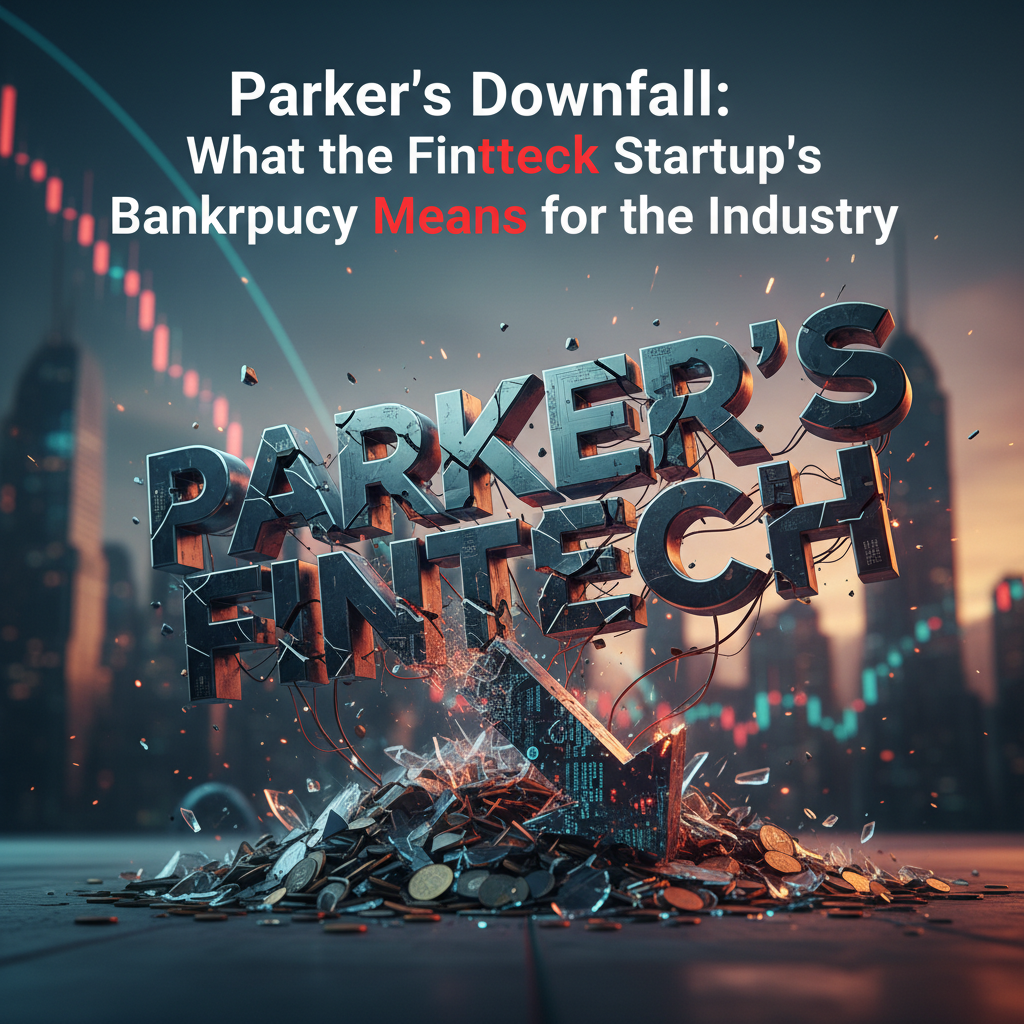
The fintech world was met with sobering news on May 9, 2026, as TechCrunch reported the filing for bankruptcy by promising startup Parker. This development sends ripples across the industry, raising critical questions about the current climate for fintech innovation, investor confidence, and the sustainability of high-growth ventures. Parker’s collapse serves as a stark reminder that even in a sector famed for disruption and rapid expansion, foundational business principles and market realities ultimately dictate survival.
The Rise and Unraveling of Parker
Parker emerged a few years ago with considerable buzz, positioning itself as a challenger in the [hypothetical service, e.g., small business lending / B2B payments / personalized wealth management] space. With a sleek platform and an ambitious vision, it quickly attracted significant venture capital funding and a loyal user base, promising to revolutionize how [target audience] managed their finances. Its early successes fueled narratives of rapid user acquisition and technological innovation, painting a picture of a company poised for long-term growth.
However, beneath the surface of aggressive marketing and rapid expansion, challenges mounted. While the exact details surrounding Parker’s bankruptcy filing are still emerging, industry analysts point to a confluence of factors that commonly plague high-growth startups in a tightening economic landscape:
- Intense Competition and Market Saturation: The fintech sector is notoriously crowded. Parker faced formidable competition from established players and a swarm of other innovative startups, making it difficult to carve out a sustainable, defensible niche.
- Unsustainable Burn Rate: Rapid expansion often comes at a high cost. Heavy spending on customer acquisition, talent, and technology without a clear path to profitability can quickly deplete even substantial funding rounds.
- Regulatory Hurdles: Operating in financial services means navigating a complex and ever-evolving regulatory environment. Compliance costs and unexpected changes can significantly impact a startup’s operational efficiency and financial health.
- Funding Landscape Shift: The era of easy money for tech startups has largely receded. Investors are increasingly prioritizing profitability and sustainable business models over pure growth, making it harder for companies like Parker to secure subsequent funding rounds if they haven’t demonstrated a clear path to generating revenue.
- Economic Downturn: A challenging global economic environment, marked by inflation and higher interest rates, often impacts consumer and business spending, directly affecting fintech companies reliant on transaction volumes or lending.
The Ripple Effect: Who Pays the Price?
Parker’s bankruptcy has immediate and far-reaching consequences:
Employees
Hundreds of employees face immediate job losses, a difficult situation compounded by the uncertainty of the current job market. This highlights the human cost of startup failures, reminding us that behind every valuation are individuals whose livelihoods are tied to the company’s fate.
Customers
Parker’s customers, who relied on its services for their financial needs, now face disruption. The process of migrating funds, data, or finding alternative solutions can be inconvenient and, for some, financially distressing. Trust in the stability of newer financial service providers may also be eroded.
Investors
Venture capital firms and other investors who backed Parker stand to lose their investments. This failure will likely lead to increased scrutiny for future fintech investments, with a stronger emphasis on due diligence, profitability metrics, and a clear exit strategy.
The Broader Fintech Ecosystem
Every major startup failure sends a cautionary message. For the fintech industry, Parker’s bankruptcy could lead to:
- Consolidation: We may see an acceleration of mergers and acquisitions as stronger players absorb weaker ones or acquire valuable technology and customer bases.
- Rethinking Growth vs. Profitability: The focus across the industry will likely shift further towards sustainable revenue generation and clear paths to profitability, rather than growth at all costs.
- Increased Regulatory Scrutiny: Failures can attract more attention from regulators, potentially leading to stricter oversight for the entire sector.
Lessons for the Future of Fintech
Parker’s unfortunate trajectory offers crucial lessons for aspiring entrepreneurs, investors, and even established players in the fintech space:
- Solid Business Fundamentals are Paramount: Innovation is vital, but it must be built on a sustainable business model with a clear path to revenue and profitability.
- Prudent Financial Management: Managing burn rate, extending runway, and having realistic financial projections are non-negotiable, especially in uncertain economic times.
- Adaptability and Niche Focus: The ability to adapt to changing market conditions and carve out a truly differentiated and defensible niche is critical for long-term survival.
- Regulatory Strategy from Day One: Proactive engagement with regulatory compliance is not an afterthought but a core component of a fintech startup’s strategy.
- Customer Trust is Fragile: Building and maintaining customer trust requires not just innovative products but also transparency, security, and stability.
Conclusion
Parker’s bankruptcy is a somber headline, marking a significant downturn for a once-promising fintech venture. While certainly a blow to its employees and investors, it also serves as a potent learning moment for the entire industry. It underscores the challenges of scaling in a competitive, regulated, and economically sensitive sector. As the dust settles, the fintech world will likely emerge more resilient, with a renewed focus on sound fundamentals, responsible growth, and delivering genuine, sustainable value to its customers.