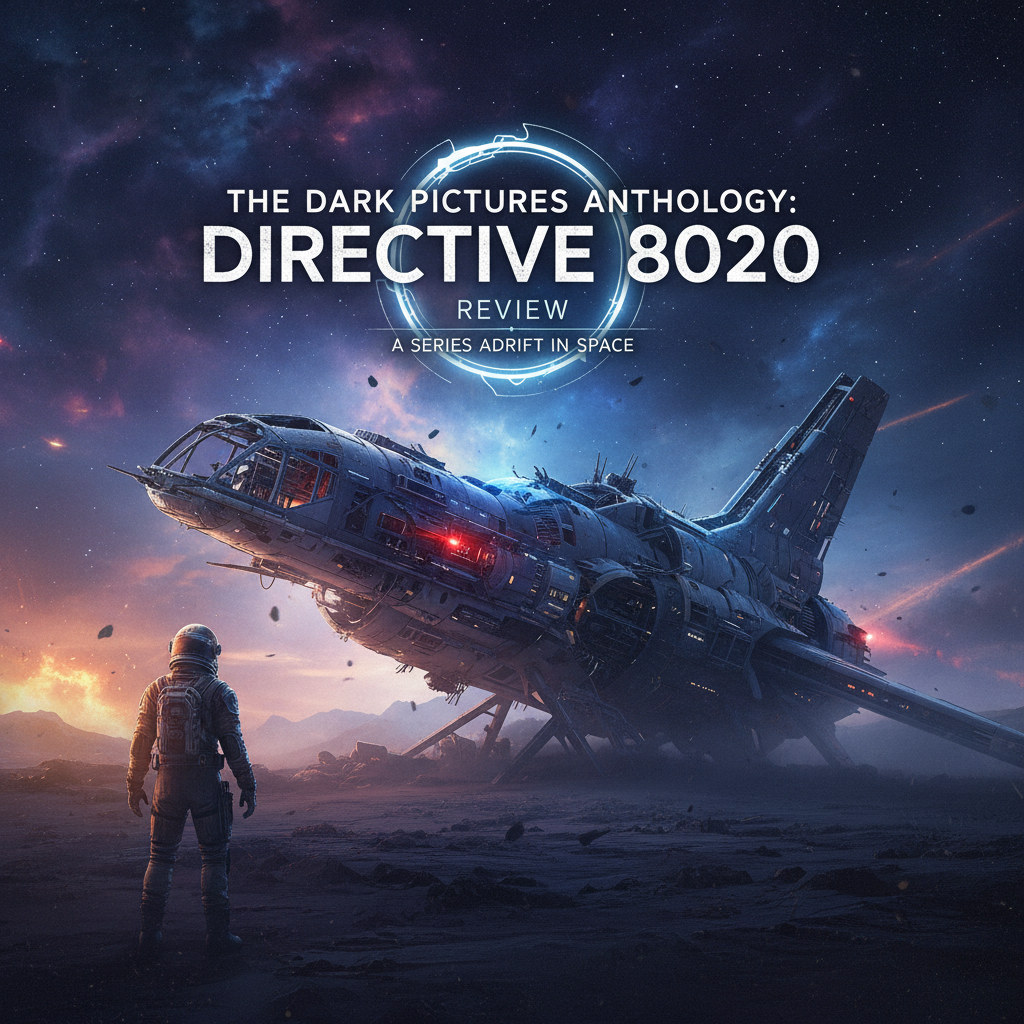
The Dark Pictures Anthology has carved out a unique niche in the horror gaming landscape, offering players a series of standalone cinematic horror experiences where choices matter and consequences are often grim. Developed by Supermassive Games, known for their groundbreaking interactive horror title Until Dawn, the anthology promised diverse stories and fresh scares with each new installment. However, with the latest entry, Directive 8020, a unsettling question emerges: has the anthology, much like its crew in the void, finally lost its way?
Our comprehensive Directive 8020 review delves deep into what makes this particular chapter feel less like a gripping horror narrative and more like a series struggling to find its bearings.
Venturing Into the Void: Directive 8020’s Premise
Directive 8020 takes us far from earthly horrors, launching players into the chilling expanse of deep space aboard the starship Cassandra. The premise is ripe for sci-fi horror: a small crew, isolated from humanity, facing an unknown threat in the claustrophobic confines of their vessel. Classic tropes of alien encounters, psychological terror, and the fragility of human sanity under extreme pressure are all on the table. Theoretically, this shift in setting should inject new life and creative scares into The Dark Pictures Anthology. Unfortunately, the execution leaves much to be desired.
The Drifting Narrative: Plot and Pacing Issues
One of the most significant criticisms leveled against Directive 8020 is its narrative coherence and pacing. While previous entries, even those with weaker plots, often maintained a consistent sense of dread or mystery, 8020 feels surprisingly meandering. The build-up to the central conflict is slow, but not in a suspenseful, deliberate way. Instead, it often devolves into tedious exposition and character interactions that fail to advance the plot or deepen investment.
- Lack of Focus: The story struggles to decide what kind of horror it wants to be, oscillating between psychological thriller, creature feature, and existential dread without fully committing to any, diluting its potential impact.
- Predictable Twists: What should be shocking revelations often telegraph themselves far in advance, robbing the narrative of its punch.
- Pacing Problems: Long stretches of uneventful exploration are punctuated by hurried, often confusing, action sequences, creating an uneven and unsatisfying rhythm.
Shallow Waters: Character Development and Choice Impact
At the heart of any Supermassive Games title are its characters and the difficult choices players make on their behalf. In Directive 8020, both aspects feel underdeveloped and less impactful than ever before. The crew of the Cassandra, while conceptually diverse, often fall into generic archetypes without enough depth to truly care about their fates.
The hallmark of The Dark Pictures Anthology is the branching narrative, where every decision, no matter how small, can lead to life-or-death consequences. However, in Directive 8020, many choices feel illusory, funnelling players down similar paths regardless of their input. This undermines the replayability and the core appeal of the interactive drama, leaving players feeling like passive observers rather than active participants in the unfolding tragedy.
Technical Turbulence: Performance and Polish
Beyond its narrative shortcomings, Directive 8020 also struggles with technical polish, contributing significantly to the feeling of a series ‘adrift.’ From noticeable frame rate drops in visually busy scenes to janky character animations and occasional audio glitches, these issues frequently pull players out of the immersive experience Supermassive Games aims to create.
While the overall art direction for the deep space setting is commendable, showcasing atmospheric environments, these efforts are often hampered by technical imperfections that should ideally be ironed out before release. Bugs and performance hiccups, even minor ones, can be fatal for a game so reliant on cinematic immersion.
Comparing the Anthology: Has the Spark Dimmed?
Looking back at previous entries like Man of Medan, Little Hope, House of Ashes, and especially The Devil in Me, one can see a clear evolution (and sometimes stagnation) in the anthology’s formula. While each had its strengths and weaknesses, they often managed to deliver on the promise of engaging horror. House of Ashes, for instance, offered compelling characters and thrilling action sequences, while The Devil in Me brought a unique serial killer premise.
Directive 8020, unfortunately, feels like a step backward in many regards. It lacks the distinctive voice, the tight pacing, or the memorable scares that made its predecessors, even the weaker ones, stand out. It feels less like a bold new direction and more like a hesitant step into uncharted, and unfortunately, uninspired, territory.
Final Verdict: Lost in Space
Our Directive 8020 review concludes with a heavy heart. While the premise of cosmic horror within The Dark Pictures Anthology held immense potential, the execution simply doesn’t deliver. With a drifting narrative, underdeveloped characters, diluted choice impact, and persistent technical issues, Directive 8020 sadly feels like the most aimless entry in the series to date. It’s a journey into the void that ultimately leaves players feeling empty.
For fans eagerly awaiting the next chilling chapter, Directive 8020 might prove to be a disappointing detour. Supermassive Games needs to reassess its trajectory to ensure The Dark Pictures Anthology doesn’t continue to drift further into irrelevance.
What are your thoughts on The Dark Pictures Anthology? Have you played Directive 8020? Share your experiences and whether you think the series is losing its way in the comments below!
Leave a Reply