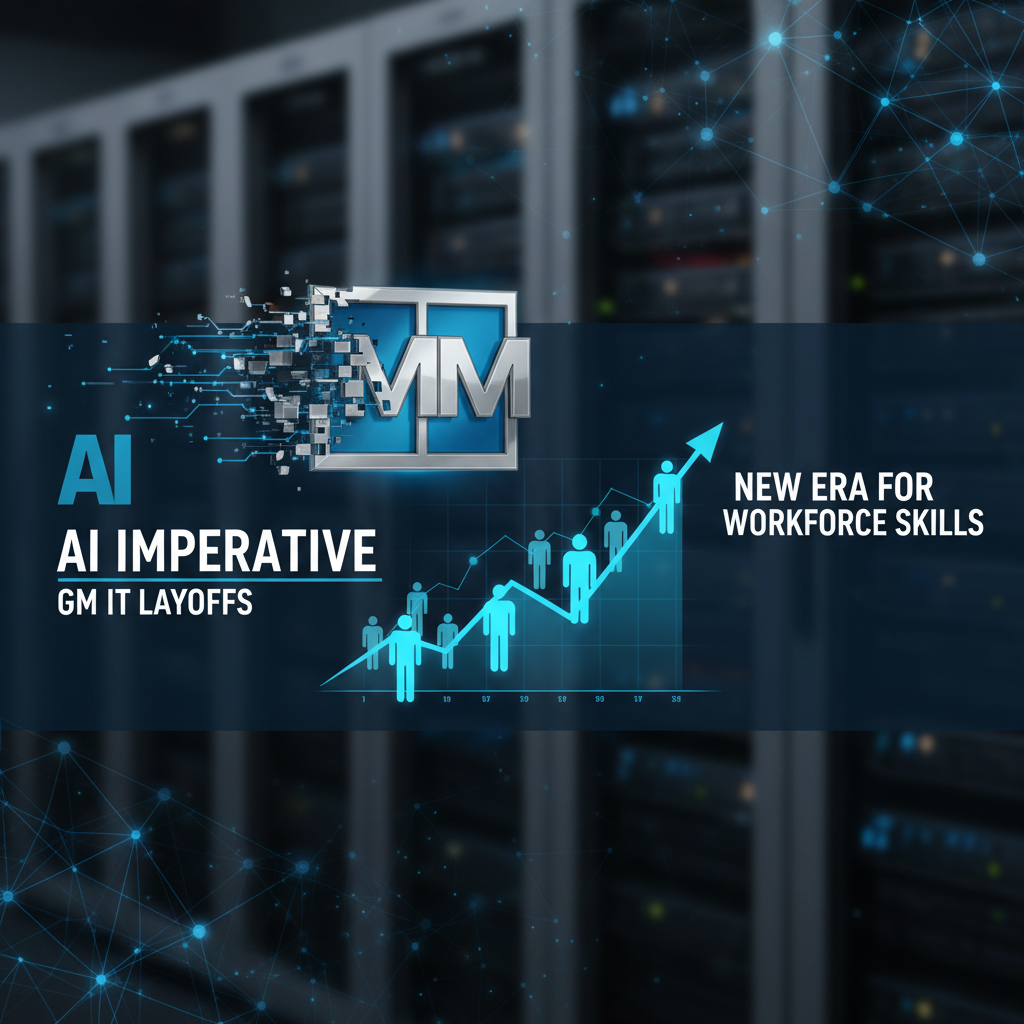
The technological landscape is undergoing a monumental shift, and General Motors (GM), a titan of industry, is at the forefront of demonstrating its profound impact on the global workforce. Recent reports indicate that GM has made a strategic decision to lay off hundreds of IT workers, a move directly tied to its ambitious pursuit of Artificial Intelligence (AI) capabilities. This isn’t merely a cost-cutting exercise; it’s a clear signal that the demand for stronger AI skills is rapidly reshaping the future of employment across all sectors.
For many, this news is a stark reminder of AI’s disruptive potential. For others, it’s a clarion call to adapt, reskill, and embrace the emerging opportunities in the AI-driven economy. Let’s delve into what GM’s pivot means for the IT industry, the broader job market, and the essential skills needed to thrive in this evolving environment.
The GM Catalyst: A Bold Strategic Pivot Towards AI
GM’s decision to shed traditional IT roles in favor of those with advanced AI expertise underscores a critical trend: enterprises are no longer just exploring AI; they are embedding it into their core operations. For an automotive giant like General Motors, AI is not just about autonomous vehicles; it encompasses optimizing manufacturing processes, enhancing supply chain logistics, personalizing customer experiences, developing predictive maintenance, and pioneering new mobility solutions. Achieving these goals requires a workforce equipped with specific, cutting-edge AI skills that many traditional IT departments may not possess.
This strategic realignment by GM highlights a proactive effort to future-proof its workforce and maintain a competitive edge. It’s a pragmatic, albeit difficult, step in adapting to the rapid pace of technological innovation.
Why Stronger AI Skills Are Now Non-Negotiable
The roles in demand are no longer just about maintaining existing systems but about innovating with intelligence. Companies are actively seeking professionals who can:
- Develop & Deploy AI Models: Expertise in machine learning, deep learning, natural language processing, and computer vision.
- Manage AI Infrastructure: Skills in cloud computing, data engineering, and MLOps (Machine Learning Operations).
- Ensure AI Ethics & Governance: Understanding responsible AI development, bias detection, and compliance.
- Integrate AI Solutions: Bridging AI with existing business processes and applications.
- Interpret & Act on AI Insights: Data scientists and analysts who can extract actionable intelligence from complex AI outputs.
These capabilities move beyond routine IT support, focusing instead on strategic contributions that drive innovation, efficiency, and new revenue streams.
Navigating the Shifting IT Landscape: A Call to Reskill and Upskill
GM’s move is a powerful illustration of the workforce transformation sweeping across industries. For IT professionals, this is not an end but a critical inflection point. The traditional IT job market is evolving, and continuous learning is no longer a luxury but a necessity for career longevity.
Here’s what IT professionals can do to stay ahead:
- Identify AI-Adjacent Skills: Map your current skills to areas like data analysis, cloud architecture, or programming languages (Python, R) that are foundational to AI.
- Invest in AI Education: Pursue certifications, online courses, or even specialized degrees in machine learning, data science, or AI engineering. Platforms like Coursera, edX, and university extension programs offer a wealth of resources.
- Gain Practical Experience: Work on personal AI projects, contribute to open-source initiatives, or seek opportunities within your current role to apply AI concepts.
- Network with AI Professionals: Engage with the AI community, attend webinars, and join industry groups to stay informed and discover new opportunities.
For organizations, this presents a dual challenge: managing the transition for displaced workers and aggressively recruiting and training for AI-centric roles. Strategic workforce planning, internal reskilling programs, and partnerships with educational institutions will be paramount.
Beyond GM: A Wider Industry Trend
GM is not an isolated case. Tech giants, financial institutions, healthcare providers, and even government agencies are all grappling with the rapid integration of AI. Companies worldwide are reassessing their talent pools, identifying skill gaps, and initiating similar technological disruptions to their workforce strategies. The race for AI talent is intensifying, creating both challenges for traditional roles and unprecedented opportunities for those with relevant expertise.
Conclusion: Embracing the AI Revolution for a Future-Ready Workforce
GM’s strategic workforce adjustments serve as a stark, yet vital, reminder of AI’s transformative power. While the immediate impact on laid-off workers is undoubtedly difficult, it underscores an undeniable truth: the future of work is inextricably linked to AI. For individuals, this means proactively embracing lifelong learning and adapting skillsets. For businesses, it necessitates visionary leadership and strategic investment in AI capabilities and a future-ready workforce.
The AI revolution is not coming; it’s already here, reshaping industries and careers at an accelerating pace. Those who proactively pivot and invest in strong AI skills will not only survive but thrive in this exciting new era.
Leave a Reply