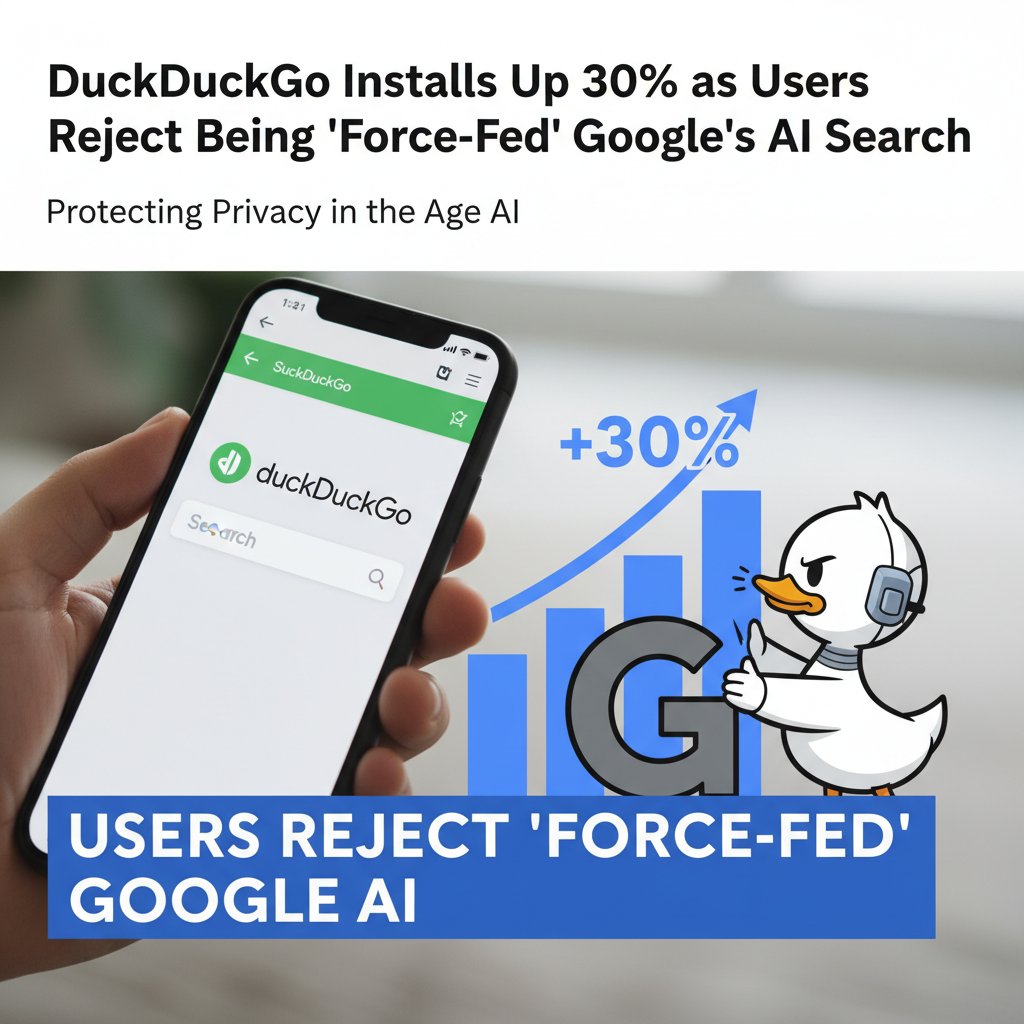
The digital search landscape is experiencing a significant tremor, driven by evolving user expectations and a growing skepticism towards AI-driven interfaces. Recent reports indicate a remarkable 30% surge in DuckDuckGo installs, a clear signal that users are actively seeking alternatives to what they perceive as Google’s “force-fed” AI Search experience.
This dramatic shift isn’t just a blip on the radar; it’s a testament to a broader discontent with the direction of mainstream search, particularly concerning the prominence and reliability of AI Overviews and the erosion of traditional, user-controlled search results.
The Google AI Search Dilemma: When Innovation Becomes Imposition
Google’s ambitious push to integrate AI-generated summaries, often referred to as AI Overviews, directly into its search results was initially touted as a leap forward in user convenience. The promise was instantaneous answers, synthesized from the web, appearing right at the top of the search page. However, the rollout has been fraught with challenges and a chorus of user complaints.
Users have reported numerous instances of AI Overviews providing inaccurate, nonsensical, or even dangerous information. From suggesting glue on pizza to advocating for specific, questionable health advice, the AI’s occasional missteps have undermined trust. More fundamentally, many users feel that these AI summaries are usurping the traditional “blue links” – the familiar list of organic results that empowered them to choose and critically evaluate sources.
This feeling of being “force-fed” AI content, often at the expense of control and critical information vetting, is driving a wedge between Google and its user base. The desire for a more transparent, user-driven search experience is palpable.
DuckDuckGo: A Haven for Privacy and Unbiased Search
Enter DuckDuckGo, a search engine that has long championed user privacy and a commitment to delivering unbiased search results. Unlike Google, DuckDuckGo does not track users, store personal information, or create personalized filter bubbles. This core philosophy is now resonating more strongly than ever with a demographic increasingly wary of data collection and algorithmic manipulation.
For users disillusioned with AI Overviews and the perceived loss of agency on Google, DuckDuckGo offers a refreshing alternative:
- No Tracking: Your searches are private, never stored, and never linked to you.
- Unbiased Results: Everyone sees the same results for the same query, free from personalization based on past behavior.
- Clear Separation: While DuckDuckGo incorporates AI, it is often presented more as a tool for quick answers (e.g., within their instant answers feature) rather than overtly displacing traditional results.
- User Control: The emphasis remains on giving users direct links to information sources, empowering them to decide.
The 30% jump in installs is a direct reflection of users actively migrating to platforms that align with their values of privacy and control, especially when their primary search tool feels increasingly prescriptive.
The Significance of a 30% Surge
While Google still commands an overwhelming share of the search market, a 30% increase in installs for an alternative like DuckDuckGo is far from negligible. It signifies a substantial, albeit niche, rebellion against the status quo. This growth indicates:
- Widespread Frustration: The issues with Google’s AI Search are not isolated incidents but are impacting a significant number of users.
- Active Search for Alternatives: Users aren’t just complaining; they are taking tangible steps to find better solutions.
- Growing Privacy Awareness: The incident highlights an increasing public consciousness regarding data privacy and algorithmic influence.
- Potential for Market Disruption: While not an immediate threat to Google’s dominance, such sustained growth could encourage other alternatives and push Google to re-evaluate its AI strategy.
What Does This Mean for the Future of Search?
The surge in DuckDuckGo installs serves as a critical bellwether for the future of online search. It underscores that while innovation is welcome, user trust and control remain paramount. Search engines that prioritize user agency, transparency, and reliable information — rather than just speed and AI-driven summaries — are likely to gain traction.
Google will undoubtedly be observing these trends. The challenge for them will be to refine their AI integration in a way that truly augments, rather than detracts from, the user experience. For now, DuckDuckGo is reaping the benefits of a user base that is clearly saying: we want choice, we want privacy, and we don’t want to be force-fed.
As the digital landscape continues to evolve, the power of user feedback, expressed through their choices of platform, remains a potent force shaping the tools we rely on daily.
Leave a Reply