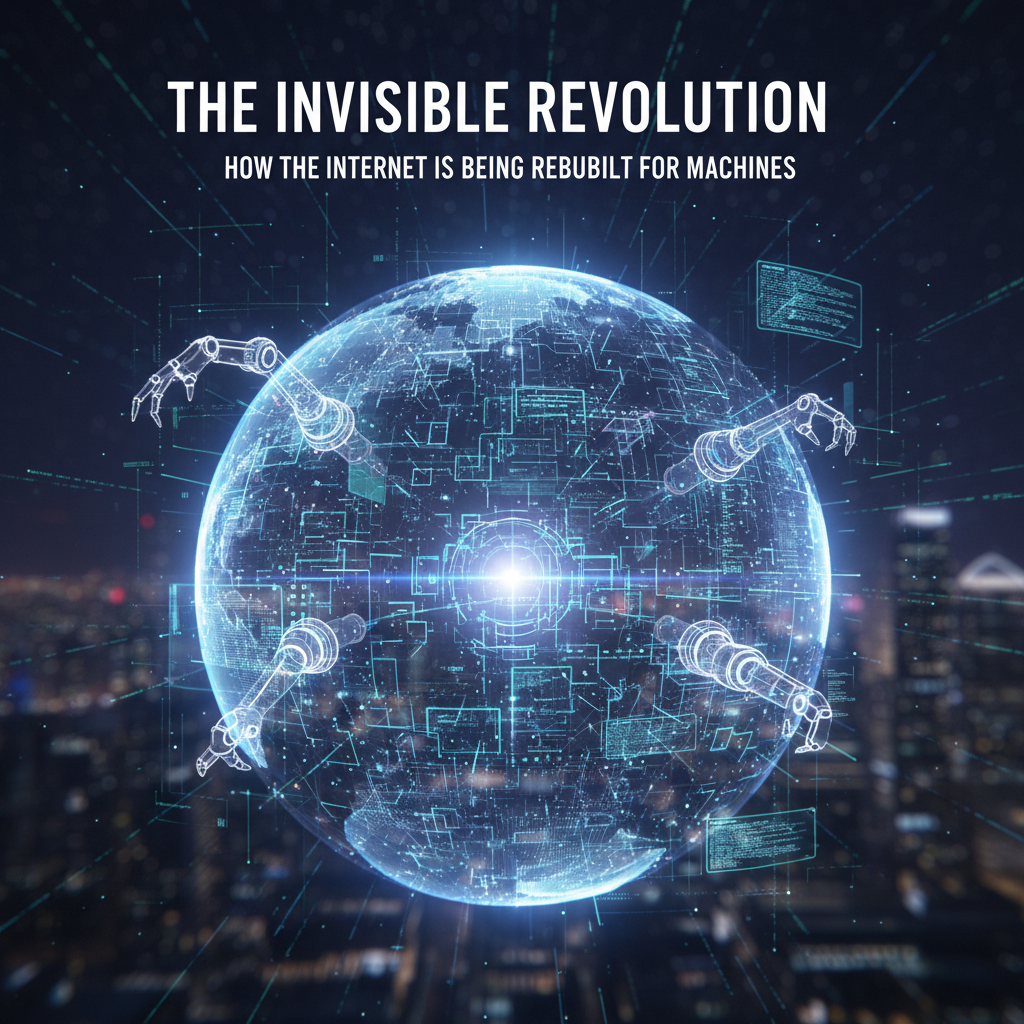
For decades, the internet has served as humanity’s grand communication network – a digital commons built for reading, watching, interacting, and sharing. But beneath the surface of the user interfaces and social feeds we navigate daily, a profound transformation is underway. The internet, as we know it, is being systematically rebuilt, not just for people, but for machines.
This isn’t a futuristic fantasy; it’s the present and near-future reality that will redefine our digital and physical worlds. From smart cities to autonomous vehicles, from intelligent factories to advanced AI, the demand for machine-to-machine (M2M) communication, seamless data exchange, and automated processes is reshaping the very fabric of the web.
The Dawn of the Machine-First Internet
The genesis of this shift lies in the exponential growth of several key technologies:
- Artificial Intelligence (AI): AI systems require vast amounts of data to learn, operate, and communicate with other systems, far beyond what human interfaces can provide.
- Internet of Things (IoT): Billions of connected devices – sensors, cameras, smart appliances, industrial machinery – are constantly generating and exchanging data, demanding dedicated, optimized pathways.
- Automation and Robotics: As industries automate and robotics become more sophisticated, they need a robust, reliable, and intelligent network to coordinate actions and share operational insights.
- Big Data: The sheer volume, velocity, and variety of data being generated globally necessitate machine processing and analysis at an unprecedented scale.
The traditional human-centric internet, with its focus on visual content and interactive UIs, is simply not optimized for the speed, scale, and precision required by these machine ecosystems.
Pillars of the New Machine-Centric Architecture
This rebuilding effort isn’t about replacing the existing internet, but augmenting and enhancing it with new layers and protocols specifically designed for automated interaction. Key components driving this evolution include:
APIs as the Universal Language
At the heart of machine communication are Application Programming Interfaces (APIs). These digital connectors allow different software applications to talk to each other directly, without human intervention. The API economy is booming, and as the internet becomes more machine-centric, robust, standardized, and secure APIs will be the backbone of nearly every interaction, enabling everything from real-time financial transactions to smart grid management.
The Intelligent Edge and Distributed Computing
Processing all data in centralized cloud servers is inefficient for real-time machine operations. The rise of edge computing brings data processing closer to the source – whether it’s an IoT sensor in a factory or a self-driving car. This distributed intelligence reduces latency, conserves bandwidth, and enhances data security, creating a more responsive and resilient network for machines.
Semantic Web and Structured Data
For machines to truly understand and act upon information, data needs to be more than just accessible; it needs to be comprehensible. The concept of the Semantic Web (often associated with Web 3.0 ideals) focuses on structuring data with metadata and ontologies, allowing machines to interpret meaning, context, and relationships between data points, leading to more intelligent automation.
Decentralization and Trust Protocols (Web3)
Technologies like blockchain and other Distributed Ledger Technologies (DLTs) are also playing a role. They offer immutable records and trustless environments, ideal for machine-to-machine transactions, automated contracts, and secure data sharing where central authorities might be a bottleneck or a single point of failure. This enables autonomous economic agents and enhances the security posture for machine interactions.
What Does This Mean for Us? The Impact of an AI-Native Internet
The implications of an internet rebuilt for machines are far-reaching:
- Unprecedented Efficiency: Automation driven by AI and IoT will optimize everything from supply chains to energy grids, leading to massive improvements in resource management and productivity.
- New Services and Industries: Entirely new applications and business models will emerge, leveraging the enhanced capabilities of a machine-readable web. Think hyper-personalized services, predictive maintenance for infrastructure, and advanced smart city management.
- Autonomous Systems Everywhere: From fully autonomous vehicles navigating complex environments to intelligent homes that anticipate our needs, the physical world will become increasingly responsive and automated.
- Enhanced Security Challenges: A more interconnected, machine-driven internet also presents new attack vectors and demands sophisticated cybersecurity solutions capable of protecting M2M communications and autonomous systems.
- Ethical and Societal Considerations: As machines gain more autonomy, discussions around AI ethics, data privacy, accountability, and the impact on human labor will become even more critical.
Embracing the Future
The internet’s evolution into a machine-first ecosystem is not a distant future event; it’s happening now, driven by the relentless pace of technological innovation. While the user-facing web will continue to evolve, the invisible infrastructure supporting our increasingly intelligent world is being profoundly re-architected.
Understanding this shift is crucial for developers, businesses, policymakers, and anyone looking to navigate the next era of digital transformation. The internet of tomorrow will be a symphony of human and machine intelligence, intricately linked and continuously evolving.
What are your thoughts on an internet optimized for machines? How do you think this will change our daily lives? Share your insights in the comments below!
Leave a Reply