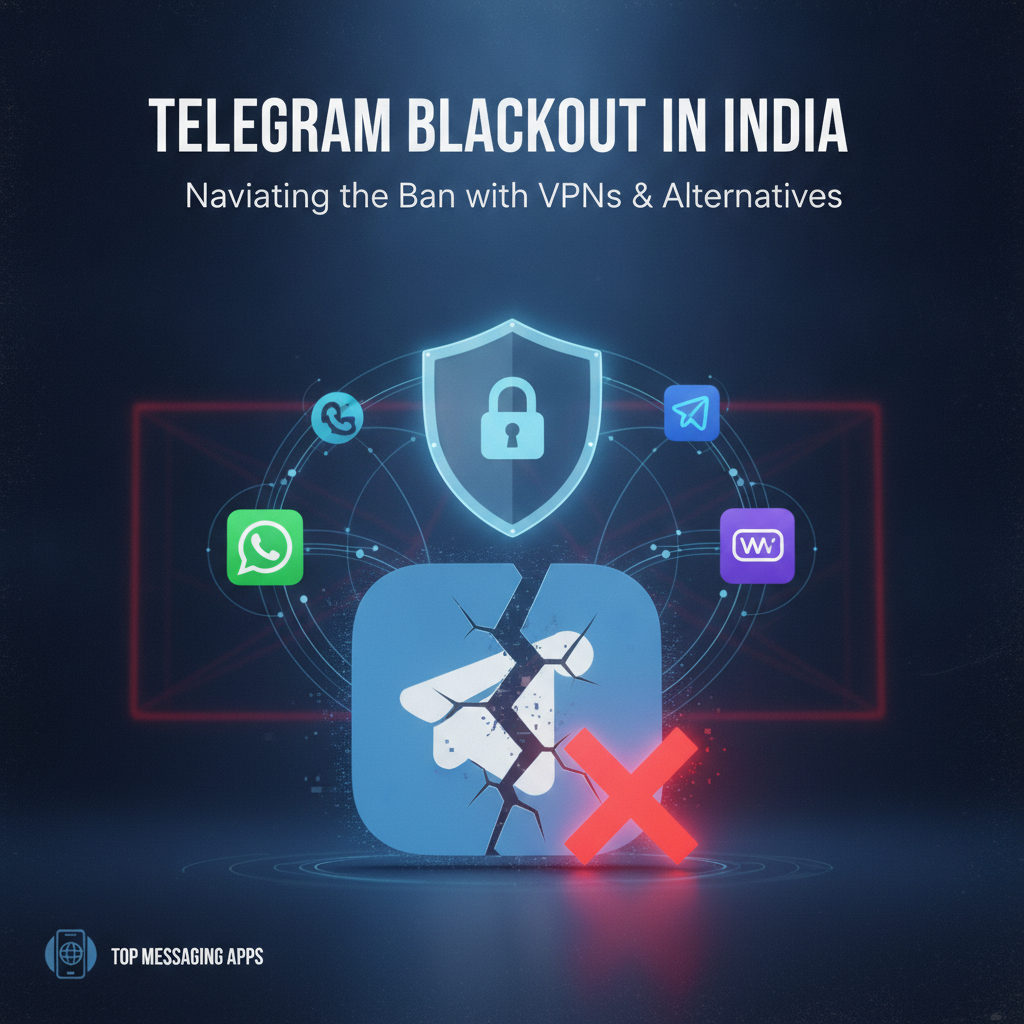
The digital landscape in India has been rocked by an unprecedented move: the official ban of Telegram. Following weeks of speculation, the popular messaging app, once a staple for millions of Indians for everything from personal communication to educational content and news dissemination, has been blocked across the country. This drastic step has immediately sent shockwaves through the nation’s internet users, prompting an immediate surge in demand for Virtual Private Networks (VPNs) and a scramble to find reliable alternative messaging platforms.
As the government cites concerns ranging from national security to the unchecked spread of misinformation, users are left grappling with the sudden loss of a vital communication tool. But in the face of digital censorship, the spirit of connectivity endures. This guide will help you understand the implications of the Telegram ban, how VPNs are becoming essential tools, and which rival apps are stepping up to fill the void.
The Telegram Ban: What Happened and Why?
On June 18, 2026, Indian internet service providers began blocking access to Telegram, effectively cutting off millions of users. While official statements highlight issues like data privacy, the platform’s alleged role in facilitating the spread of fake news, and its end-to-end encryption making it challenging for authorities to monitor, the move has ignited a fierce debate about digital freedom and government control over online communication.
For many, Telegram wasn’t just a messaging app; it was a hub for communities, a source of breaking news through channels, and a platform for file sharing. Its sudden disappearance leaves a significant void, impacting businesses, educators, and social groups alike who relied on its robust features and large group capacities.
The VPN Surge: Your Digital Lifeline in India
In the immediate aftermath of the ban, a predictable trend emerged: a massive spike in searches and downloads for VPN services in India. A Virtual Private Network allows users to create a secure, encrypted connection over a less secure network, like the internet. By routing your internet traffic through a server in another country, a VPN can effectively bypass geo-restrictions and censorship, making it appear as if you are browsing from a different location where Telegram is not banned.
Why a VPN is Crucial Now:
- Bypass Geo-Restrictions: Access Telegram by connecting to a server outside India.
- Enhance Privacy: Encrypt your internet traffic, protecting your online activities from snoopers and surveillance.
- Maintain Anonymity: Mask your IP address, making your online presence more anonymous.
Choosing a Reliable VPN for India:
Not all VPNs are created equal. When selecting a service, especially for sensitive activities like bypassing a ban, consider these factors:
- Strong Encryption: Look for AES-256 encryption.
- No-Logs Policy: Ensure the VPN provider doesn’t keep records of your online activity.
- Server Network: A wide array of servers in various countries ensures better connectivity and options.
- Speed and Reliability: Essential for a smooth messaging and browsing experience.
- User-Friendly Interface: Easy to set up and use on multiple devices (Android, iOS, Windows, Mac).
- Customer Support: 24/7 support can be invaluable if you encounter issues.
Popular VPNs like ExpressVPN, NordVPN, ProtonVPN, and Surfshark are experiencing significant uptake, offering robust security features and a global server presence suitable for Indian users.
Beyond Telegram: Top Messaging App Alternatives to Consider
While VPNs offer a temporary solution for accessing Telegram, many users are also seeking long-term alternatives. The market is rich with messaging apps, each with its own strengths. Here are some of the front-runners:
1. Signal: The Privacy Champion
- Key Features: End-to-end encryption by default for all communications (messages, calls, video calls), disappearing messages, open-source protocol.
- Why it’s Popular: Unrivaled commitment to user privacy and security, recommended by cybersecurity experts.
- Consideration: Smaller user base than Telegram or WhatsApp, which might affect community reach.
2. WhatsApp: The Ubiquitous Choice
- Key Features: End-to-end encryption (powered by Signal protocol), widespread adoption in India, voice and video calls, group chats.
- Why it’s Popular: Already the most used messaging app in India, making it easy to connect with existing contacts.
- Consideration: Owned by Meta (Facebook), leading to ongoing privacy concerns for some users regarding data sharing policies, despite E2E encryption.
3. Element (Matrix Protocol): Decentralized & Secure
- Key Features: Decentralized architecture (no single point of control), end-to-end encryption, bridging to other messaging networks.
- Why it’s Popular: Offers greater control over data, robust for secure team communication and community building.
- Consideration: Can have a steeper learning curve for new users compared to mainstream apps.
4. Threema: Swiss Privacy Engineering
- Key Features: Anonymous usage (no phone number or email required), end-to-end encryption, strong data protection laws due to Swiss origin.
- Why it’s Popular: High level of privacy and anonymity, paid app ensures no ad-based revenue model.
- Consideration: Paid app, which can be a barrier for some users; smaller global user base.
The Broader Implications: Internet Freedom in India
The Telegram ban is more than just an app removal; it’s a significant moment for internet freedom in India. It highlights the growing tension between government control and individual digital rights, pushing users to become more aware and proactive about their online privacy and access. The rush to VPNs and alternative apps is a testament to the resilience of digital citizens who refuse to be disconnected.
Stay Connected, Stay Secure
In a rapidly evolving digital landscape, adapting to changes like the Telegram ban is crucial. Whether you choose to leverage a robust VPN to maintain access or migrate to a more privacy-focused alternative, the key is to stay informed and secure. Protecting your communication and your digital freedom is more important now than ever before. Explore your options, prioritize your privacy, and ensure your voice remains heard in the digital sphere.
Leave a Reply