
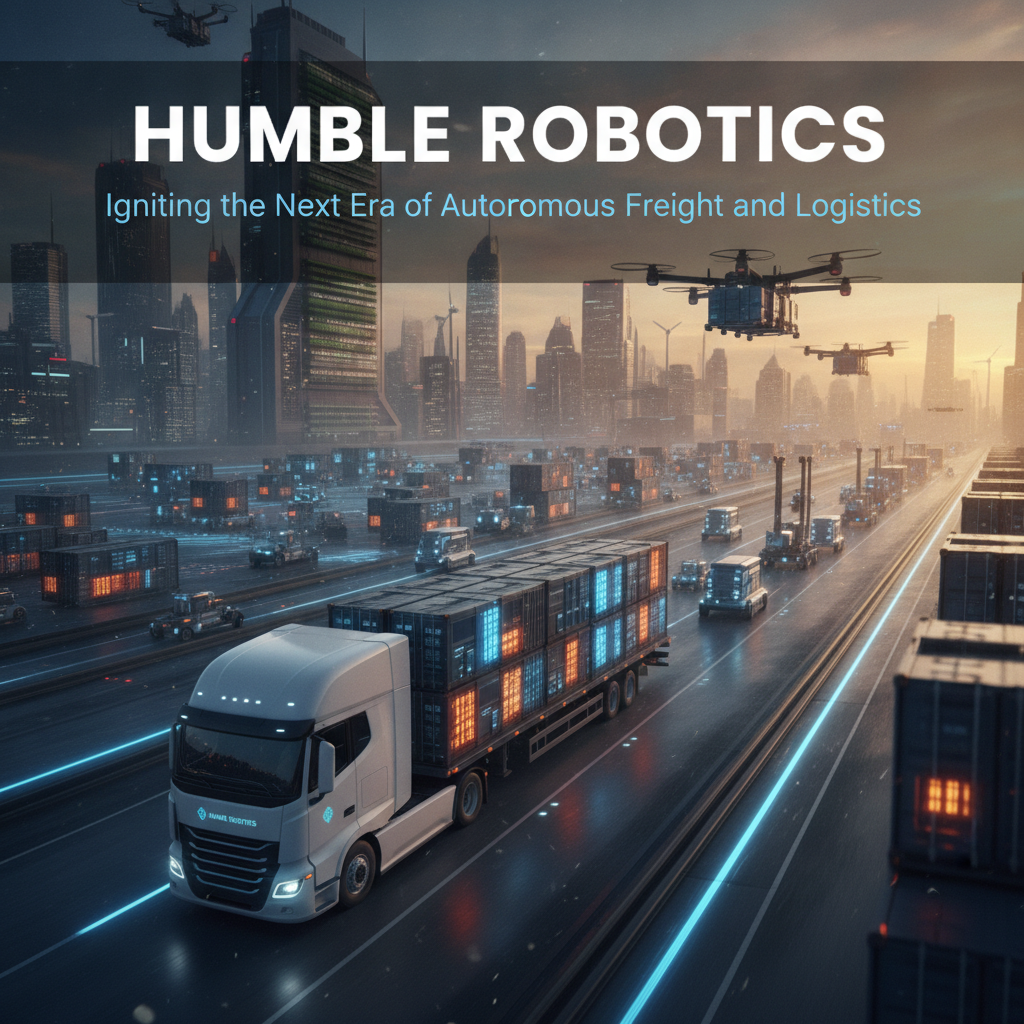
The promise of autonomous vehicles (AVs) has long captured our imaginations, sparking cycles of intense hype followed by periods of tempered expectations. But if you thought the self-driving revolution had stalled, think again. The autonomous vehicle hype is unequivocally back, and this time, it’s driving straight into the heart of the global supply chain, with companies like Humble Robotics leading the charge in the burgeoning field of autonomous freight.
While consumer-grade self-driving cars continue their methodical progression, the commercial sector – particularly long-haul trucking and logistics – has emerged as a fertile ground for AV innovation. Humble Robotics is not just participating in this resurgence; they are actively shaping its direction, demonstrating how advanced robotics and AI are set to transform how goods are transported worldwide.
The Resurgence of Autonomous Vehicle Hype: Why Freight Now?
The initial wave of AV excitement largely centered on passenger vehicles, envisioning a future of driverless commutes and robotic taxis. While significant progress has been made, the complexities of navigating diverse urban environments and unpredictable human behavior have proven to be formidable challenges for widespread Level 5 autonomy.
However, the narrative has shifted. The renewed focus on freight and commercial applications is driven by several compelling factors:
- Contained Environments: Hauling goods on highways, particularly between distribution centers, offers more predictable routes and less complex scenarios compared to city driving.
- Economic Imperatives: The logistics industry faces chronic driver shortages, rising fuel costs, and immense pressure for greater efficiency. Autonomous solutions promise significant operational savings and the ability to operate 24/7.
- Safety Enhancement: Autonomous trucks have the potential to reduce accidents caused by human error, fatigue, or distraction.
- Technological Maturity: Advances in sensor technology (LiDAR, radar, cameras), AI, machine learning, and mapping capabilities have made robust autonomous systems for specific use cases more viable than ever.
This confluence of need and capability has set the stage for companies like Humble Robotics to make a substantial impact.
Humble Robotics: Paving the Way for Self-Driving Freights
Humble Robotics stands out in the crowded AV landscape by specifically targeting the challenges and opportunities within freight and logistics. They aren’t just adapting passenger vehicle tech; they are building solutions tailor-made for the rigorous demands of commercial transport. Their approach addresses critical pain points:
Unlocking Efficiency and Cost Savings
One of the primary drivers for autonomous freight adoption is the promise of vastly improved efficiency. Humble Robotics’ technology aims to:
- Optimize Routes: AI-driven systems can analyze traffic, weather, and road conditions in real-time to select the most efficient paths.
- Reduce Labor Costs: While human oversight will remain crucial, autonomous operations can significantly reduce the number of drivers required for long hauls, addressing the chronic driver shortage.
- Improve Fuel Economy: Consistent, optimized driving patterns by autonomous systems can lead to more fuel-efficient operations.
Enhancing Safety on the Road
Safety is paramount in the trucking industry. Humble Robotics is developing systems designed to:
- Mitigate Human Error: Removing human factors like fatigue, distraction, and impairment can drastically reduce accident rates.
- Respond Faster: Autonomous systems can react to sudden changes and hazards more rapidly and consistently than human drivers in many situations.
Addressing Logistical Complexities
Beyond the highway, Humble Robotics is likely innovating in how autonomous vehicles integrate into existing logistics infrastructure, from automated loading and unloading to seamless coordination with warehouses and distribution centers. This holistic approach is key to true transformation.
The Broader Impact on Logistics and the Supply Chain
The implications of widespread autonomous freight, pioneered by companies like Humble Robotics, are profound:
- Faster Delivery Times: 24/7 operation without mandated breaks means goods can move more continuously.
- Increased Supply Chain Resilience: Less reliance on human drivers can make the supply chain more robust against labor shortages or disruptions.
- New Job Opportunities: While some roles may change, new jobs in remote operation, maintenance, data analysis, and AV fleet management will emerge.
- Regional Development: Autonomous freight could enable more efficient goods movement to remote areas, potentially fostering economic growth in underserved regions.
Of course, challenges remain, including regulatory frameworks, public perception, and the need for robust cybersecurity. However, the progress made by innovators like Humble Robotics suggests these hurdles are surmountable.
The Road Ahead for Autonomous Freight
The current autonomous vehicle hype cycle feels different because it’s grounded in practical, economic needs. Humble Robotics is at the vanguard of this movement, translating the vision of self-driving into tangible benefits for the freight and logistics sectors. As their technology matures and scales, we can expect to see a gradual yet profound transformation of our roads and our global supply chains.
The future of logistics is no longer just on the horizon; it’s being built and deployed today by companies dedicated to making autonomous freight a reality. Keep an eye on Humble Robotics – they might just be delivering your next package.
Leave a Reply