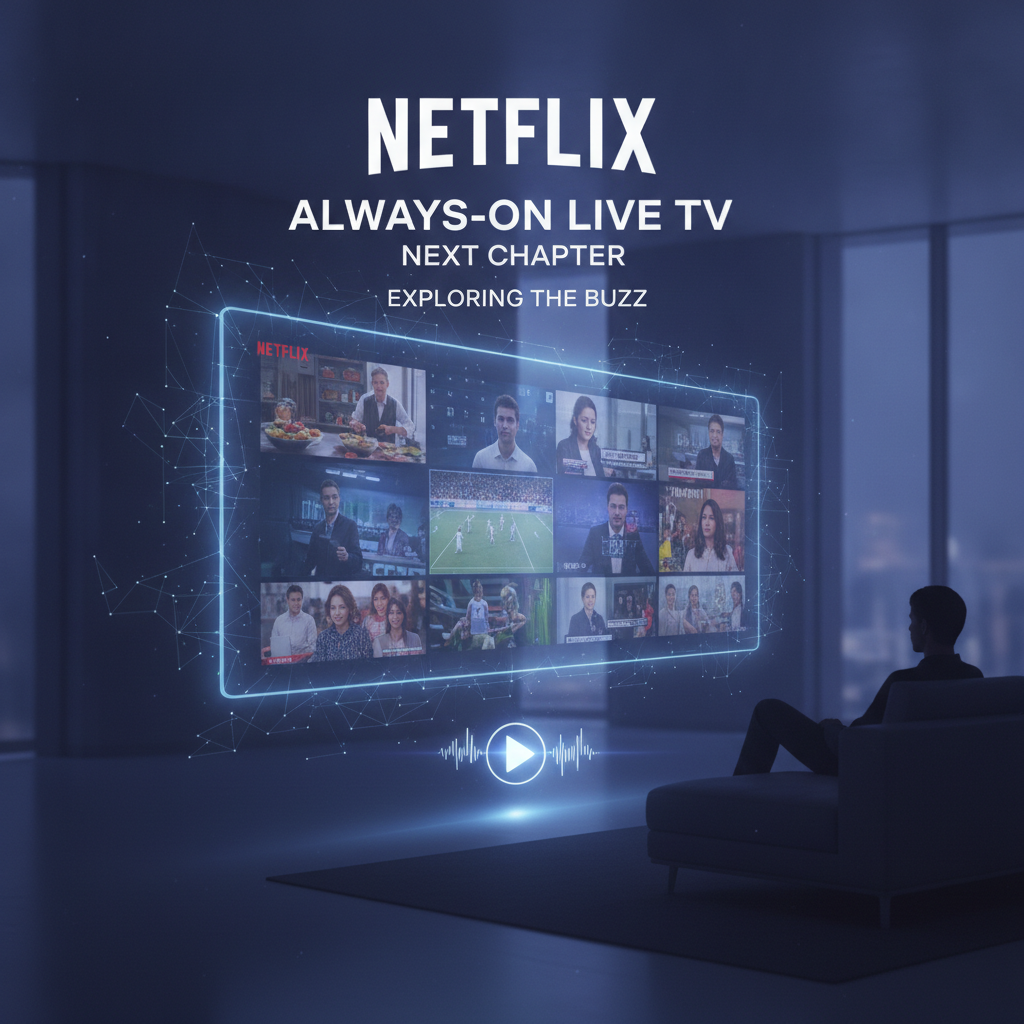
For years, Netflix has been synonymous with on-demand streaming – the ultimate freedom to watch what you want, when you want. It revolutionized how we consume entertainment, famously challenging the traditional linear TV model. But what if the streaming giant is now looking to blend its innovative approach with a touch of the past? Recent whispers suggest Netflix could be planning to introduce ‘always-on’ live TV channels, a move that would mark a significant pivot for the company and send ripples through the entire streaming landscape.
Is Netflix truly planning to turn back the clock, or is this a strategic evolution designed to capture new audiences and enhance subscriber engagement? Let’s dive into what this potential shift could mean for Netflix, its subscribers, and the future of television.
What Exactly Are ‘Always-On’ Live TV Channels?
Before we explore the ‘why,’ let’s clarify the ‘what.’ When we talk about ‘always-on’ or linear TV channels in the context of streaming, we’re referring to scheduled programming, much like traditional cable or broadcast television. Instead of endlessly scrolling through a vast library to pick a show, you’d tune into a channel dedicated to a specific genre, series, or theme, and content would play continuously.
Think of it like this: a ‘Netflix Comedy Classics’ channel running Friends, Seinfeld, and The Office episodes back-to-back, or a ‘True Crime Zone’ channel with a curated lineup of documentaries and docu-series. This differs sharply from Netflix’s current on-demand model, where every show starts and stops at your command.
Why Would Netflix Embrace Linear Programming?
The idea of Netflix adopting a traditional TV format might seem counterintuitive, but several compelling reasons could be driving this strategic exploration:
- Combating Choice Paralysis: The sheer volume of content on Netflix can sometimes be overwhelming. ‘Always-on’ channels offer a lean-back, curated experience, making content discovery effortless and reducing the dreaded ‘what to watch?’ dilemma.
- Boosting Engagement & Retention: Linear channels could keep subscribers on the platform longer, exposing them to new shows or re-engaging them with beloved classics they might not actively search for. This increased ‘dwell time’ is crucial for subscriber retention.
- Opening New Revenue Streams (Advertising): If Netflix implements these channels, it could significantly expand its advertising opportunities. Scheduled ad breaks are a natural fit for linear programming, potentially bolstering its ad-supported tier and attracting more advertisers.
- Appealing to Diverse Audiences: While many have embraced on-demand, a segment of the population still prefers or misses the passive, scheduled viewing experience of traditional TV. This move could attract new demographics or re-engage cord-cutters who miss linear programming.
- Monetizing Existing Library: Netflix boasts an enormous library of original and licensed content. ‘Always-on’ channels could provide a fresh way to repackage and re-monetize older titles or create themed channels around popular franchises, maximizing the value of their existing assets.
The Potential Impact on Subscribers and the Streaming Industry
Should Netflix proceed with ‘always-on’ live TV channels, the implications would be far-reaching:
For Subscribers:
- A Hybrid Viewing Experience: Users would gain the best of both worlds – the freedom of on-demand alongside the convenience of curated, scheduled content.
- Enhanced Content Discovery: Passive viewing could lead to discovering new shows and movies they might have otherwise overlooked.
- Potential for Live Events: While speculative, a robust linear platform could eventually open doors for live news, sports, or special events, areas where Netflix has traditionally lagged behind competitors.
For the Streaming Industry:
- Blurring Lines: This move would further erode the distinction between traditional TV and streaming services, accelerating the evolution of how content is distributed and consumed.
- Increased Competition: Other streaming platforms, especially those with existing FAST (Free Ad-supported Streaming TV) channels like Pluto TV, Peacock, and Tubi, would face heightened competition from a major player.
- Validation of Linear: Netflix’s endorsement of linear programming would signify a powerful validation for the format, potentially encouraging other streamers to explore similar offerings.
Challenges and Considerations for Netflix
While the opportunities are significant, implementing ‘always-on’ channels isn’t without its hurdles for Netflix:
- Content Licensing Complexity: Rights for linear broadcasting can differ significantly from on-demand streaming. Netflix would need to renegotiate or acquire new rights for a vast amount of its content.
- Technical Infrastructure: Building and maintaining a reliable, scalable live streaming infrastructure is a different beast than an on-demand system, requiring substantial investment.
- User Experience Integration: Seamlessly integrating linear channels into the existing Netflix UI without alienating its core on-demand users will be a design challenge.
- Brand Identity: Netflix built its brand on ‘unlimited choice.’ Introducing scheduled programming might require a careful balancing act to maintain its core identity.
- Market Saturation: The FAST market is already growing. Netflix would need to differentiate its offering effectively.
What Kind of ‘Always-On’ Channels Could We See?
If these plans come to fruition, we can speculate on the types of channels Netflix might introduce:
- Genre-Specific Channels: ‘Netflix Rom-Coms,’ ‘Netflix Sci-Fi Adventures,’ ‘Netflix Horror House.’
- Franchise & IP Channels: Dedicated channels for popular sagas like ‘The Stranger Things Channel,’ ‘The Bridgerton Hub,’ or ‘The Witcher Zone.’
- Curated Thematic Channels: ‘Netflix 80s Throwback,’ ‘Award-Winning Dramas,’ ‘Global Cinema Showcase.’
- Content Showcase Channels: Highlighting new releases or upcoming content in a continuous loop.
The Future is Hybrid
The potential for Netflix to introduce ‘always-on’ live TV channels signals a fascinating evolution in the streaming wars. It suggests a future where the lines between traditional television and digital streaming continue to blur, offering consumers an even broader array of viewing choices.
While still in the realm of speculation, this move could solidify Netflix’s position as an indispensable entertainment hub, catering to every viewing preference. It’s a bold strategy that, if executed well, could redefine what it means to be a ‘streaming service’ in the years to come.
What do you think about Netflix potentially launching ‘always-on’ live TV channels? Would you tune in? Share your thoughts in the comments below!
Leave a Reply