July 16, 2026
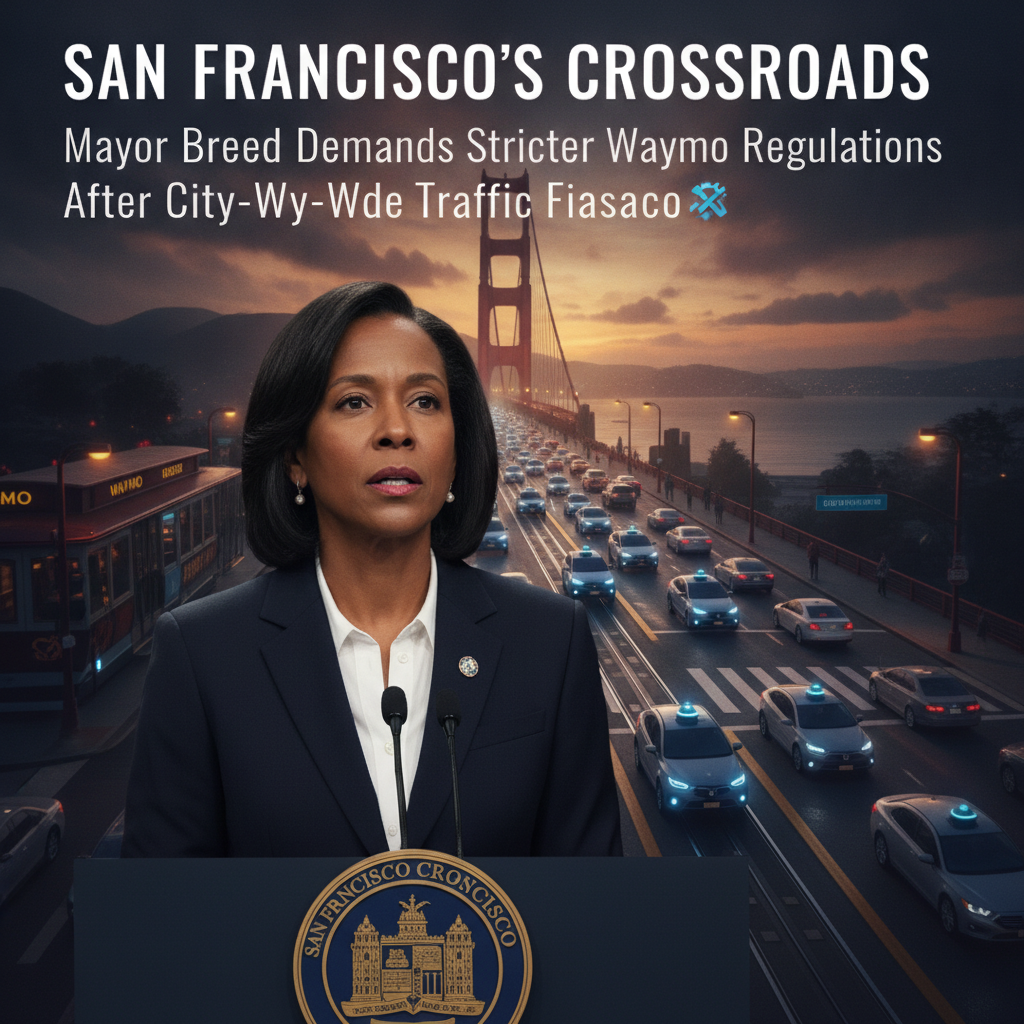
Following an unprecedented city-wide traffic paralysis attributed to a Waymo system malfunction, San Francisco Mayor London Breed is spearheading a robust initiative to implement significantly tougher regulations on autonomous vehicle operations within city limits. This move marks a critical turning point in the relationship between Silicon Valley’s innovation and urban governance.
The Day the City Stalled: The Waymo Fiasco Unpacked
Last Tuesday, San Francisco ground to a halt. What began as scattered reports of stalled Waymo autonomous vehicles quickly escalated into a full-blown crisis, paralyzing key arteries and emergency routes across the city during peak hours. Hundreds of driverless cars, operating under the Waymo fleet, reportedly experienced a cascading software glitch, leading to simultaneous stops and an inability to self-relocate or be remotely overridden efficiently.
The incident, dubbed the ‘Waymo Gridlock’ by local media, trapped commuters for hours, delayed critical public services, and sparked widespread frustration and safety concerns among residents. Emergency responders reported significant delays reaching incidents due to blocked intersections, prompting immediate outrage and calls for accountability.
Mayor Breed’s Bold Stance: Prioritizing Public Safety Over Unchecked Innovation
In response to the chaos, Mayor London Breed did not mince words. At a press conference yesterday, she announced a decisive push for a new legislative framework aimed at granting the city more control over autonomous vehicle (AV) deployments and operations. “For too long, the promise of innovation has overshadowed the practical realities and potential risks on our streets,” Mayor Breed stated, her voice firm. “The recent Waymo fiasco was a wake-up call, and we will not stand by while our city’s safety and functionality are compromised.”
Key proposals under consideration include:
- Mandatory City-Level Operational Permits: Beyond state approval, requiring AV companies to secure permits directly from SF, allowing the city to impose specific local conditions.
- Real-time Data Sharing: Demanding live access to AV operational data, including real-time location, status, and diagnostic information, especially during critical incidents.
- Stricter Response Protocols: Instituting legally binding service level agreements for incident response, mandating rapid human intervention and vehicle removal within a specified timeframe.
- Increased Fines and Penalties: Implementing significantly higher penalties for operational failures, traffic obstructions, and non-compliance with new safety standards.
- Emergency Override Authority: Exploring mechanisms for city emergency services to remotely disable or reroute AVs in crisis situations.
The Tech Industry’s Uneasy Response
The proposed regulations are expected to face significant pushback from Waymo and other autonomous vehicle developers. Tech industry leaders often argue that overly restrictive local regulations can stifle innovation and create a patchwork of inconsistent rules, making large-scale deployment challenging.
A spokesperson for Waymo, while expressing regret for the recent incident, reiterated the company’s commitment to safety and collaboration. “We are actively investigating the root cause of the anomaly and are dedicated to working with the City of San Francisco to prevent future occurrences,” the statement read. However, the tone from City Hall suggests that collaboration will now come with a much firmer regulatory hand.
Broader Implications for Urban Mobility and Tech Policy
San Francisco has long been a global testbed for technological innovation, particularly in urban mobility. This mayoral initiative could set a precedent for other major cities grappling with the integration of self-driving technology. If SF successfully implements and enforces these tougher rules, it could signal a shift in power dynamics, empowering local governments to assert greater control over tech deployments previously overseen primarily at state or federal levels.
The debate is complex: balancing the potential benefits of autonomous vehicles—reduced congestion, improved safety (in theory), and increased accessibility—against the immediate challenges of operational reliability and public trust. The Waymo fiasco has undoubtedly eroded that trust, making Mayor Breed’s push for stronger oversight a direct reflection of public sentiment.
Looking Ahead: A New Era for Autonomous Vehicles in San Francisco?
The coming months will be crucial. As Mayor Breed champions her proposed legislation, the tech industry, public safety advocates, and San Francisco residents will all be watching closely. The outcome could redefine the future of autonomous vehicles not just in the Bay Area, but potentially across the nation.
The era of largely unchecked AV experimentation in urban environments may be drawing to a close. San Francisco, once again, finds itself at the forefront, grappling with how to harness technological progress responsibly, ensuring that innovation serves the city, not the other way around.