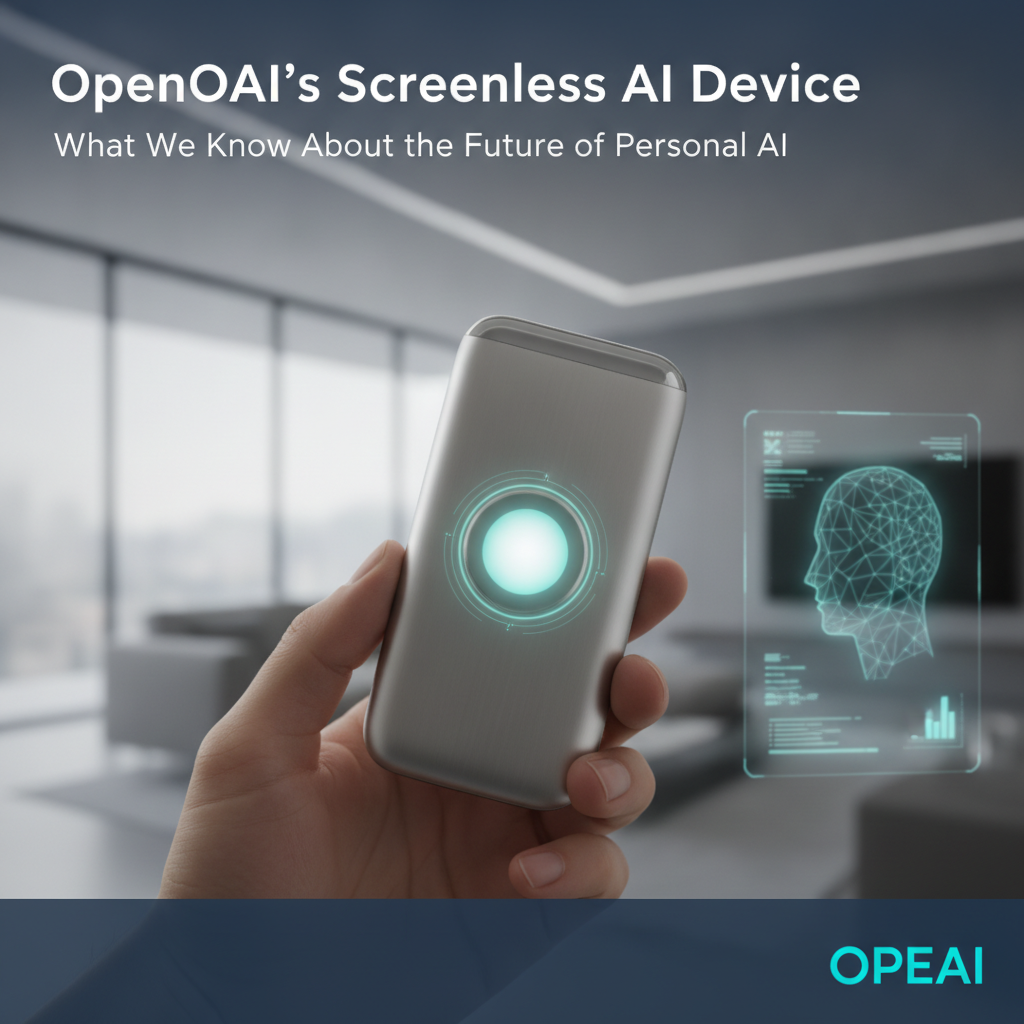
The world of artificial intelligence is rapidly evolving, moving beyond chatbots and image generators to redefine our interaction with technology itself. At the forefront of this revolution is OpenAI, the company behind ChatGPT, whose rumored venture into hardware has set the tech world abuzz: a mysterious, screenless AI device designed to be an ever-present, proactive assistant.
While details remain shrouded in secrecy, the implications of OpenAI developing its own hardware are profound. Could this be the next paradigm shift in personal computing, or merely another ambitious foray into an unproven market? Let’s dive into everything we know – and speculate – about OpenAI’s screenless AI device.
What is a Screenless AI Device?
Before delving into OpenAI’s specific project, it’s crucial to understand the concept of a screenless AI device. These gadgets aim to integrate artificial intelligence seamlessly into daily life without the need for a traditional display. Instead, they rely primarily on voice commands, gestures, cameras, and contextual awareness to interact with users.
The goal is to move beyond app-centric smartphone interactions towards a more intuitive, ambient computing experience. Imagine an AI that understands your environment, anticipates your needs, and provides information or performs tasks proactively, often through audio or subtle visual cues, rather than requiring you to pull out a phone and tap through menus.
OpenAI’s Rumored Hardware: The Whispers and Clues
The idea of OpenAI venturing into hardware has been fueled by several key indicators:
- Sam Altman’s Public Comments: OpenAI CEO Sam Altman has openly expressed interest in creating a ‘supremely good AI personal assistant’ that goes beyond software. He’s spoken about the need for new hardware interfaces to truly leverage the power of advanced AI models, hinting at a desire to control the full stack – from model to user experience.
- Hiring and Partnerships: Reports suggest OpenAI has been exploring partnerships with major hardware manufacturers. There have also been key hires with experience in consumer electronics and device development, signaling a serious internal initiative.
- Patents and Concepts: While no specific OpenAI device patents have been widely publicized, the general industry trend (and Altman’s prior investments in ventures like Humane) indicates a strong interest in wearable and portable AI form factors.
Potential Features and Functionality
Given OpenAI’s expertise in large language models (LLMs) and generative AI, their screenless device would likely prioritize:
- Advanced Conversational AI: A natural, highly intelligent voice interface powered by the latest GPT models, capable of nuanced understanding and complex task execution.
- Contextual Awareness: Utilizing microphones, cameras, and other sensors to understand the user’s environment, activities, and emotional state, providing proactive and relevant assistance.
- Proactive Assistance: Moving beyond reactive queries, the device could offer suggestions, reminders, or information before being asked, based on learned habits and real-time context.
- Seamless Integration: Designed to blend into daily life, whether as a wearable, a small portable device, or something else entirely, minimizing friction in interactions.
- Accessibility: Potentially offering new ways for individuals with visual impairments or other disabilities to interact with technology and access information.
Why is OpenAI Stepping into the Hardware Arena?
For a company primarily known for its groundbreaking software, a move into hardware might seem unexpected. However, several strategic reasons underpin this rumored shift:
- Full Stack Control: To deliver the ultimate AI experience, OpenAI might believe it needs to control both the software and the hardware. This allows for unparalleled optimization and innovation, ensuring their powerful AI models are unleashed without the constraints of existing platforms.
- Breaking Free from Existing Ecosystems: Relying on smartphones and current operating systems (iOS, Android) means playing by their rules. Creating its own hardware allows OpenAI to define a completely new interaction paradigm centered around AI.
- Defining the Future of Personal AI: OpenAI isn’t just building tools; they’re aiming to shape the future of human-AI interaction. A dedicated device could be their vision for how AI truly integrates into our lives, making it omnipresent and intuitive.
- Unlocking New Use Cases: Certain AI applications, especially those requiring constant contextual awareness or real-time proactive assistance, are difficult to implement optimally on a smartphone. Dedicated hardware can bridge this gap.
The Competitive Landscape: Humane AI Pin and Rabbit R1
OpenAI isn’t the first to envision a screenless, AI-first device. Two notable players have already made headlines:
- Humane AI Pin: Founded by former Apple designers, the AI Pin is a wearable device that projects information onto your palm, takes photos, and leverages a voice-first interface. It aims to replace your smartphone with a more ambient, context-aware AI experience.
- Rabbit R1: This pocket-sized device, developed in partnership with Teenage Engineering, emphasizes a ‘Large Action Model’ (LAM) that learns user interactions with apps and performs tasks across them. It features a rotating camera and a push-to-talk button, offering a more tangible, yet still screenless, interaction.
OpenAI’s potential device would enter a nascent but rapidly evolving market. Its key differentiator would undoubtedly be the direct integration of OpenAI’s cutting-edge AI models, potentially offering a more sophisticated and intelligent core experience than its rivals.
Challenges and Opportunities
Developing and launching a screenless AI device comes with significant hurdles:
Challenges:
- User Adoption: Shifting ingrained smartphone habits is incredibly difficult. Users need a compelling reason to embrace a new form factor.
- Privacy Concerns: A device constantly listening, watching, and processing personal data raises significant privacy questions that need robust solutions.
- Battery Life: Running powerful AI models and sensors continuously demands exceptional power management.
- Cost and Accessibility: Making such advanced technology accessible and affordable to a wide audience will be a balancing act.
- Feature Set vs. Simplicity: Striking the right balance between powerful features and intuitive, minimalist interaction is crucial.
Opportunities:
- True Personalization: A dedicated AI device can learn and adapt to an individual’s life in unprecedented ways.
- Enhanced Productivity: Streamlining tasks and providing information without distraction.
- New Interaction Paradigms: Moving beyond screens to more natural and intuitive ways of engaging with technology.
- Market Disruption: Potentially redefining the landscape of personal computing, much like the smartphone did decades ago.
The Future of Personal AI
Whether OpenAI’s screenless AI device becomes a groundbreaking success or a niche product, its rumored existence signals a clear trend: the future of AI is moving towards greater integration and less overt interaction. Companies are striving to make AI less of a tool you use and more of a presence that assists you throughout your day.
OpenAI’s foray into hardware represents a bold step towards an ambient computing future, where AI is not just in your pocket but truly interwoven into the fabric of your daily existence. As we await more official announcements, the anticipation for what OpenAI might unveil only continues to grow.
What are your thoughts on OpenAI’s potential screenless AI device? Share your predictions in the comments below!