
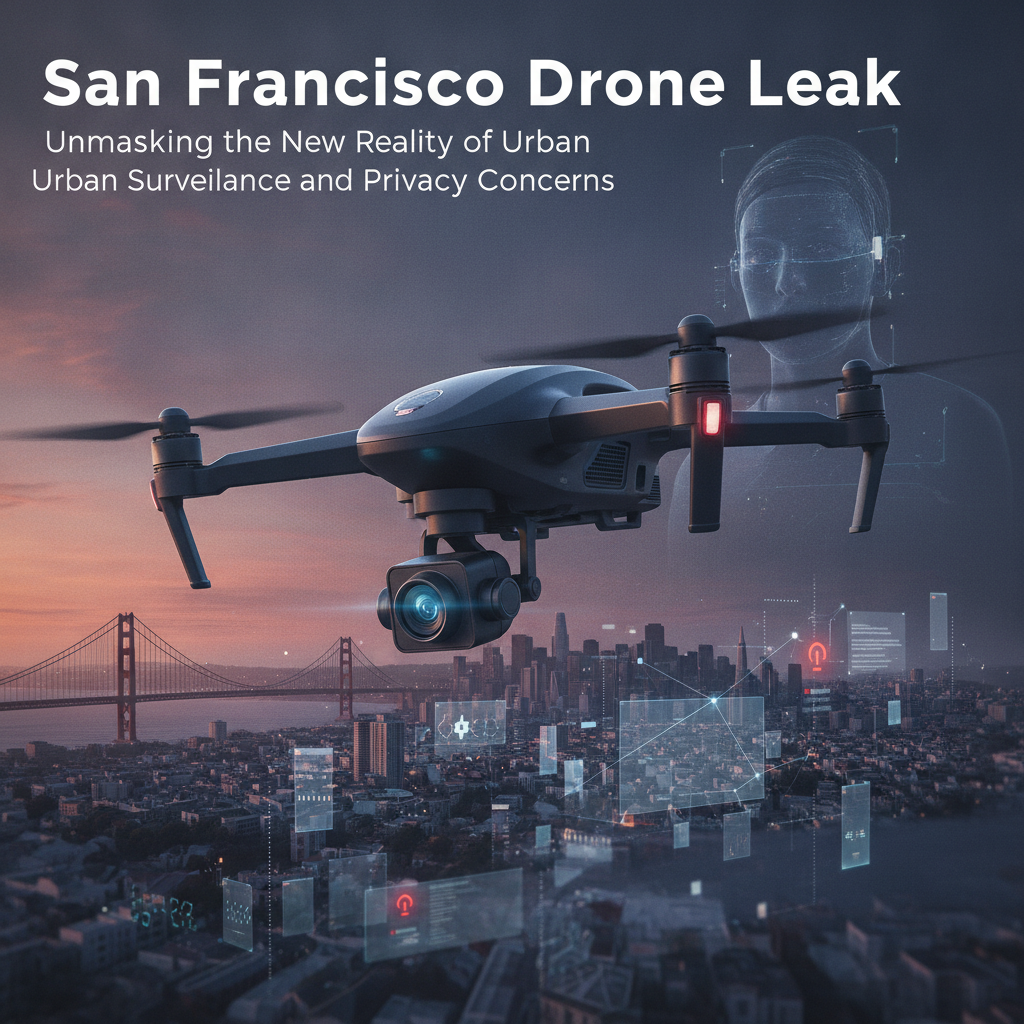
The city by the bay, San Francisco, has long been a beacon of innovation and progressive thought. Yet, a recent leak of San Francisco Police Department (SFPD) drone footage has cast a stark, digital shadow over its streets, exposing a new and unsettling reality of urban surveillance. This incident is more than just a security breach; it’s a critical moment that forces us to confront the expanding role of technology in policing, the erosion of privacy, and the urgent need for transparency and accountability.
The SFPD Drone Footage Leak: A Glimpse Behind the Curtain
The leaked footage, reportedly stemming from internal SFPD operations, offered an unprecedented look into how police drones are being utilized in real-world scenarios. Unlike the occasional news report or official statement, this raw footage brought the invisible eyes in the sky into sharp focus. It revealed not just specific incidents, but the potential for widespread, pervasive monitoring of public spaces, raising immediate alarm bells for privacy advocates and ordinary citizens alike.
This leak underscores a growing trend where law enforcement agencies are rapidly adopting drone technology. While proponents often cite public safety, crime prevention, and emergency response as key benefits, incidents like the SFPD leak highlight the significant privacy implications that often remain shrouded in secrecy.
The Ascendance of Police Drones and Urban Surveillance
Police drones, or Unmanned Aerial Vehicles (UAVs), are no longer futuristic concepts; they are an integral part of modern policing. Equipped with high-resolution cameras, thermal imaging, and increasingly, sophisticated AI capabilities like facial recognition, these devices offer law enforcement an unparalleled vantage point. From monitoring large crowds during protests to assisting in search-and-rescue operations, the utility of police drones is undeniable. However, their pervasive use transforms the very nature of public space.
The technology enables constant, wide-area surveillance, creating a digital record of our movements and activities. This transition from targeted surveillance to mass data collection raises fundamental questions about civil liberties and the right to privacy in an increasingly monitored society. The SFPD incident serves as a microcosm for a national, even global, debate on how these powerful tools are wielded.
Balancing Public Safety with Individual Privacy: A Precarious Act
At the heart of the drone surveillance debate lies a fundamental tension: the desire for public safety versus the preservation of individual privacy. Law enforcement agencies argue that drones are essential tools for combating crime and ensuring community well-being. They can provide crucial information during emergencies, track suspects, and gather evidence more safely and efficiently than ground-based operations.
However, the risk of mission creep is ever-present. What begins as a tool for critical incidents can quickly morph into routine, ubiquitous monitoring. Critics fear a future where every public interaction, every gathering, every individual’s movement is recorded and analyzed, potentially leading to a ‘chilling effect’ on free speech, assembly, and the right to dissent. The sheer volume of data collected by these surveillance cameras and drones also raises concerns about data storage, security, and potential misuse or abuse.
The Need for Robust Frameworks and Police Accountability
The SFPD drone footage leak, like similar incidents, shines a spotlight on the often-insufficient legal and ethical frameworks governing police drone use. Many jurisdictions lack comprehensive regulations that address:
- When and where drones can be deployed.
- What type of data can be collected and retained.
- Who has access to the collected data.
- How long data is stored.
- Mechanisms for public oversight and accountability.
Without clear guidelines, the potential for arbitrary surveillance and rights violations increases significantly. There’s an urgent call for greater transparency from police departments, requiring them to publicly disclose their drone policies, usage statistics, and the impact assessments on civil liberties. Public discourse and community involvement are crucial to striking a balance that harnesses technology’s benefits without sacrificing fundamental digital rights.
Beyond San Francisco: Implications for a Monitored Future
The San Francisco incident is not isolated; it’s a harbinger of things to come for cities worldwide. As drone technology becomes more sophisticated and affordable, its adoption by police forces will only accelerate. This makes the lessons learned from the SFPD leak even more critical.
The future of urban living hinges on how we collectively decide to manage these powerful tools. Will we succumb to an always-on surveillance state, or will we demand safeguards that protect our privacy and civil liberties while still enabling effective law enforcement? The answer lies in proactive policy-making, rigorous oversight, and an informed, engaged citizenry.
Conclusion: A Call to Action for Digital Rights
The leak of SFPD drone footage is a powerful reminder that the new reality of urban surveillance is here, and it’s rapidly evolving. It’s a call to action for policymakers, privacy advocates, and every citizen to engage in a vital conversation about the future of our digital rights. As technology continues to advance, so too must our commitment to safeguarding fundamental freedoms. Only through transparency, accountability, and robust legal frameworks can we ensure that surveillance tools serve the public good without inadvertently creating a society where privacy is merely a memory.