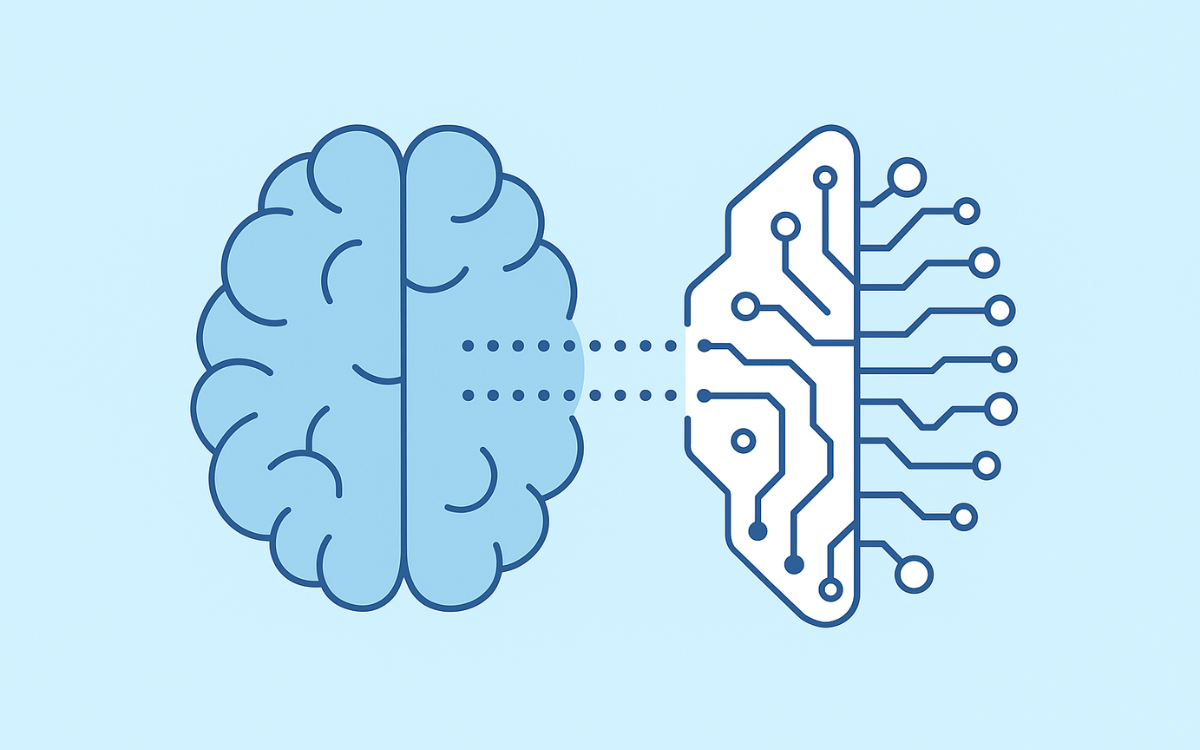
Type a sentence into a text box, wait a few seconds, and watch a fully-formed video clip appear — complete with motion, lighting, and sometimes even sound. AI-generated video has moved from research-lab novelty to a mainstream creative tool in 2026, powering everything from marketing campaigns to short films. But what’s actually happening under the hood when a machine turns words into moving pictures? Let’s break it down.
What Is AI Video Generation?
AI video generation is the process of creating motion content — social clips, product demos, cinematic sequences, and more — from a text description or a still image, without cameras, actors, or a film crew. Instead of capturing reality, the system predicts what a matching video should look like, frame by frame, based on patterns it learned from massive amounts of training data.
The Core Engine: Diffusion Models
Most modern AI video tools — including well-known platforms built on architectures similar to Sora, Veo, and Kling — rely on a technique called diffusion. It sounds counterintuitive at first: to learn how to create something, the model first learns how to destroy it.
During training, real videos are gradually corrupted with random noise, step by step, until nothing recognizable remains — just static. The model watches this happen millions of times and learns the reverse process: how to take pure noise and progressively remove it, step by step, until a coherent image or sequence emerges.
At generation time, the process runs in reverse from the start. The model begins with a canvas of random noise and gradually refines it over dozens of steps, using your text prompt as a guide at every stage to steer the output toward what you described.
Why Video Is Harder Than Images
Generating a single AI image is already impressive, but video adds a much tougher constraint: temporal consistency. A character’s face, an object’s shape, the direction of light, and the physics of movement all need to stay coherent not just within one frame, but across dozens or hundreds of frames in sequence.
To manage this, video models typically process entire sequences of frames together rather than one at a time, letting each frame reference the others during generation. This cross-frame awareness is what keeps a walking figure’s legs moving naturally or a coffee cup from morphing shape between shots — and it’s also why video generation demands far more computing power than still images.
The Role of Transformers
Alongside diffusion, most AI video systems use transformer architectures — the same family of neural networks behind large language models. Transformers help the system understand relationships between different types of input: text, images, motion cues, and audio, all at once.
This multimodal understanding is what allows a video model to keep a character looking the same throughout a clip, sync a voiceover to lip movement, or transition smoothly between scenes without the viewer noticing a seam.
From Prompt to Finished Clip: The Basic Pipeline
While every platform has its own architecture, most AI video tools follow a similar high-level pipeline:
- Prompt understanding — the text (and any reference image) is encoded into a format the model can use as guidance.
- Noise initialization — the model starts with a block of random noise representing the video’s frames.
- Iterative denoising — over many steps, the model removes noise while checking its output against the prompt, gradually revealing shapes, motion, and detail.
- Temporal refinement — the frames are cross-checked against each other to smooth out flicker and keep objects consistent over time.
- Upscaling and post-processing — the raw output is sharpened, upscaled to higher resolution, and sometimes paired with generated audio.
What This Means for Creators
Understanding the mechanics behind AI video isn’t just academic — it helps explain why certain prompting techniques work better than others, why longer or more complex scenes are harder to generate cleanly, and why consistency (of a character or product across multiple clips) remains one of the biggest challenges in the field. As the underlying diffusion and transformer models keep improving, expect clips to get longer, more physically accurate, and increasingly difficult to distinguish from real footage.
The Bottom Line
AI-generated video works by teaching a neural network to reverse a noise-destruction process, then guiding that reversal with a text prompt across an entire sequence of frames at once. It’s a combination of diffusion models for image quality and transformer architectures for multimodal understanding — and it’s advancing fast enough that today’s cutting edge will likely look basic within a year.