Choosing which programming language to learn can feel overwhelming — there are dozens of options, and each promises to be “the future.” But in 2026, a handful of languages clearly stand out based on job demand, community support, and where the tech industry is actually headed: AI, cloud computing, mobile apps, and high-performance systems. Here’s a practical, no-hype breakdown of the languages worth your time this year.
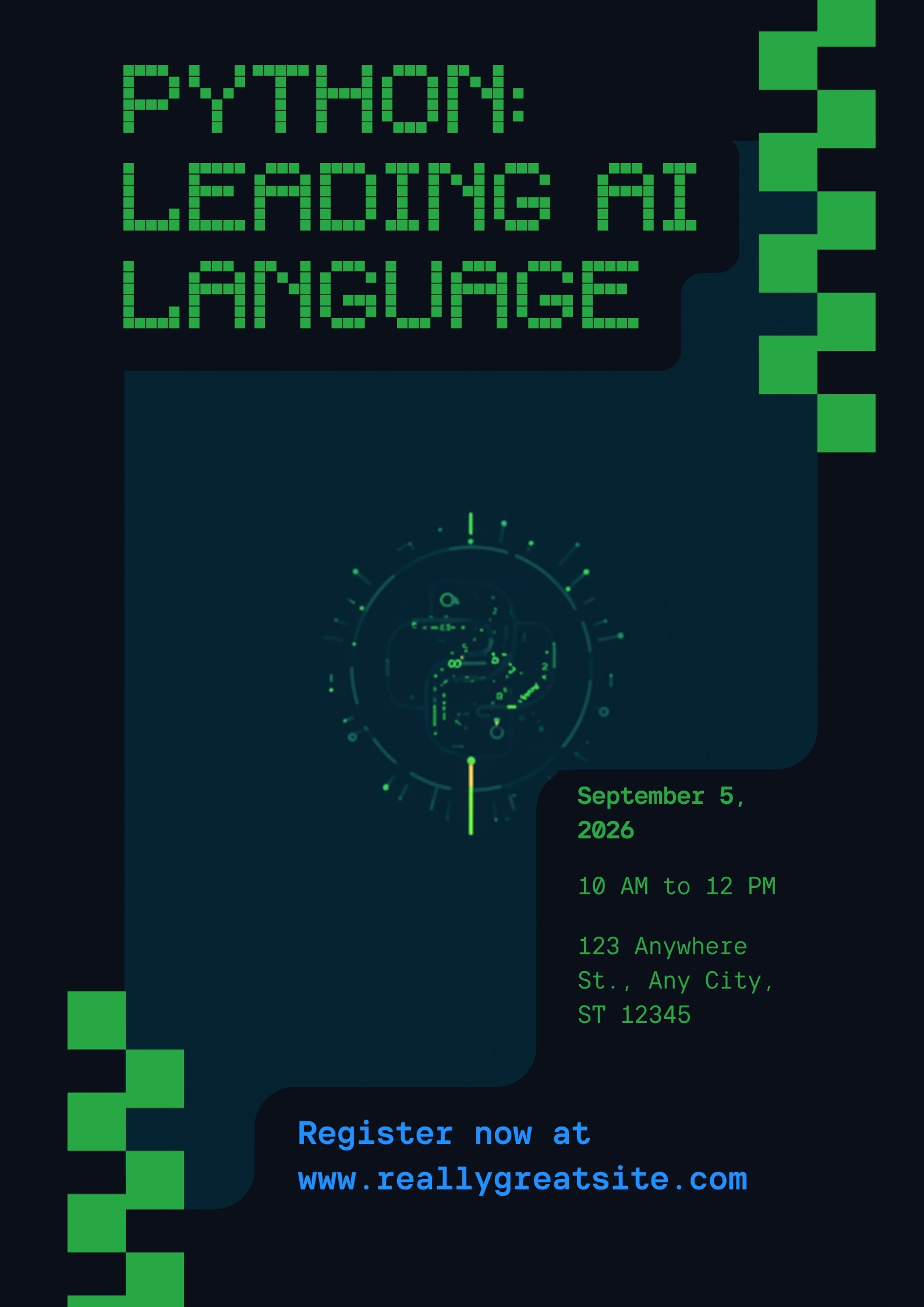
1. Python — Still the King of AI and Data Science
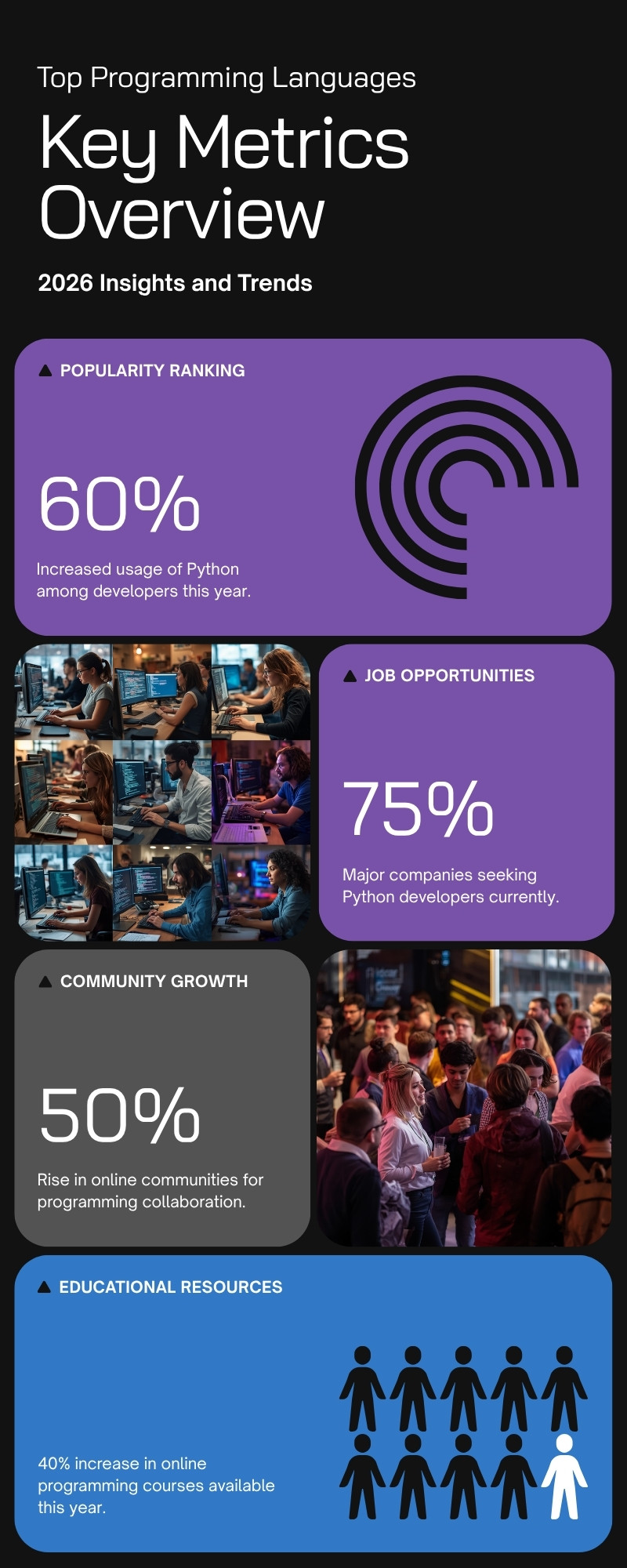
Python continues to dominate, and it’s not close. It leads US job postings by a wide margin, and there’s simply no credible alternative for AI engineering — every major framework, from PyTorch and TensorFlow to Hugging Face and LangChain, targets Python first. Beyond AI, Python powers data engineering (Pandas, Polars, Airflow), automation, and increasingly competitive backend web development through FastAPI, which has overtaken Flask in new projects.
Best for: Beginners, AI/ML careers, data science, automation.
2. JavaScript & TypeScript — The Web’s Lingua Franca
JavaScript remains the only language that runs natively in every browser, and it’s still the most-used language among developers overall. But TypeScript — which adds type safety on top of JavaScript — has become the practical standard for serious front-end and full-stack projects, with first-class support in React, Next.js, and Vue. If you’re building anything for the web in 2026, learning TypeScript on top of JavaScript is no longer optional for scalable projects.
Best for: Web development, full-stack roles, front-end careers.
3. Go (Golang) — Cloud and Backend Infrastructure
Go has become the default language of cloud infrastructure — Kubernetes, Docker, and Terraform are all written in it. Its simplicity, fast compilation, and strong concurrency support make it a favorite for backend services and microservices. It’s also one of the highest-paying languages, with average salaries reported around $147K for experienced developers.
Best for: Backend engineers, DevOps, cloud-native development.
4. Rust — Performance Without Sacrificing Safety
Rust has earned a loyal following for combining near-C++ performance with memory safety guarantees that eliminate entire categories of bugs. It’s increasingly used in performance-critical systems, WebAssembly, and blockchain infrastructure. The learning curve is steeper than most languages on this list, but the payoff — in both capability and salary — is significant for systems-level roles.
Best for: Systems programming, safety-critical applications, performance engineering.
5. Kotlin & Swift — The Mobile Standard
Mobile still dominates how people interact with technology worldwide, and native development hasn’t gone away despite cross-platform tools. Kotlin is the primary language for Android development and commands one of the highest projected salaries among mobile-focused roles, while Swift remains the go-to for iOS and macOS, with a beginner-friendlier syntax than you might expect.
Best for: Mobile app developers targeting Android or iOS natively.
6. SQL — The Quiet Foundation
It’s easy to overlook SQL because it’s not flashy, but it’s arguably the most universally useful skill on this list. Virtually every data-driven application — regardless of which “main” language it’s written in — relies on a database, and SQL is how you talk to it. If you work anywhere near data, analytics, or backend systems, SQL fluency pays off constantly.
Best for: Everyone working with data, regardless of specialty.
7. C++ — Still Essential After All These Years
C++ isn’t going anywhere. It remains the backbone of game development, real-time systems, and high-performance applications where you need direct control over memory and hardware. Many other popular languages and runtimes are themselves built on C or C++, so understanding it gives you insight that transfers well beyond any single project.
Best for: Game development, embedded systems, performance-critical software.
So, Which Should You Learn First?
- Complete beginner: Python — the gentlest learning curve with the broadest job market.
- Want to build for the web: JavaScript, then TypeScript.
- Aiming for AI/ML: Python, no real alternative.
- Interested in cloud/infrastructure: Go.
- Want a performance/safety edge: Rust.
- Building mobile apps: Kotlin (Android) or Swift (iOS).
The Bottom Line
There’s no single “best” programming language in 2026 — the right choice depends on what you want to build and which industry you’re targeting. That said, Python’s dominance in AI, TypeScript’s grip on web development, and Go and Rust’s rising demand in cloud and systems work make them the safest long-term bets for most developers. Pick one based on your goals, get genuinely comfortable with it, and expand from there — depth beats breadth early in a programming career.