
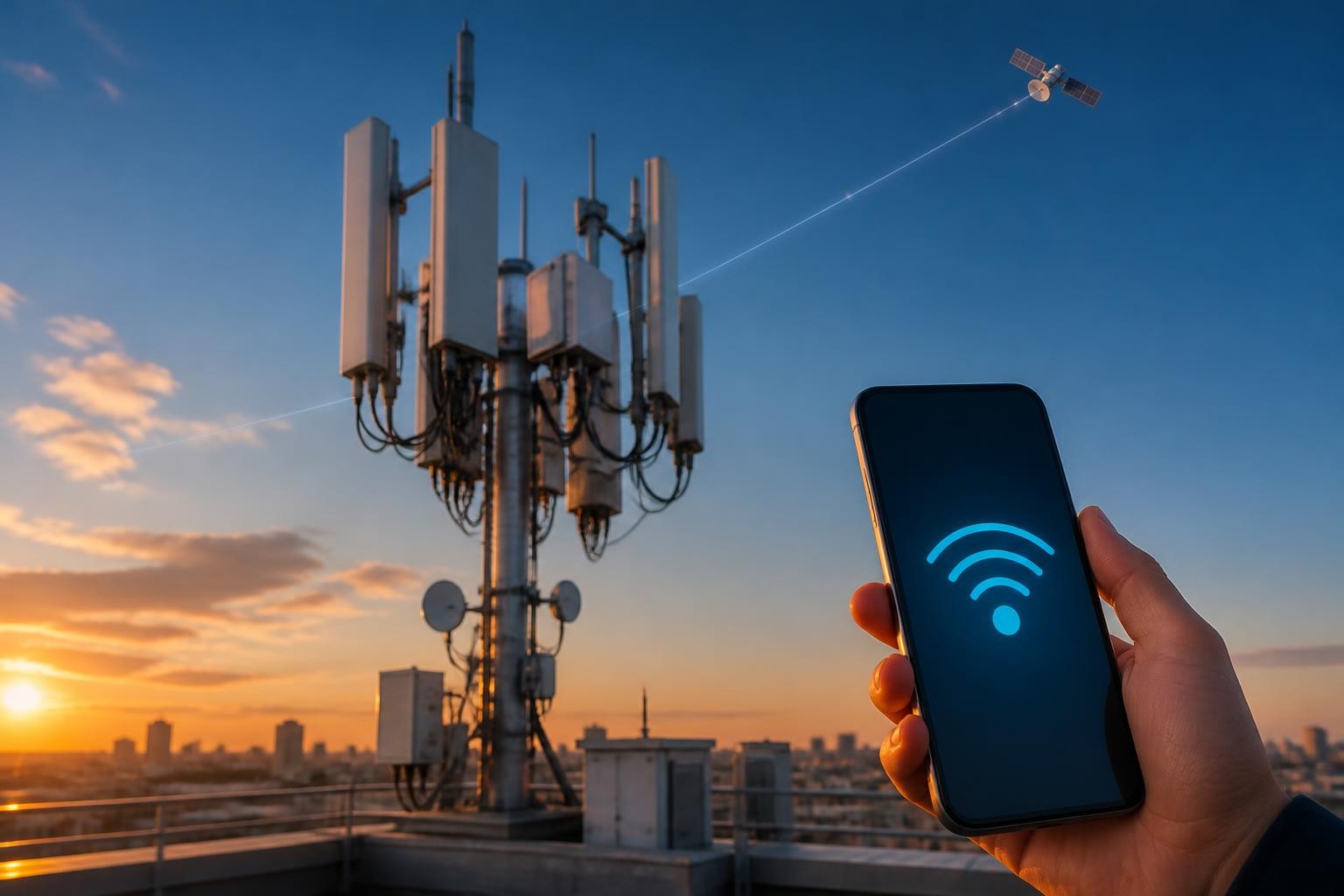
SpaceX is taking a major step toward expanding Starlink Mobile beyond satellite connectivity. The company has selected Qualcomm to provide key technology for a planned nationwide terrestrial 5G network in the United States. The multi-year agreement is expected to support tens of thousands of cellular sites, with deployment planned to begin in 2027.
What is Starlink Mobile planning?
Starlink is known for delivering internet access through satellites in low Earth orbit. Its next connectivity ambitions include a mobile network that combines satellite services with traditional ground-based cellular infrastructure.
The new terrestrial network is intended to use cellular base stations across the United States. These sites would complement satellite connectivity and help provide capacity in places where a conventional mobile network is important, including towns, cities and busy travel areas.
Why Qualcomm was selected
Qualcomm will supply its Dragonwing Cellular Infrastructure platforms, including the QRU100 and QDU100, along with software for radio and baseband processing. These systems are designed to help operate the equipment that sends and receives signals between mobile devices and the network.
The agreement brings Qualcomm further into large-scale telecommunications infrastructure. The company is widely known for smartphone processors, but its technology is also used in wireless networking equipment and other connected devices.
Massive MIMO: the technology behind the network
One of the planned network’s important features is Massive MIMO, short for multiple-input, multiple-output. It uses many antenna elements to send and receive data, helping a base station serve multiple devices and make more efficient use of available radio spectrum.
Qualcomm says the planned radio units will use a 64T64R configuration, meaning 64 transmit paths and 64 receive paths. The design aims to increase capacity and improve how efficiently the network uses its spectrum. Real-world performance will depend on deployment, spectrum availability, network design and local conditions.
Why combine satellites and ground-based 5G?
Satellite connectivity and terrestrial mobile networks solve different coverage challenges. Satellites can reach remote areas where building towers is difficult, while ground-based networks can provide high capacity in places with many users and devices.
A combined approach could give Starlink Mobile more flexibility. Satellite links may help extend connectivity beyond the reach of conventional towers, while terrestrial sites can add capacity where people use mobile services most heavily.
When could the 5G network launch?
The companies have described a multi-year programme involving tens of thousands of sites, with the US deployment expected to begin in 2027. This is a rollout plan rather than a promise that every location will receive service at the same time. Building a nationwide network requires equipment installation, backhaul connections, spectrum arrangements, testing and regulatory approvals.
Can Starlink Mobile challenge existing carriers?
The US wireless market already has established operators with extensive networks, retail operations and customer bases. Starlink Mobile would need to compete not only on coverage but also on capacity, pricing, reliability and customer experience.
Its existing satellite network could be a point of difference, but operating a nationwide terrestrial network is a demanding infrastructure project. The outcome will depend on how quickly sites are built, how spectrum is used and how well satellite and cellular services work together.
What could this mean for mobile users?
For consumers, the potential benefit is more connectivity options. A network that combines satellite and terrestrial coverage could help reduce some coverage gaps, especially for people who travel or live outside major urban centres.
However, users should not expect immediate changes to their phone service. The announced ground-network deployment is planned for 2027, and availability, compatible devices, service plans and performance details will become clearer as the rollout progresses.
Final thoughts
SpaceX’s choice of Qualcomm for Starlink Mobile’s planned terrestrial 5G network is an important development in the wireless industry. It shows that the future of mobile connectivity may involve a closer relationship between satellites and traditional cellular infrastructure. The ambitious rollout still has major challenges ahead, but it will be worth watching as the companies move toward their 2027 deployment target.
Leave a Reply