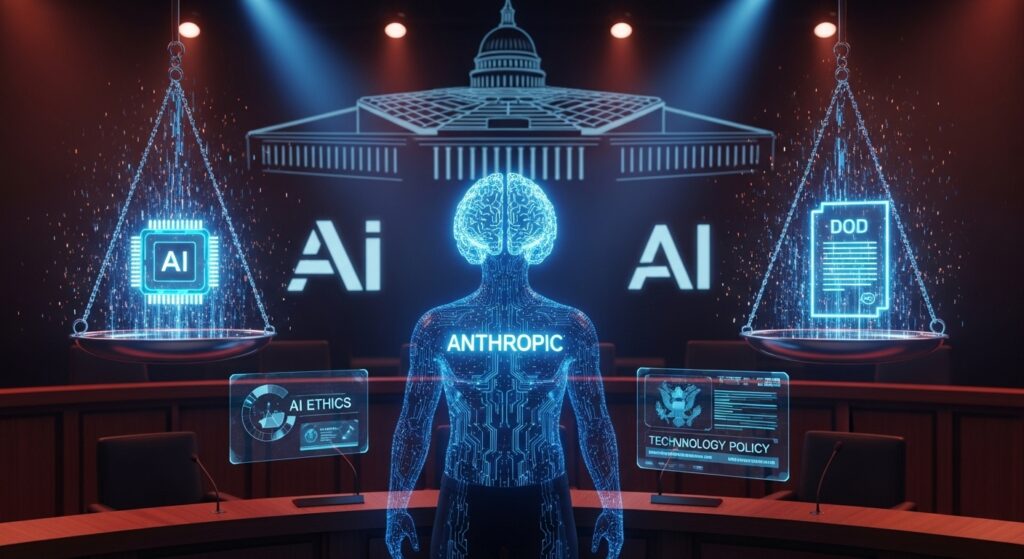
The Anthropic lawsuit against the U.S. Department of Defense (DOD) has sparked an intense debate across the artificial intelligence industry. More than 30 researchers and engineers from companies such as OpenAI and Google DeepMind recently filed a legal statement supporting Anthropic’s position in the case.
The dispute began when the Pentagon labeled Anthropic a “supply-chain risk.” This designation usually applies to companies linked to foreign adversaries. However, Anthropic received the label after it refused to allow its AI technology to be used for mass domestic surveillance or autonomous lethal weapons.
The situation quickly turned into a legal battle. Anthropic filed lawsuits against the DOD and other federal agencies, arguing that the decision was unfair and harmful to the American AI ecosystem. Meanwhile, AI researchers from competing companies stepped forward to support the firm, highlighting concerns about government overreach and the future of responsible AI development.
What Is the Anthropic Lawsuit About?
At its core, the Anthropic lawsuit focuses on a disagreement between the AI company and the U.S. Defense Department over how AI technology should be used.
Anthropic reportedly placed strict restrictions on how the Pentagon could use its AI models. These restrictions included:
- No mass surveillance of U.S. citizens
- No development of autonomous lethal weapons
- Clear safeguards against harmful misuse
According to court filings, the Pentagon pushed for broader access to the technology. The agency argued that it should be able to use AI systems for any lawful purpose without limitations from a private contractor.
When negotiations collapsed, the Department of Defense labeled Anthropic a supply-chain risk, a classification that can significantly limit a company’s ability to work with government contractors.
Anthropic responded by filing lawsuits and requesting a temporary restraining order so it could continue working with defense partners while the case proceeds.
Why OpenAI and Google Employees Filed a Statement
The controversy expanded when more than 30 employees from OpenAI and Google DeepMind submitted an amicus brief supporting Anthropic.
An amicus brief is a legal filing submitted by experts who are not directly involved in a case but want to provide professional insight. In this instance, AI researchers argued that the Pentagon’s action could harm the broader technology sector.
Among the signatories was Jeff Dean, chief scientist at Google DeepMind, along with several researchers from both organizations.
In the brief, the employees wrote that the government’s action represented an “improper and arbitrary use of power.”
They also warned that punishing a leading U.S. AI company could weaken the country’s technological leadership.
Their argument focused on one key point: if the Pentagon disagreed with Anthropic’s contract terms, it could simply cancel the agreement and choose another provider.
The Pentagon’s Controversial Supply-Chain Risk Label
The supply-chain risk designation is not a minor administrative label. In national security policy, it often applies to companies that may threaten government systems or infrastructure.
For example, the United States has used similar restrictions against companies suspected of ties to foreign governments.
Applying the same classification to an American AI startup therefore surprised many experts in the technology industry.
Critics argue that the label sends a troubling signal. It suggests that companies could face penalties for refusing certain government uses of their technology.
Supporters of Anthropic believe that such a move could discourage responsible development practices and ethical guardrails in AI systems.
The Ethical Debate Behind the Anthropic Lawsuit
The Anthropic lawsuit highlights a growing debate in artificial intelligence: how much control developers should have over how their technology gets used.
Anthropic has positioned itself as a company focused heavily on AI safety and alignment. The firm created its AI models with strict policies designed to prevent harmful applications.
These restrictions often involve technical safeguards, contractual limitations, and usage policies.
In the amicus brief, researchers supporting Anthropic argued that such guardrails are essential because clear public laws regulating AI still remain limited.
Without strong legal frameworks, they say, developers must create their own safeguards to prevent misuse.
The brief states that contractual and technological restrictions represent “vital safeguards against catastrophic misuse.”
OpenAI’s Separate Deal With the Pentagon
Another factor intensified the controversy. Shortly after the Pentagon labeled Anthropic a supply-chain risk, the Department of Defense signed a deal with OpenAI.
This timing raised eyebrows inside the tech community. Some observers interpreted the move as opportunistic.
Even inside OpenAI, several employees reportedly protested the decision.
Despite the competitive relationship between companies, many researchers still supported Anthropic’s legal fight.
This unusual moment demonstrated that AI researchers often share common concerns about safety, transparency, and responsible use of advanced technology.
Why the AI Industry Is Paying Close Attention
The Anthropic lawsuit could set an important precedent for the future of AI governance in the United States.
Several key issues are at stake:
1. Government Power Over AI Companies
The case raises questions about how far government agencies can go when negotiating technology contracts.
If the government can penalize companies for refusing certain uses, firms may feel pressure to accept requests they consider unethical.
2. AI Safety and Ethical Guardrails
Developers increasingly place restrictions on how their systems operate.
If those safeguards become legally risky, companies might remove them to avoid conflicts with regulators.
3. Innovation and Global Competition
The United States currently leads the world in advanced AI development.
Industry experts warn that unpredictable policies could discourage innovation and weaken the country’s competitive edge.
Concerns About Innovation and Scientific Debate
Researchers who filed the legal brief expressed another concern: the Pentagon’s decision could discourage open discussions about AI risks.
The amicus filing warned that the action could “chill professional debate” in the field.
AI scientists frequently publish research discussing potential dangers of powerful systems. These debates help improve safety practices and transparency.
If companies fear penalties for raising concerns, those conversations could disappear.
That outcome might slow progress toward safer and more reliable AI technologies.
The Role of Anthropic in the AI Landscape
Anthropic has emerged as one of the most influential AI startups in recent years. Founded by former OpenAI researchers, the company built advanced AI models such as Claude.
The firm focuses heavily on AI safety research and responsible development practices.
Major investors, including technology companies and venture capital firms, have backed Anthropic with billions of dollars in funding.
Because of its influence, the outcome of the Anthropic lawsuit could affect not only one company but the entire AI ecosystem.
What Happens Next in the Anthropic Lawsuit?
The legal process will take time. Courts will review Anthropic’s request for a temporary restraining order, which would allow the company to continue working with military contractors while the case moves forward.
If the court rules in Anthropic’s favor, it could limit the government’s ability to apply the supply-chain risk designation in similar disputes.
However, if the Pentagon’s decision stands, the ruling may reshape how AI companies negotiate with government agencies.
Either way, the case has already sparked important discussions about ethics, national security, and innovation.
Why This Case Matters for the Future of AI
The Anthropic lawsuit represents more than a contract dispute. It reflects a deeper struggle over how society should govern powerful technologies.
Artificial intelligence continues to evolve rapidly. Governments want access to these tools for defense, intelligence, and security.
At the same time, researchers worry about misuse and unintended consequences.
Finding the right balance will require cooperation between governments, companies, and scientists.
The debate surrounding Anthropic’s legal battle shows that the AI industry still searches for that balance.
And as AI becomes more powerful, those conversations will only grow more important.
Conclusion
The Anthropic lawsuit has become one of the most closely watched legal disputes in the artificial intelligence world. Support from OpenAI and Google researchers highlights how seriously the industry views the issue.
At stake are questions about government authority, ethical boundaries, and the future of responsible AI development.
Regardless of the final court decision, the case has already sparked a crucial discussion: Who decides how powerful AI technologies should be used?
The answer will shape the future of artificial intelligence for years to come.
Sources
- Wired – Reports on AI industry response to Pentagon decision
- TechCrunch – Coverage of Anthropic lawsuits against the U.S. Department of Defense
- Court filings from the Anthropic vs. U.S. Department of Defense case
- Public statements from AI researchers including Jeff Dean