
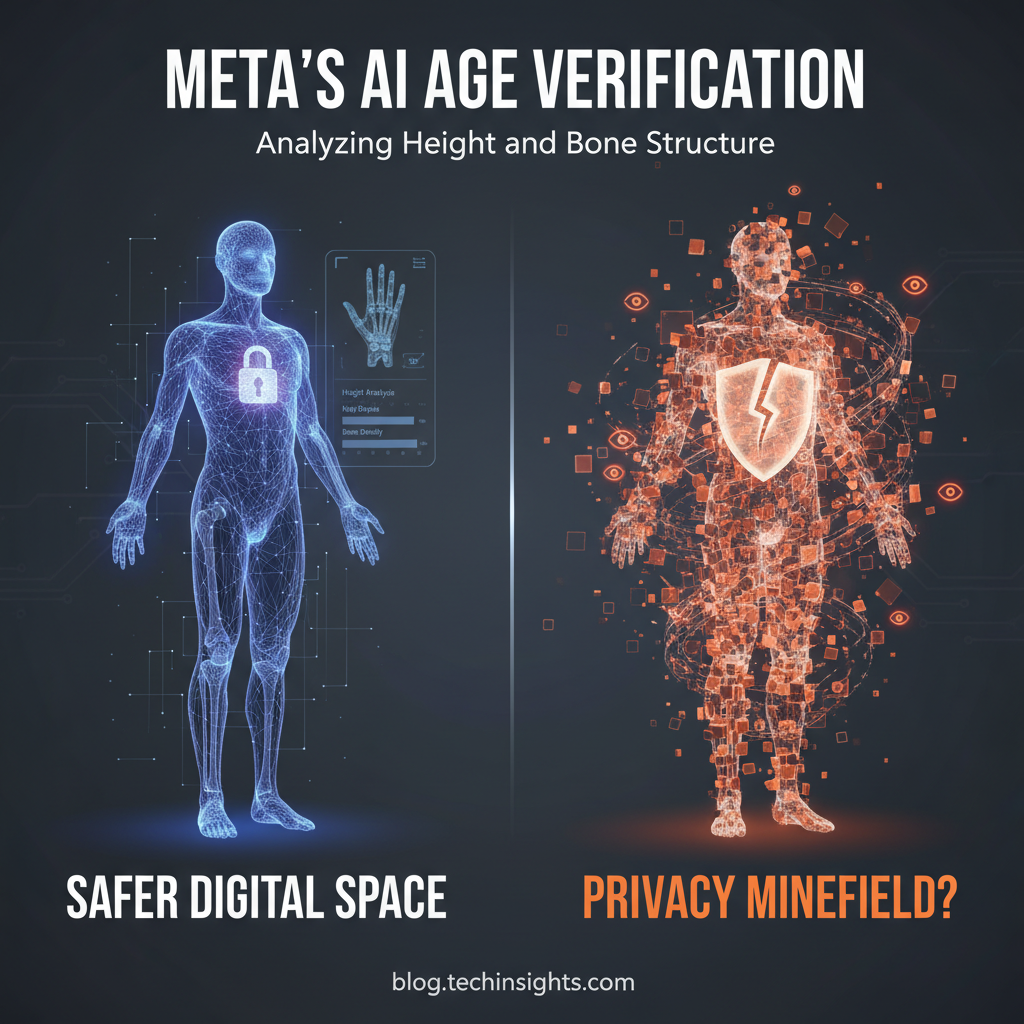
In an increasingly digital world, ensuring online safety for minors is a paramount concern for parents, educators, and tech companies alike. Tech giants like Meta (formerly Facebook) are under constant pressure to create safer environments, especially for younger users. Their latest proposed solution? Harnessing artificial intelligence to analyze physical attributes like height and bone structure to identify underage users.
This innovative, albeit controversial, approach raises critical questions about privacy, accuracy, and the future of digital identity. Let’s delve into Meta’s plans, the technology behind it, and the significant implications for users worldwide.
The Growing Need for Robust Age Verification Online
The internet, while a powerful tool for connection and learning, also presents numerous risks for children and teenagers. Exposure to inappropriate content, cyberbullying, online predators, and the mental health impact of social media are ever-present dangers. Current age verification methods – often relying on self-declaration or ID uploads – are notoriously easy to circumvent.
Regulators globally are pushing for stricter measures. Laws like COPPA (Children’s Online Privacy Protection Act) in the US and the GDPR-K (General Data Protection Regulation – Kids) in Europe mandate that platforms take reasonable steps to verify the age of their users and protect minors’ data. This legislative pressure, coupled with a genuine desire to protect young users, is driving companies like Meta to explore advanced solutions.
How Meta’s AI Might Work: Analyzing Physical Cues
Meta’s proposed AI system aims to move beyond traditional age verification by analyzing biometric and physical data. The core idea is to leverage advanced computer vision and machine learning algorithms to assess physical characteristics often correlated with age, specifically focusing on height and bone structure.
Imagine this: when a user signs up or interacts with certain age-gated content, Meta’s AI could analyze uploaded photos or videos. Instead of simply looking at a face for identity, the AI would be trained on vast datasets of images, learning to identify patterns in bone development, facial proportions, and overall stature that are indicative of different age groups. For example:
- Height Analysis: While not foolproof, average height ranges are generally correlated with age during childhood and adolescence. AI could estimate a user’s height relative to objects or surroundings in an image.
- Bone Structure Analysis: This is more complex. AI could potentially analyze facial bone structure (e.g., jawline, orbital bones, cranial development) or even indicators from body posture, which change as individuals grow from childhood into adulthood.
The goal isn’t to pinpoint an exact age, but rather to determine if a user falls below a certain age threshold (e.g., under 13 or under 18), thus triggering age-appropriate restrictions or preventing access to adult content.
The Promise: Enhanced Child Safety and Regulatory Compliance
From Meta’s perspective, the benefits are clear and compelling:
- Improved Accuracy: Potentially more accurate than self-declaration, making it harder for minors to lie about their age.
- Enhanced Child Protection: Better age gating means minors are less likely to encounter inappropriate content, be targeted by predators, or participate in adult-oriented communities.
- Regulatory Compliance: Helps Meta meet legal obligations for protecting minors online, potentially avoiding hefty fines.
- Reducing Pressure on Parents: While parental oversight remains crucial, this technology could provide an additional layer of digital safety.
The Peril: A Minefield of Privacy and Ethical Concerns
While the intent to protect children is laudable, the proposed method immediately sparks significant concerns:
1. Privacy and Biometric Data Collection:
- Sensitive Information: Analyzing height and bone structure involves collecting and processing highly sensitive biometric data. How will this data be stored? For how long? Who will have access?
- Consent: Can a minor truly give informed consent for such data collection? If parents consent, what are the implications for the child’s future privacy?
- Data Security: Biometric data, once compromised, cannot be changed like a password. A breach could have lifelong implications for individuals.
2. Accuracy, Bias, and Discrimination:
- Inherent AI Bias: AI models are only as good as the data they’re trained on. If training data lacks diversity across ethnicities, body types, or socio-economic backgrounds, the AI could exhibit significant biases, leading to misidentification.
- Developmental Variations: Growth rates and physical development vary widely among individuals. A tall 10-year-old might be mistaken for a teenager, or a shorter adult for a minor. What about individuals with medical conditions affecting growth?
- False Positives/Negatives: What are the consequences of incorrectly identifying an adult as a minor, or vice-versa? False negatives could leave minors vulnerable, while false positives could unjustly restrict adult users.
3. Scope Creep and Surveillance Fears:
- Beyond Age Verification: Once Meta collects and processes this type of biometric data, what prevents its use for other purposes down the line? Could it be used for targeted advertising, identity verification, or even surveillance?
- Normalizing Biometric Surveillance: Introducing such technology on a massive scale could normalize the collection of biometric data, leading to a slippery slope where constant digital monitoring becomes the norm.
4. Ethical Considerations:
- Digital Identity: Who truly controls our digital identity when companies are using AI to infer personal attributes?
- Transparency: Meta would need to be incredibly transparent about how the AI works, what data is collected, how it’s used, and how users can challenge decisions.
The Road Ahead: Balancing Innovation with Responsibility
Meta’s venture into AI-powered age verification using physical attributes represents a significant leap in online safety efforts. However, the path forward is fraught with challenges that demand careful consideration from technologists, ethicists, regulators, and the public.
For this technology to gain widespread acceptance and trust, Meta will need to:
- Demonstrate robust accuracy across diverse populations.
- Implement stringent data privacy and security protocols.
- Offer clear transparency regarding the AI’s operation and data usage.
- Provide effective appeal mechanisms for users who believe they have been misidentified.
- Engage in open dialogue with privacy advocates and regulatory bodies.
Conclusion
The promise of a safer online experience for minors is compelling, but the proposed method of AI analyzing height and bone structure to identify underage users opens a Pandora’s box of privacy, accuracy, and ethical concerns. While innovation is essential for tackling the complex challenges of the digital age, it must be tempered with a profound respect for individual rights and a commitment to responsible technology development.
As Meta pushes the boundaries of AI, the world will be watching to see if this pioneering effort can truly deliver on its promise of child safety without inadvertently creating a pervasive surveillance system that erodes fundamental privacy in the process.
Leave a Reply