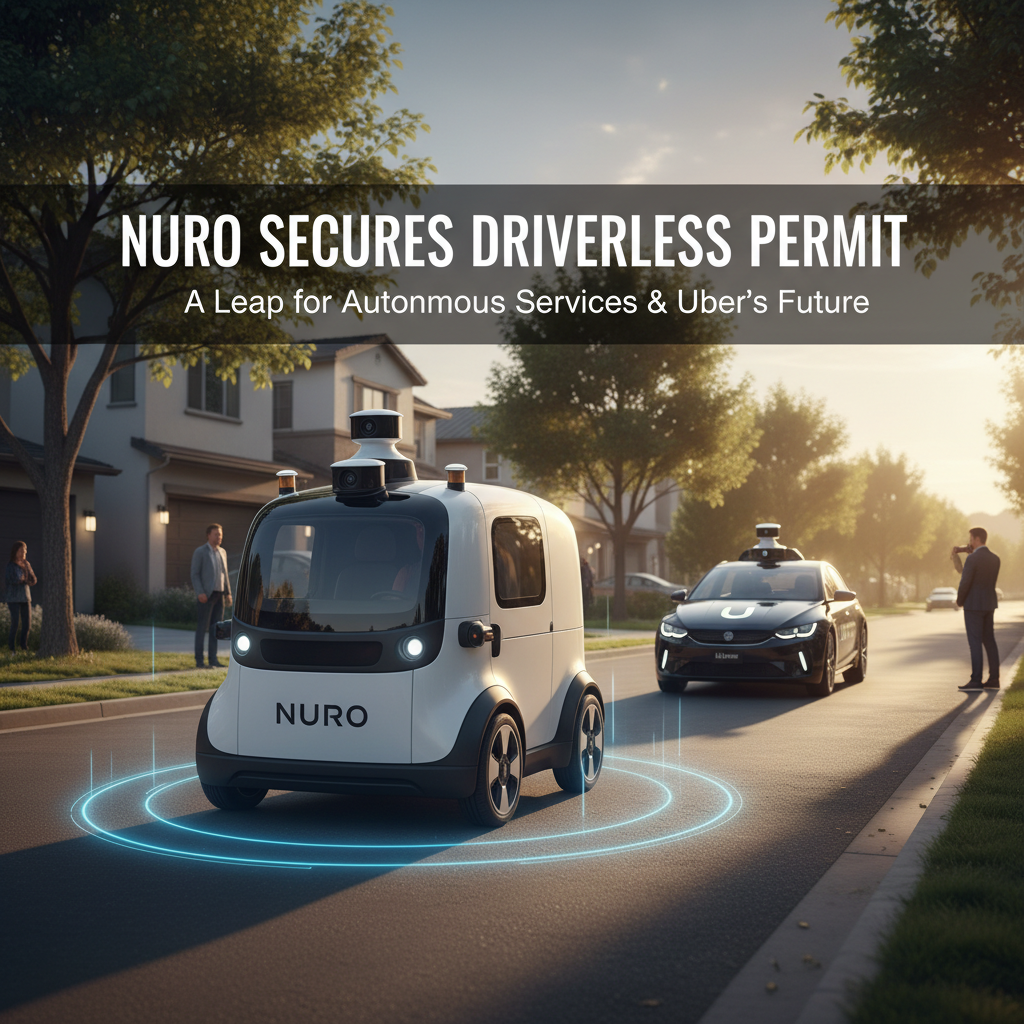
The road to fully autonomous vehicles has been a complex one, marked by technological breakthroughs and significant regulatory hurdles. Today, a major milestone has been reached: Nuro, a leader in autonomous delivery technology, has secured a highly coveted driverless testing permit. This isn’t just a win for Nuro; it’s a powerful signal for the entire autonomous vehicle (AV) industry, including companies like Uber, which are deeply invested in the future of robotaxi and autonomous delivery services.
This permit moves Nuro beyond the ‘safety driver required’ phase, allowing its vehicles to operate truly driverless on public roads. What does this mean for the advancement of self-driving cars, the future of last-mile delivery, and the broader vision for an autonomous transportation ecosystem that Uber and others are building?
The Significance of Nuro’s Driverless Testing Permit
Obtaining a permit to test autonomous vehicles without a human safety driver is a monumental achievement. It signifies several critical advancements:
- Regulatory Trust: It demonstrates that regulatory bodies have scrutinizingly reviewed Nuro’s safety protocols, system redundancies, and operational domain, finding them robust enough for driverless operations.
- Technological Maturity: Operating without a human in the loop demands an incredibly high level of sophistication from the autonomous driving system, from perception and prediction to planning and control.
- Path to Commercialization: Driverless testing is a crucial step before full commercial deployment. It allows companies to refine their technology in real-world scenarios, gathering invaluable data on system performance and public interaction.
Nuro’s permit is specifically for its low-speed, unmanned delivery vehicles, which are purpose-built for transporting goods rather than passengers. This focused approach has allowed Nuro to tackle a more contained operational design domain, accelerating its progress.
How Nuro’s Progress Impacts Uber’s Autonomous Ambitions
While Nuro’s vehicles are designed for deliveries and not passenger transport, this permit has significant ripple effects for companies like Uber. Uber has long pursued a multi-pronged strategy for autonomous services, encompassing both robotaxi services for passengers and autonomous delivery solutions for Uber Eats. Here’s how Nuro’s achievement plays a role:
- Validation of the AV Ecosystem: Every successful step by an AV company, particularly one gaining regulatory approval, strengthens the credibility and feasibility of the entire autonomous vehicle industry. This makes the path smoother for all players, including Uber’s existing and future AV partnerships.
- Benchmarking and Innovation: Nuro’s ability to navigate regulatory hurdles and demonstrate safe driverless operation provides valuable insights and sets a benchmark for other AV developers, potentially spurring further innovation across the sector.
- Future of Autonomous Deliveries: Uber Eats is a massive platform for food and grocery delivery. While Nuro hasn’t explicitly announced a widespread driverless partnership with Uber Eats stemming from *this specific permit*, the advancement of driverless delivery technology directly aligns with Uber’s long-term vision to automate aspects of its delivery network. Imagine a future where Nuro’s vehicles seamlessly handle last-mile deliveries for your favorite restaurants on Uber Eats.
- Investor Confidence: Such permits boost investor confidence in autonomous technology as a whole, potentially making it easier for companies like Uber to fund and scale their own AV initiatives.
Nuro’s permit is a testament to the fact that driverless technology is maturing, moving from futuristic concept to practical application, impacting various facets of transportation and logistics, including those critical to Uber’s diverse service offerings.
Nuro’s Unique Approach to Autonomy
Nuro stands out with its innovative, purpose-built autonomous vehicles. Unlike many companies retrofitting existing cars for self-driving, Nuro designs its vehicles from the ground up for specific tasks – primarily local goods delivery. Key aspects of their technology include:
- Safety First Design: Their vehicles are smaller, lighter, and operate at lower speeds, inherently reducing the risk profile compared to larger passenger vehicles.
- Unmanned Operation: Designed without space for drivers or passengers, these vehicles optimize interior space for cargo, making them ideal for efficient, contact-free delivery.
- Focus on Last-Mile Delivery: By concentrating on predictable, local routes for last-mile logistics, Nuro addresses a critical and costly segment of the supply chain, offering significant potential for efficiency and cost savings.
What’s Next for Autonomous Vehicles and Driverless Services?
Nuro’s driverless testing permit is a clear indicator that the commercial deployment of autonomous services is gaining serious momentum. We can expect:
- Expanded Pilot Programs: More cities and regions will likely see driverless vehicles, both for delivery and potentially passenger services, as companies gain more experience and data.
- Refined Regulatory Frameworks: As technology advances, regulators will continue to evolve their guidelines, ensuring safety while fostering innovation.
- Increased Partnerships: The complex nature of AV development means more collaborations between tech companies, automakers, logistics firms, and ride-sharing giants like Uber will be essential for widespread adoption.
The journey isn’t without its challenges – public acceptance, cybersecurity, and scaling operations remain critical areas of focus. However, each permit, each successful driverless mile, brings us closer to a future where autonomous vehicles play an integral role in our daily lives.
Conclusion
Nuro’s achievement in securing a driverless testing permit marks a pivotal moment for the autonomous vehicle industry. It underscores the maturity of self-driving technology and reinforces the vision of a future powered by autonomous services. For Uber, this progress, while indirect for its passenger robotaxi service, is a positive development that validates the broader AV ecosystem and accelerates the potential for advanced autonomous delivery solutions.
The era of driverless services is not just on the horizon; it’s actively being built, one permit and one autonomous mile at a time. Keep an eye on Nuro, Uber, and the rest of the AV industry as they continue to redefine transportation and logistics.
What are your thoughts on Nuro’s latest achievement and the future of driverless technology? Share your comments below!