
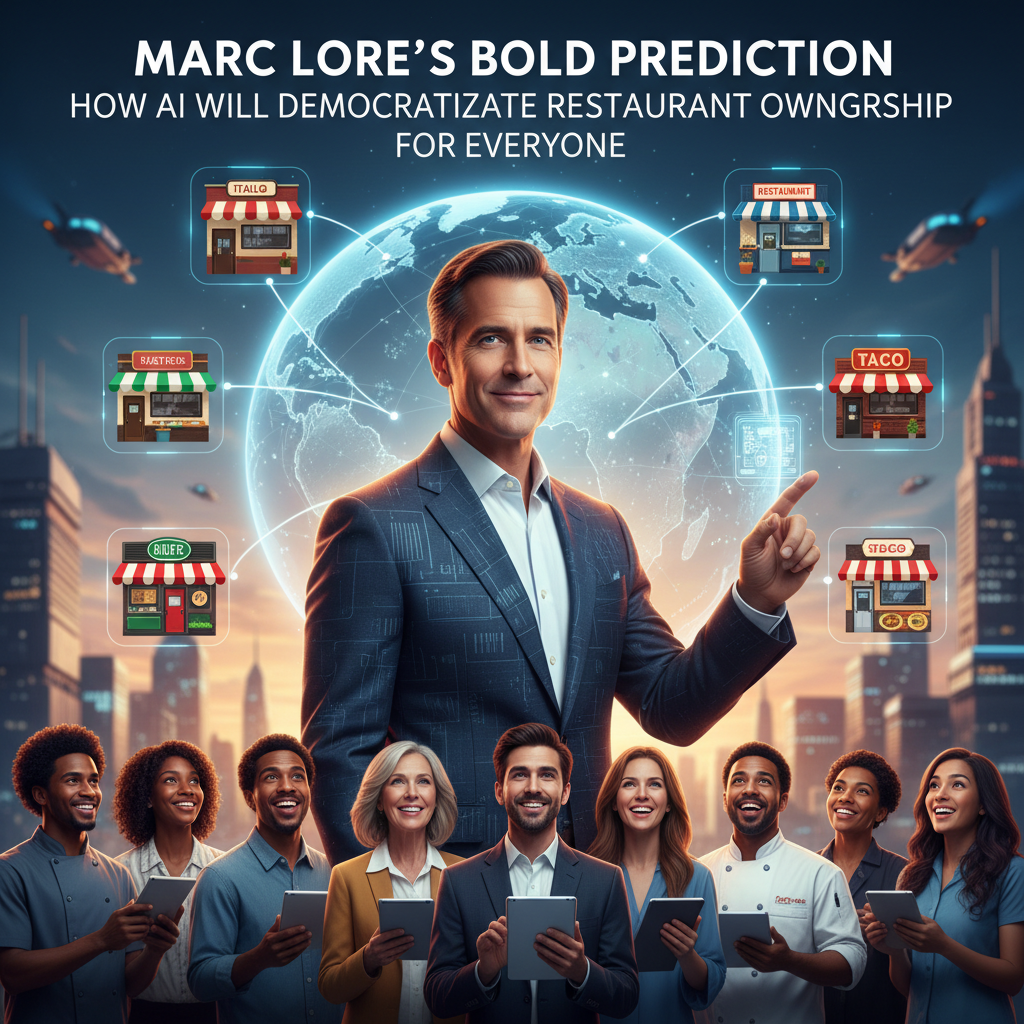
Opening a restaurant is often considered a monumental undertaking. It requires significant capital, deep culinary expertise, meticulous operational planning, and a hefty dose of luck to navigate the cutthroat food industry. But what if all those traditional barriers were to crumble, allowing anyone with a passion for food and a creative idea to launch their own eatery? According to visionary entrepreneur Marc Lore, this isn’t just a fantasy; it’s the near future, thanks to the transformative power of Artificial Intelligence.
The Vision: AI as Your Co-Founder and COO
Marc Lore, known for founding Jet.com and leading Walmart’s e-commerce division, has consistently pushed the boundaries of what’s possible in business. His latest venture, Wonder Group, is already disrupting the food delivery and dining experience. Lore’s prediction regarding AI’s role in restaurant ownership isn’t merely about automation; it’s about AI-enabled creation, management, and optimization at an unprecedented scale.
Imagine an AI that can:
- Generate Menu Concepts: Based on market trends, dietary preferences, ingredient availability, and even specific flavor profiles you input, the AI could design unique and appealing menus.
- Optimize Supply Chains: From sourcing high-quality ingredients at the best prices to managing inventory and predicting demand, AI could handle the entire supply chain with unmatched efficiency.
- Streamline Operations: Scheduling staff, managing kitchen workflows, monitoring equipment, and ensuring compliance with health regulations could all be orchestrated by intelligent systems.
- Personalize Customer Experiences: AI could learn customer preferences, recommend dishes, manage loyalty programs, and even handle customer service inquiries seamlessly.
- Automate Marketing & Sales: From social media campaigns to targeted promotions, AI could manage the entire marketing funnel, attracting and retaining customers effectively.
In Lore’s vision, the aspiring restaurateur wouldn’t need to be a chef, a business analyst, or a marketing guru. Their role would shift from executing tedious tasks to focusing on creative vision, brand identity, and fostering a unique culinary experience – essentially, being the curator and brand storyteller.
Breaking Down the Barriers to Entry
The beauty of this AI-driven future lies in its potential to democratize the industry. Currently, the obstacles are formidable:
- High Capital Investment: Real estate, kitchen equipment, permits, and initial inventory demand significant upfront costs.
- Complex Operations: Managing a kitchen, front-of-house, staff, suppliers, and customer relations is incredibly intricate.
- Steep Learning Curve: Success often requires years of industry experience and specialized knowledge.
- High Failure Rate: The restaurant business is notorious for its high churn, with many ventures failing within the first few years.
AI technology, as envisioned by Lore, directly addresses these pain points. By automating processes, optimizing resource allocation, and providing real-time data-driven insights, AI could drastically reduce operational costs and the need for extensive human oversight in many areas. This would lower the barrier to entry, making it feasible for individuals with limited capital or industry experience to launch their own food businesses.
The Evolution of the AI-Powered Kitchen
We’re already seeing glimpses of this future. Robotic arms flipping burgers, AI-powered predictive cooking, automated coffee makers, and sophisticated order kiosks are becoming more common. Ghost kitchens and virtual brands, which rely heavily on efficient logistics and digital storefronts, are also paving the way for a more tech-centric food ecosystem.
Lore’s prediction suggests an acceleration and integration of these technologies into a holistic AI platform. This platform wouldn’t just manage individual tasks; it would oversee the entire restaurant lifecycle, from concept to plate, allowing a single individual or a small team to manage multiple virtual or highly automated physical locations simultaneously.
Challenges and the Human Touch
Of course, this transformative vision isn’t without its considerations. Questions arise about job displacement, the need for robust and ethical AI development, and how to maintain the essential human element that makes dining out such a rich experience. While AI can handle efficiency, the unique ambiance, personal service, and creative flair that chefs and restaurateurs bring will likely remain invaluable differentiators.
The future, therefore, might not be entirely devoid of human interaction, but rather one where humans are elevated from mundane tasks to roles that emphasize creativity, curation, and genuine hospitality, augmented by the incredible capabilities of AI.
Conclusion: A Culinary Renaissance on the Horizon
Marc Lore’s vision paints an exciting picture of a future where entrepreneurship in the food sector is democratized. AI will act as a powerful enabler, turning complex restaurant operations into accessible, manageable, and even enjoyable ventures for anyone with a unique culinary idea.
As AI continues to advance, the traditional image of a bustling kitchen and a demanding front-of-house may evolve into a seamless, tech-driven operation where human creativity can truly shine. Get ready – your dream of opening a restaurant might be closer than you think, powered by the incredible potential of Artificial Intelligence.
Leave a Reply