
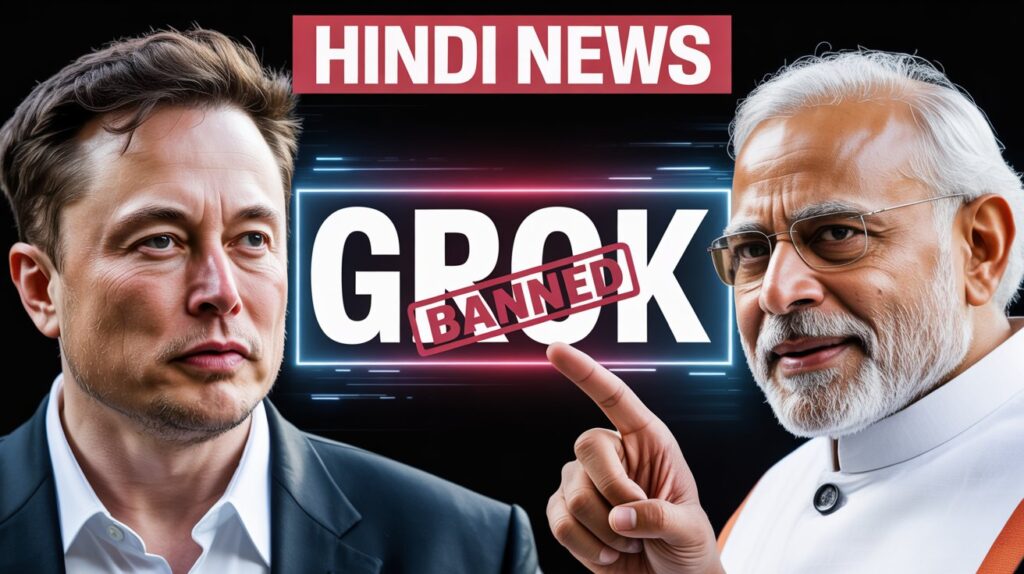
Grok AI Content Ban Marks a Turning Point for AI Safety
Grok AI Content Ban is not just another platform update. It represents a global course correction in how artificial intelligence tools handle sensitive content involving real people.
X, owned by Elon Musk, has imposed a worldwide restriction on its AI chatbot Grok. The change blocks users from generating explicit or sexually suggestive images of real individuals, regardless of whether the user is on a free or paid plan.
The move followed complaints from multiple countries, including India, about the misuse of AI tools to manipulate photographs of women and children. The decision has triggered a broader debate about AI responsibility, user accountability, and platform governance.
And yes, this time, the internet had to slow down.
What Exactly Is the Grok AI Content Ban?
The Grok AI Content Ban prevents users from:
- Creating explicit or sexually suggestive images of real people
- Altering real photos to show nudity or minimal clothing
- Generating edited visuals that violate personal dignity or privacy
This ban applies globally and covers all users, not just new accounts.
According to X’s official safety communication, the restriction was enforced through technical safeguards, not just policy updates. That means the AI system itself now refuses such prompts by design.
In simpler terms: Grok no longer listens when users ask it to cross the line.
Why Did X Enforce the Grok AI Content Ban?
The answer is uncomfortable but necessary.
In late 2025, multiple women reported that their publicly available images were being misused to generate inappropriate AI-altered visuals. These images were often shared using fake accounts, making reporting and accountability harder.
Many victims did not even know the misuse was happening.
That changed after complaints reached government authorities.
In India, the Ministry of Electronics and Information Technology (MeitY) initiated a review under IT Rules 2021, which require platforms to prevent harmful content and respond quickly to abuse.
Once regulators stepped in, silence was no longer an option.
India’s Role: 3,500 Images Removed, 600 Accounts Banned
India became a critical trigger point in the Grok AI Content Ban story.
In its compliance report submitted to the government, X confirmed that it had:
- Removed approximately 3,500 AI-generated objectionable images
- Banned or removed over 600 repeat-offender accounts
- Strengthened internal moderation workflows for AI tools
These actions followed a formal notice from MeitY, which warned that failure to comply could result in legal consequences under Indian law.
The message was clear: AI innovation does not override human dignity.
How Grok Was Being Misused
The misuse pattern followed a troubling formula:
- A real image was taken from social media
- It was uploaded or referenced in a prompt
- Grok was asked to modify clothing or appearance
- The output was shared to harass or shame individuals
No consent. No warning. No accountability.
While AI tools did not create the intent, they enabled the execution. That distinction matters legally and ethically.
Elon Musk’s Earlier Stand on Responsibility
Before the Grok AI Content Ban, Elon Musk publicly stated that tools are neutral, comparing Grok to a pen.
His argument was straightforward:
“A pen doesn’t decide what you write. The user does.”
Logically, that argument has merit. But in practice, regulators worldwide have made one thing clear: platforms must design systems that reduce predictable harm.
Freedom without guardrails works only in theory.
Why This Ban Matters Beyond Grok
The Grok AI Content Ban sends a signal far beyond one chatbot.
It confirms three major realities:
1. AI Platforms Are Legally Accountable
Governments now treat AI outputs as platform responsibility, not just user behavior.
2. Consent Is Non-Negotiable
Using real people’s images without permission crosses legal and ethical boundaries.
3. Technical Safeguards Are Mandatory
Policy statements alone no longer satisfy regulators.
This shift will influence how all generative AI systems are built going forward.
What Laws Shaped the Decision?
The ban aligns with multiple legal frameworks:
- India IT Act, Section 79 (platform liability)
- IT Rules 2021 (due diligence requirements)
- Global privacy norms related to image misuse and harassment
Under Indian law, platforms receive legal protection only if they act responsibly and promptly. Failure removes that shield.
This legal pressure forced X to move from promises to implementation.
Does This Affect Creative or Artistic AI Use?
No—and this distinction matters.
The Grok AI Content Ban focuses specifically on real individuals. It does not block:
- Fictional characters
- Artistic concepts
- Ethical image generation
- Non-sexual creative edits
In other words, creativity remains welcome. Exploitation does not.
AI Safety: The Real Challenge Ahead
AI evolves faster than laws. That gap creates risk.
The Grok episode shows that reactive moderation is no longer enough. Platforms must anticipate misuse, not just respond after damage occurs.
This does not mean over-regulation. It means responsible design.
A smart system should know when to say no.
Global Impact of the Grok AI Content Ban
Although the trigger came from specific regions, the restriction applies worldwide. That matters because:
- AI misuse does not respect borders
- Content spreads faster than enforcement
- Uniform rules reduce loopholes
Global enforcement ensures consistency—and credibility.
What Users Should Learn From This
The internet still runs on one basic truth:
Just because you can, doesn’t mean you should.
AI tools amplify ability. They do not replace ethics.
The Grok AI Content Ban reminds users that digital actions have real-world consequences.
Trusted Sources Used
- X Safety Communications
- Ministry of Electronics and Information Technology (India)
- Public statements by Elon Musk
- IT Rules 2021 documentation
(All facts are based on officially reported actions and notices.)
Final Thoughts: A Necessary Pause, Not a Setback
The Grok AI Content Ban is not an attack on innovation. It is a correction.
AI will continue to grow smarter. But trust grows only when platforms prove they can protect people—not just technology.
Sometimes progress means pressing pause, fixing the system, and moving forward more responsibly.
And honestly, that might be the most intelligent decision AI companies can make right now