
iPhone 17e and iPad Air M4 Officially Unveiled
iPhone 17e and iPad Air M4 headline Apple’s latest product refresh, bringing practical upgrades rather than flashy redesigns. Apple introduced a faster entry-level iPhone with MagSafe and doubled storage, alongside an iPad Air powered by the new M4 chip with a claimed 30% performance boost.
Apple did not change everything. Instead, it refined what already worked. That approach feels deliberate. It also keeps pricing stable — something buyers always appreciate.
Let’s break down what matters.
Apple Inc. Launches iPhone 17e with MagSafe and A19 Chip
The iPhone 17e replaces last year’s iPhone 16e while keeping the $599 starting price. Apple focused on internal upgrades, connectivity, and long-term value.
Key Specifications
- A19 chip
- Apple C1X in-house modem
- MagSafe magnetic charging
- 256GB base storage
- 6.1-inch display
- 48MP single rear camera
Apple doubled the base storage from last year’s model. That decision alone removes one common complaint about entry-level iPhones.
A19 Chip: Performance Boost Without Price Increase
The iPhone 17e uses the A19 chip, the same processor found in the standard iPhone 17. That means users get flagship-level performance at a lower price tier.
Faster app launches, smoother multitasking, and better efficiency come from this chip. Apple consistently leads mobile silicon performance benchmarks, according to independent testing firms such as Geekbench and AnandTech in prior generations. While Apple does not publish raw benchmark comparisons at launch, performance gains typically align with annual chip improvements.
Simply put: the 17e does not feel “budget.”
C1X Modem and Connectivity Improvements
The iPhone 17e includes Apple’s upgraded C1X in-house modem. It replaces the earlier C1 modem used in the previous model.
This upgrade supports stronger connectivity and better network efficiency. Apple continues its strategy of reducing reliance on third-party modem suppliers, a move widely reported by Bloomberg and other financial publications.
For users, the result is straightforward: better signal stability and improved wireless performance.
MagSafe Returns to the “e” Line
One of the most notable changes in the iPhone 17e and iPad Air M4 announcement is MagSafe support on the 17e.
MagSafe allows magnetic alignment for chargers and accessories. Apple introduced it with the iPhone 12 series. Until now, the “e” lineup lacked this feature.
Now, users can:
- Attach MagSafe chargers
- Use magnetic wallets
- Connect compatible accessories
That change makes the 17e more aligned with the main iPhone lineup.
Design, Display, and Camera: Familiar but Durable
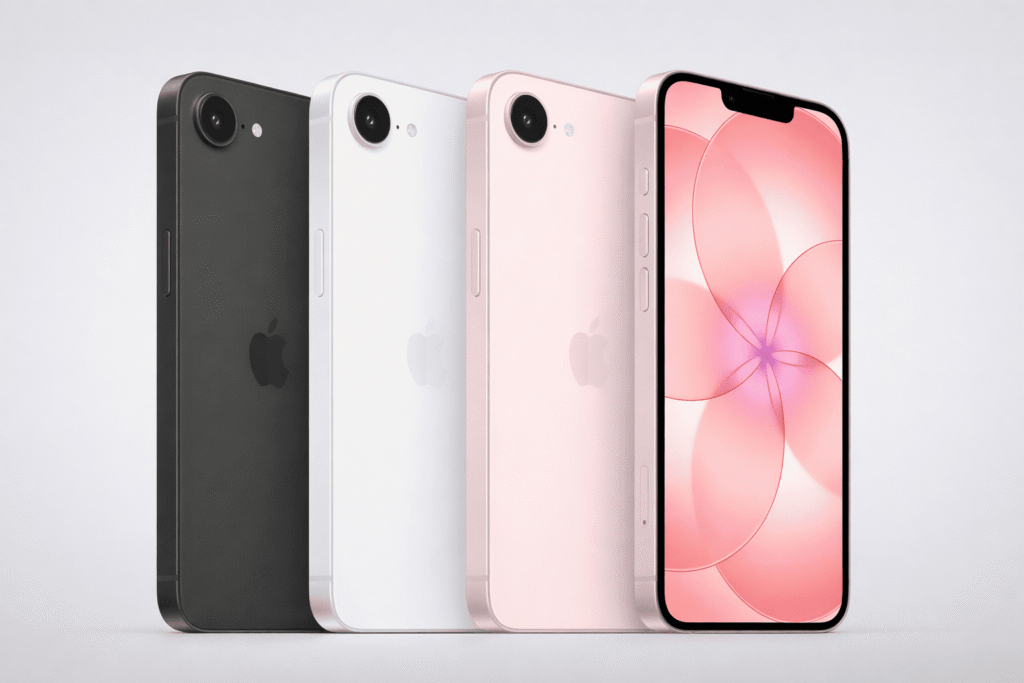
Apple kept the 6.1-inch display size unchanged. The phone remains slightly smaller than the 6.3-inch iPhone 17.
The 17e continues with:
- A single 48-megapixel rear camera
- Standard refresh rate display
- No Dynamic Island interface
The front glass now matches the durability level of the iPhone 17. Apple did not redesign the device, but it strengthened it.
Color options include pink, black, and white.
How iPhone 17e Competes in the Market
At $599, the iPhone 17e competes directly with:
- Samsung’s mid-range Galaxy models
- Google’s Pixel A-series
- Several Chinese smartphone brands
In markets like India, where price sensitivity influences buying decisions, the 17e could attract buyers who want Apple performance without flagship pricing.
The major trade-offs compared to premium iPhones remain:
- Single camera system
- Standard refresh rate
- Slightly smaller screen
For many users, those compromises feel reasonable.
iPad Air Upgraded to M4 Chip
The second major announcement in the iPhone 17e and iPad Air M4 launch focuses on performance.
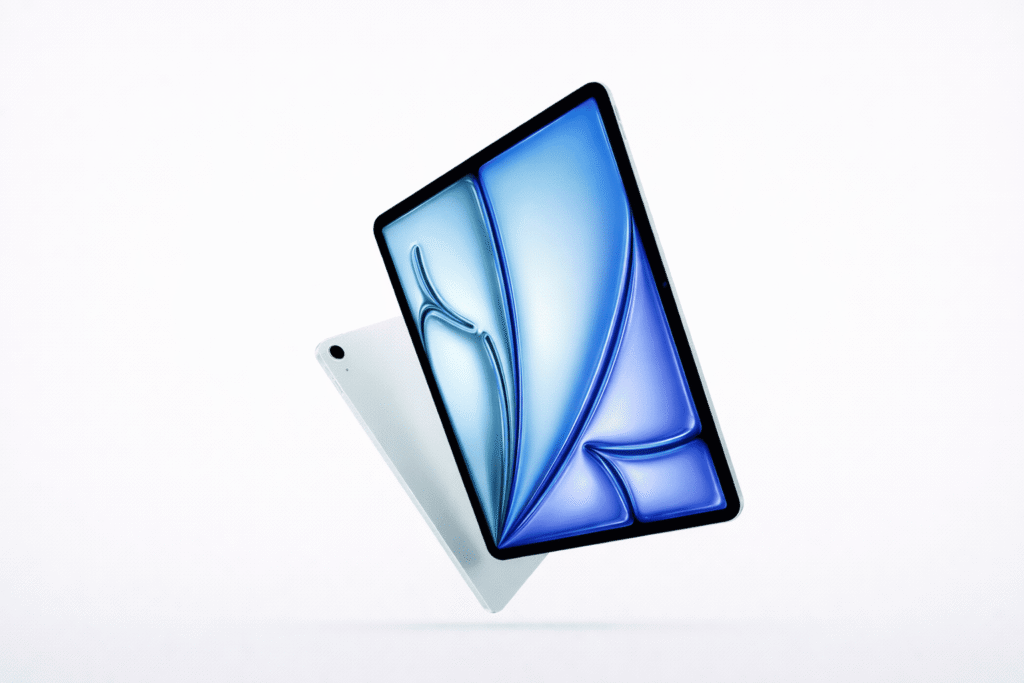
Apple upgraded the iPad Air from the M3 chip to the Apple M4.
What’s New in the iPad Air M4?
- M4 chip
- Claimed 30% speed boost
- Wi-Fi 7 support
- C1X modem
- N1 wireless chip
Apple states that the M4 chip makes the iPad Air 30% faster than the previous generation. While Apple does not always disclose benchmark specifics during launch events, it consistently publishes performance comparisons relative to prior models.
Performance Gains: What 30% Really Means
A 30% improvement typically affects:
- Video editing speeds
- App rendering
- Gaming performance
- Multitasking responsiveness
Creative users benefit the most. Students and professionals also gain smoother workflow handling.
Importantly, Apple kept pricing unchanged:
- 11-inch model: $599
- 13-inch model: $799
That pricing strategy strengthens value perception.
Wi-Fi 7 and Modern Connectivity
The new iPad Air supports Wi-Fi 7. This standard offers:
- Higher data transfer speeds
- Lower latency
- Better performance in crowded networks
As routers gradually adopt Wi-Fi 7, users will notice stronger performance during large downloads and cloud-based work.
iPad Sales Momentum
According to reported financial data, Apple’s iPad division generated $8.6 billion in revenue during the December quarter, marking a 6.3% year-over-year increase. This data reflects strong holiday demand.
By upgrading the iPad Air without raising prices, Apple aims to maintain that growth.
Availability and Pre-Orders
Both the iPhone 17e and iPad Air M4:
- Open for pre-order on March 4
- Arrive in stores on March 11
Apple also plans additional product launches this week, including new MacBook models.
Strategic Perspective: Why These Upgrades Matter
Apple did not introduce radical design changes. Instead, it focused on:
- Doubling storage
- Adding MagSafe
- Improving modem performance
- Upgrading chip performance
- Keeping prices stable
That combination builds trust. Consumers appreciate predictable value.
The iPhone 17e and iPad Air M4 demonstrate Apple’s broader strategy: refine, strengthen, and optimize.
Final Verdict: Practical, Powerful, and Competitive
The iPhone 17e and iPad Air M4 represent smart, incremental upgrades rather than dramatic redesigns. The 17e gains MagSafe, faster silicon, improved connectivity, and more storage. The iPad Air moves to the M4 chip with a 30% performance claim and Wi-Fi 7 support.
Apple kept pricing stable, which strengthens their appeal in competitive markets.
If you value performance, reliability, and ecosystem integration without flagship-level spending, these devices make strong arguments.
Sometimes, evolution beats revolution. And this launch proves it.