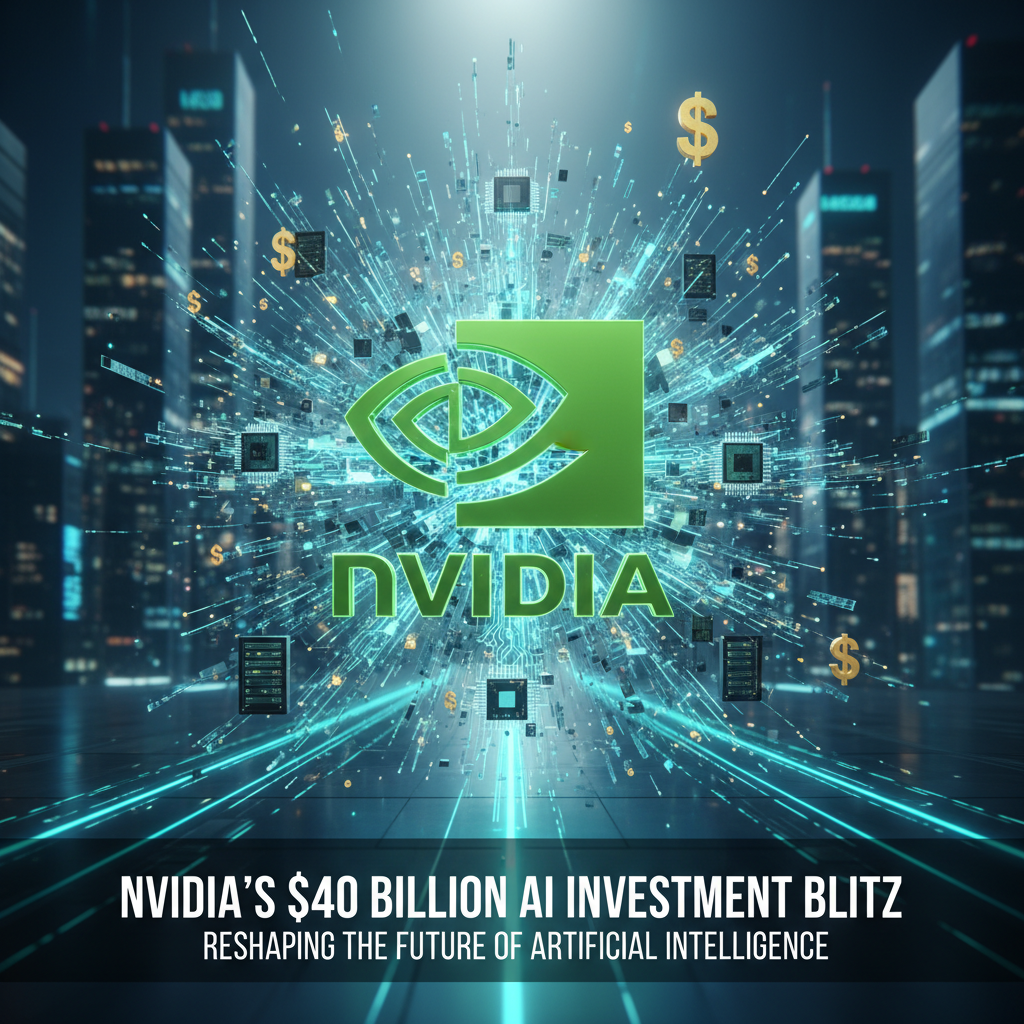
The tech world is abuzz, and for good reason. Graphics processing unit (GPU) giant Nvidia, already a dominant force in the AI hardware landscape, has made an unprecedented move: committing an astonishing $40 billion to equity AI deals this year alone. This staggering sum, highlighted by recent reports and confirmed by market analysts, signals a profound strategic pivot, solidifying Nvidia’s ambition to be more than just a chip manufacturer. It’s a clear declaration of intent to orchestrate and own a significant portion of the entire AI value chain.
This aggressive investment strategy, unfolding rapidly in 2026, positions Nvidia not merely as a supplier, but as a critical enabler and equity partner in the most promising AI ventures globally. It’s a deep dive into the software, services, and application layers, extending their influence far beyond the silicon.
Beyond the GPU: A Strategic Deep Dive into Nvidia’s Investment Thesis
Nvidia’s $40 billion war chest isn’t being deployed on a whim. It’s a calculated maneuver rooted in a multifaceted strategic vision:
Securing the AI Value Chain
- Ensuring Demand: By investing in companies building the next generation of AI applications, Nvidia inherently secures future demand for its high-performance GPUs, which are indispensable for training and deploying complex AI models, especially large language models (LLMs).
- Gaining Insights: Equity stakes provide Nvidia with invaluable early access and insight into emerging AI technologies, application trends, and customer pain points. This intelligence can then feed back into their hardware and software development cycles.
- Building an Ecosystem: These investments help foster a ‘Nvidia-first’ ecosystem, where portfolio companies are incentivized to build on Nvidia’s CUDA platform, TensorRT, and other proprietary tools, further entrenching its technological lead.
Diversifying Revenue Streams and Influence
- Moving Up the Stack: While hardware sales remain core, these equity deals allow Nvidia to capture value from the higher-margin software and services layers of the AI industry.
- Reducing Dependency: It’s a strategic move to diversify revenue away from purely hardware sales cycles, mitigating risks associated with cyclical demand or increased competition in chip manufacturing.
- End-to-End AI Solutions: Nvidia is positioning itself as an integrated AI solutions provider, capable of offering everything from foundational silicon to highly specialized AI applications through its network of portfolio companies.
Fueling Innovation and Market Expansion
- Accelerating Research: Direct investments can fast-track cutting-edge AI research and product development within promising startups, bringing new capabilities to market faster.
- Broadening Adoption: By supporting diverse AI applications across various industries – from healthcare and finance to robotics and autonomous vehicles – Nvidia is actively expanding the overall AI market, creating more opportunities for its core business.
Where is the $40 Billion Going? Target Sectors and Emerging Trends
While specific deals remain under wraps until official announcements, the sheer scale of the investment suggests a broad, yet targeted, approach across key AI frontiers:
- Generative AI & Large Language Models (LLMs): Unsurprisingly, a significant portion is likely flowing into companies pushing the boundaries of generative AI, developing new LLMs, multimodal AI, and specialized generative applications that require immense computational power.
- Enterprise AI Solutions: Investments in companies developing vertical-specific AI solutions for sectors like healthcare (drug discovery, diagnostics), finance (fraud detection, algorithmic trading), and manufacturing (predictive maintenance, robotics automation).
- AI Infrastructure & Software: Beyond foundational models, Nvidia is likely investing in developers of AI development platforms, MLOps tools, data management solutions for AI, and specialized software to optimize AI workloads.
- Robotics & Autonomous Systems: Long-term strategic bets on companies innovating in robotics, autonomous vehicles, and intelligent automation, all of which are heavily reliant on advanced AI and robust processing capabilities.
The Ripple Effect: What This Means for the AI Ecosystem
Nvidia’s aggressive investment spree will send shockwaves throughout the AI landscape:
- For Startups: While it presents unprecedented funding opportunities and validation for AI ventures, it also raises questions about corporate influence and the potential for increased competition from Nvidia-backed entities.
- For Competitors: This move puts immense pressure on rivals like Intel, AMD, Google, Microsoft, and Amazon, who are all vying for dominance in various segments of the AI market. Nvidia’s equity plays could pre-empt competitive advancements or solidify its ecosystem.
- For the Market: Expect accelerated innovation, potential consolidation, and a new benchmark for AI investment. This move signifies the immense capital flowing into AI and the high stakes involved in shaping its future.
- Nvidia’s Evolving Identity: The company is rapidly transforming from a hardware giant into an AI ecosystem orchestrator, a venture capital powerhouse, and a full-stack AI platform provider.
Jensen Huang’s Vision: Building the AI Operating System of the World
This monumental investment strategy aligns perfectly with CEO Jensen Huang’s long-articulated vision. Huang has consistently emphasized that Nvidia is not just selling chips; they are building the foundational infrastructure and an operating system for the next industrial revolution driven by AI. The $40 billion commitment is a tangible demonstration of this vision, illustrating a concerted effort to weave Nvidia’s technology into the fabric of every significant AI innovation.
Nvidia’s Bold Leap: A New Era of AI Dominance
Nvidia’s commitment of $40 billion to equity AI deals this year is a defining moment for the company and the broader technology sector. It marks a decisive step in their evolution from a hardware leader to an all-encompassing AI powerhouse. By strategically investing across the AI spectrum, Nvidia is not just participating in the future of AI; it’s actively shaping it, ensuring its technology remains at the core of every significant advancement.
The coming years will undoubtedly reveal the full impact of this audacious strategy, but one thing is clear: Nvidia is playing the long game, and their moves are setting a new standard for ambition in the age of artificial intelligence.
What are your thoughts on Nvidia’s aggressive strategy? How do you think this will reshape the AI landscape?
Leave a Reply