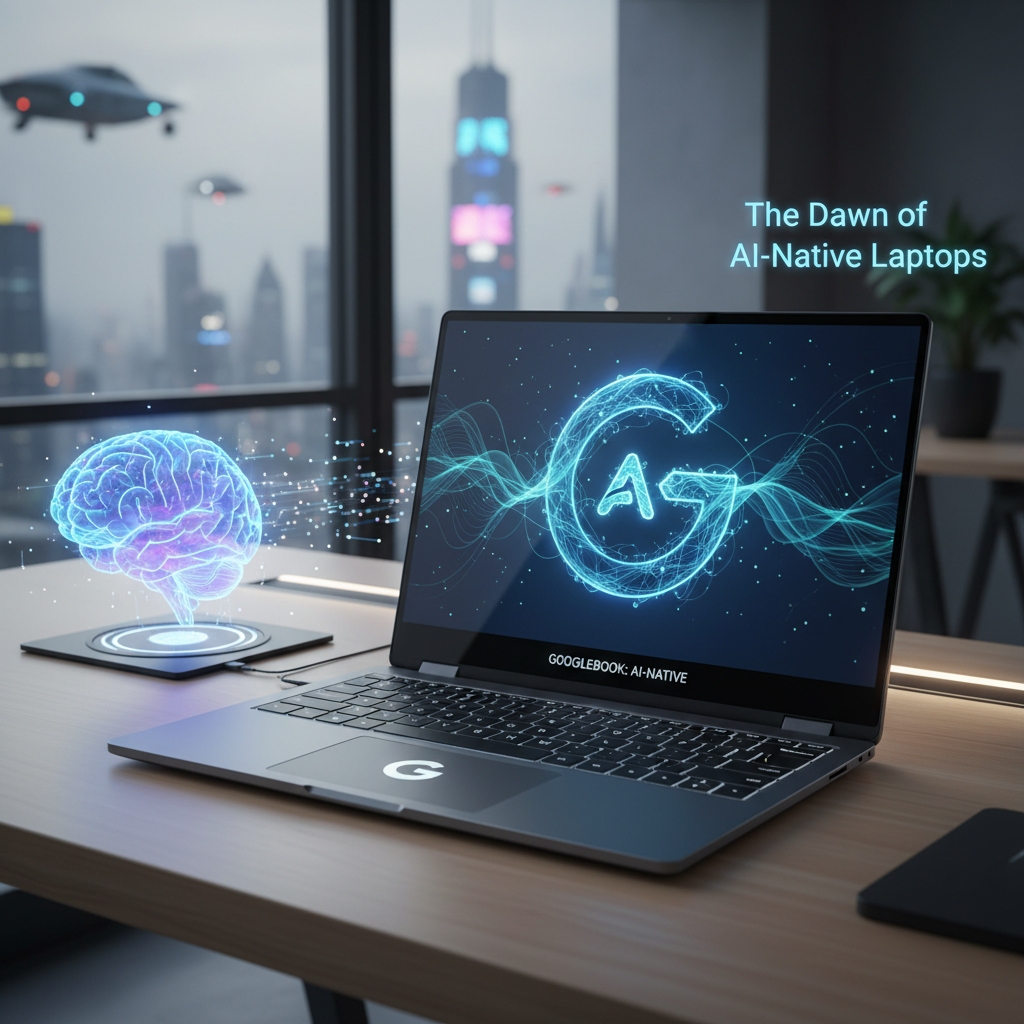
The future of personal computing officially arrived today, May 12, 2026, as Google pulled back the curtain on its highly anticipated new hardware line: Googlebook. Heralded as the world’s first truly AI-native laptops, this groundbreaking series promises to fundamentally reshape how we interact with our devices, moving beyond mere AI ‘enhancements’ to deliver a computing experience built from the ground up for artificial intelligence.
For years, we’ve seen AI features slowly integrate into our operating systems and applications. But Googlebook isn’t just an AI-powered laptop; it’s an AI-native one. This distinction is crucial, signifying a complete architectural rethinking designed to unlock unprecedented on-device AI capabilities.
What Does ‘AI-Native’ Really Mean?
At the heart of the Googlebook philosophy is the concept of deep integration. Unlike traditional laptops where AI tasks might be offloaded to cloud servers or run opportunistically on general-purpose CPUs/GPUs, Googlebook features a dedicated, powerful Tensor Processing Unit (TPU)—likely a custom-designed variant of Google’s renowned AI accelerator chips—working in concert with next-generation processors. This allows for:
- Unparalleled On-Device AI Performance: Complex machine learning models, like large language models (LLMs) and advanced image processing, can run directly on the device with minimal latency, improving speed and responsiveness.
- Enhanced Privacy and Security: Processing sensitive data locally reduces the need to send it to the cloud, offering a significant boost in user privacy and data security.
- Always-On, Context-Aware Intelligence: Googlebook is designed to understand your workflow, preferences, and even emotional cues in real-time, providing proactive assistance without constant internet reliance.
- Optimized Power Efficiency: The dedicated TPU is purpose-built for AI tasks, executing them far more efficiently than general-purpose silicon, leading to remarkable battery life even with intensive AI workloads.
Key Features and Capabilities of Googlebook
While full specifications are still emerging, Google highlighted several transformative features that make Googlebook a game-changer:
1. Gemini Integration at its Core
Googlebook isn’t just running AI; it’s practically breathing it. Google’s advanced multimodal AI, Gemini, is deeply embedded into the operating system (a specialized version of ChromeOS or an entirely new OS optimized for AI). Imagine a personal AI assistant that goes far beyond current chatbots:
- Real-time Creative Co-pilot: Generate images, videos, and music instantly based on natural language prompts. Edit complex multimedia projects with AI guidance.
- Intelligent Productivity Suite: Summarize long documents, draft emails, prepare presentations, and even debug code with Gemini’s assistance, all happening locally.
- Adaptive Learning: The system learns from your usage patterns, anticipating needs, recommending optimal workflows, and tailoring the user experience to an unprecedented degree.
2. Revolutionary AI-Powered Applications
Googlebook will launch with a suite of new applications specifically designed to leverage its AI-native architecture. Expect breakthroughs in:
- Hyper-Personalized Content Creation: Tools that can generate bespoke content, from stories to marketing copy, with an understanding of your unique style and audience.
- Advanced Communication: Real-time language translation with nuanced contextual understanding, intelligent noise cancellation that adapts to environments, and AI-driven meeting summaries.
- Immersive Entertainment: AI-upscaled media, dynamic game environments that adapt to player actions in real-time, and personalized content discovery.
3. Seamless Google Ecosystem Experience
Leveraging Google’s vast ecosystem, Googlebook will offer unparalleled integration with Google Workspace, Android devices, and cloud services. Your Googlebook will truly be the central hub of your digital life, with AI ensuring continuity across all your platforms.
The Impact: A New Era of Personal Computing
Googlebook isn’t just another laptop; it’s a statement. It signals Google’s commitment to hardware innovation and its vision for a future where AI isn’t an add-on, but the fundamental operating principle of our devices. This launch will undoubtedly ignite a fierce competition in the PC market, pushing rivals like Apple, Microsoft, and Intel/AMD to accelerate their own AI-native strategies.
For consumers, Googlebook promises to redefine productivity, creativity, and digital interaction. It’s a leap towards a more intuitive, intelligent, and personalized computing experience that truly feels like the future.
Pricing and Availability
While specific models and configurations are yet to be fully detailed, Google indicated a tiered pricing structure to make Googlebook accessible to a broad audience, with pre-orders beginning in late Q3 2026 and general availability expected by holiday season 2026.
Looking Ahead
The unveiling of Googlebook marks a pivotal moment in technology. It’s not just about faster processors or better screens; it’s about fundamentally changing the relationship between user and machine. As we enter the era of AI-native computing, Googlebook appears poised to lead the charge, setting a new benchmark for what we can expect from our personal devices.
What are your thoughts on Googlebook and the rise of AI-native laptops? Share your predictions in the comments below!
Leave a Reply