

At CES 2026 in Las Vegas, display technology quietly took a sharp turn toward something lighter, smarter, and far more practical. Instead of yet another bulky headset, ASUS and its gaming brand Republic of Gamers teamed up with Xreal to unveil a new class of wearable display: the ROG Xreal R1 Gaming Glasses.
These smart glasses promise a 171-inch virtual screen, ultra-smooth 240Hz refresh rate, and a form factor light enough for long gaming sessions. At CES 2026, where exaggeration often comes standard, this announcement stood out for one reason—it felt genuinely usable.
CES 2026 ASUS Smart Glasses 171-Inch Virtual Screen: The Big Idea
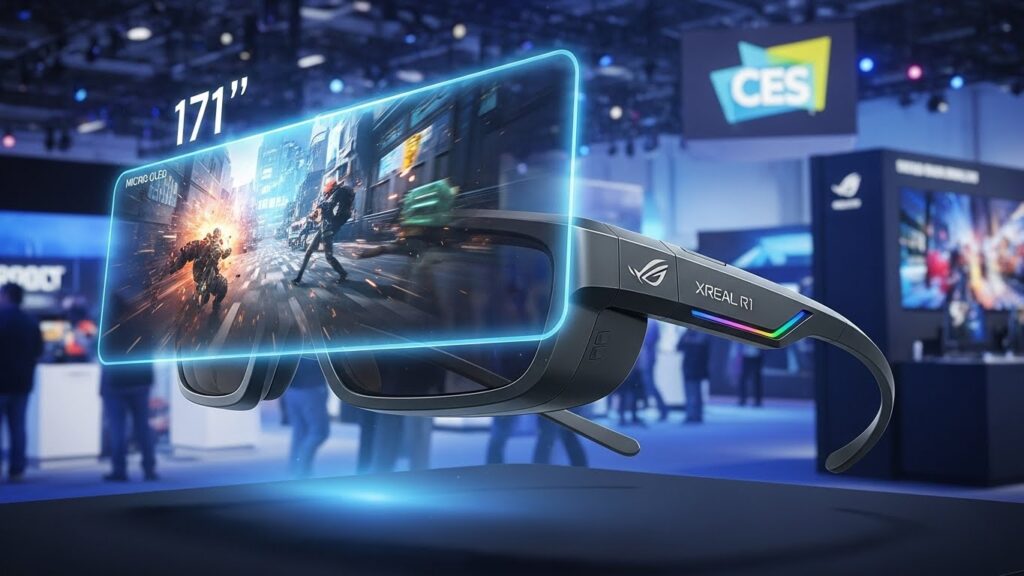
The core idea behind the ROG Xreal R1 is simple: give users a massive screen without strapping a heavy device to their face. Instead of full virtual immersion, these glasses project a flat, cinema-style display that floats naturally in front of the eyes.
ASUS claims the virtual screen feels like a 171-inch display viewed from four meters away. That sounds dramatic, but the experience mirrors something people already understand—a giant TV, not a virtual world.
This design choice matters. Many users love VR demos but struggle with comfort during long sessions. ASUS clearly asked a practical question: what if the screen stayed big, but the hardware stayed small?

Why ASUS Skipped Full VR for Something Smarter
Virtual reality headsets surround your vision. They also surround your face with weight, heat, and cables. Over time, fatigue kicks in. Analysts have flagged this issue for years, especially for gaming sessions that stretch beyond an hour.
The ROG Xreal R1 avoids that trap.
Instead of blocking the real world, the glasses layer a large display over reality. Users remain aware of their surroundings. The experience feels closer to sitting in front of a massive monitor than entering a digital universe.
This approach fits everyday use far better. You can game, watch videos, or work without feeling disconnected—or dizzy.
Display Technology: Micro-OLED Done Right
Under the hood, ASUS did not cut corners.
The ROG Xreal R1 uses:
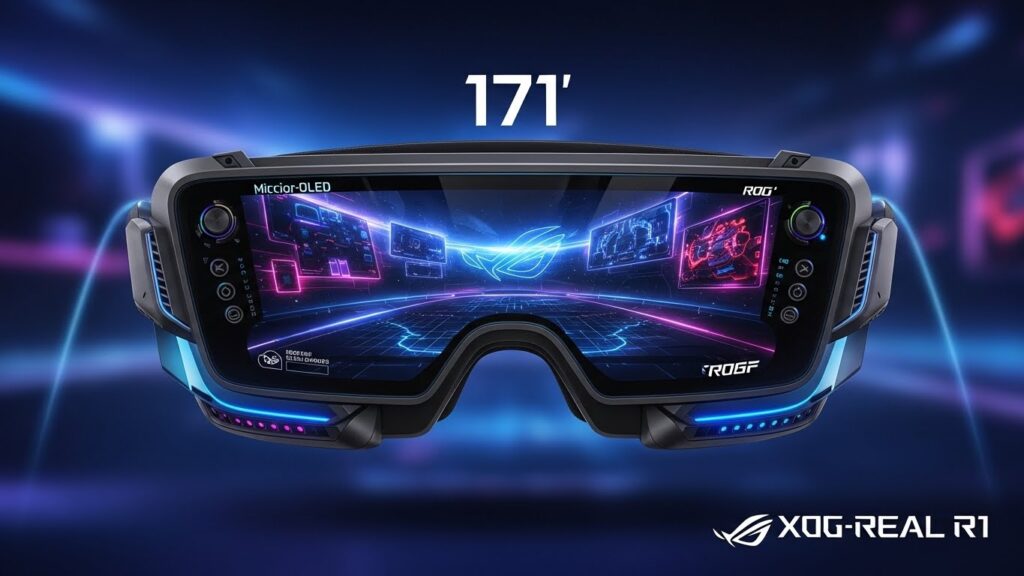
- Dual 0.55-inch Sony micro-OLED panels
- 1920 × 1080 Full HD resolution per eye
- 240Hz refresh rate
- Around 2 ms motion-to-photon latency
That refresh rate matters. Competitive gamers notice every dropped frame. At 240Hz, motion looks fluid and sharp, even in fast shooters or racing games. Earlier wearable displays struggled here. The R1 does not.
The glasses offer a 57-degree field of view, which ASUS translates into the 171-inch virtual screen experience. It feels large without overwhelming peripheral vision.
Anchor Mode vs Follow Mode: Control Matters
One standout feature is Anchor Mode.
Anchor Mode locks the virtual screen in space. Turn your head, and the screen stays put—just like a real monitor. This feels natural during long sessions.
Users can also switch to a mode where the screen follows their gaze. That flexibility helps in tight spaces like airplanes or trains.
ASUS clearly thought about real-world scenarios, not just showroom demos.
Connectivity That Actually Makes Sense
A great display means nothing if setup feels painful. ASUS addressed this directly.
The ROG Xreal R1 connects through the ROG Control Dock, which includes:
- HDMI 2.0
- DisplayPort 1.4
- USB-C support
Users can plug the glasses into:
- Gaming PCs
- Consoles
- Handhelds like the ROG Ally
- Laptops and compatible smartphones
No software installation required. Plug in, wear the glasses, and the screen appears.
That simplicity turns the R1 into what ASUS calls a “big screen anywhere” device. Couch, hotel room, train seat—it all works.
Audio and Lenses: Small Details, Big Comfort
ASUS added Sound by Bose spatial audio directly into the glasses. The sound feels directional and immersive without sealing your ears. You hear the game and the room around you.
The electrochromic lenses adjust transparency automatically. In bright environments, the lenses darken. In dim rooms, they clear up. Users don’t need to fiddle with settings mid-session.
These details reduce friction, which often decides whether a product becomes daily-use—or drawer-use.
The “James Bond” Factor (Yes, It Matters)
Let’s be honest. Wearing smart glasses that project a massive screen feels cool.
Unlike VR headsets, the R1 looks like eyewear, not equipment. That matters socially and psychologically. You don’t feel locked into a device. You feel augmented.
ASUS does not ask users to change habits. You still consume flat video, games, and apps. The glasses simply replace the physical monitor.
That familiarity lowers the barrier to adoption.
Beyond Gaming: A Hint at Broader Use
Although ASUS markets the R1 toward gamers, the implications stretch further.
Because the glasses display standard flat content:
- Multiple users can view the same content individually
- Presentations don’t need projectors
- Training sessions can use personal screens
In education or enterprise settings, lightweight display glasses could replace bulky hardware. Software will decide how far this goes, but the hardware already fits existing workflows.
That compatibility gives the R1 a stronger future than many niche VR products.
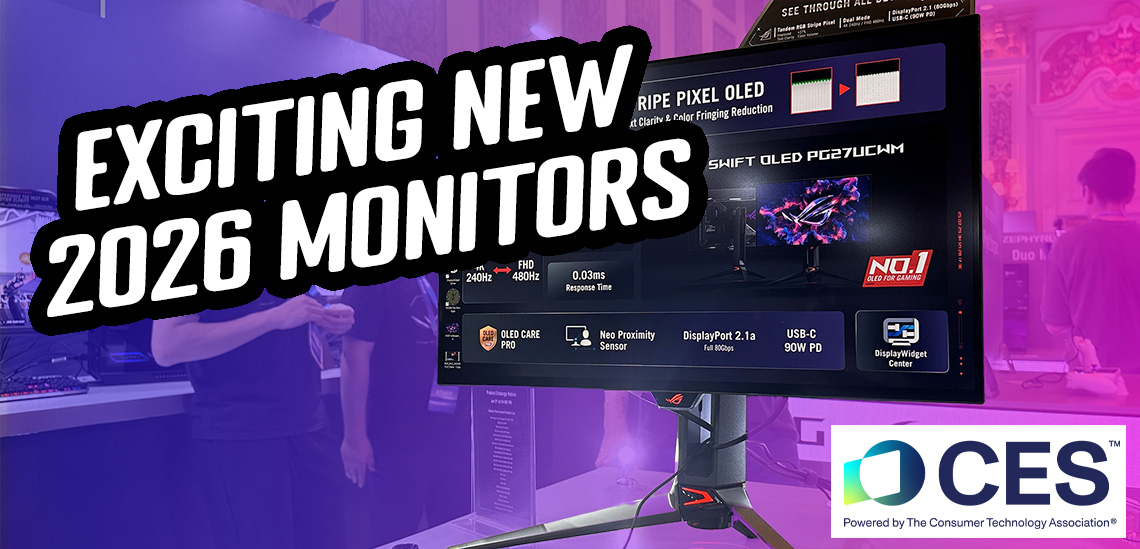
ASUS Also Unveils Next-Gen OLED Displays at CES 2026
The smart glasses weren’t alone.
At CES 2026, ASUS and ROG showcased:
- ROG Swift OLED PG34WCDN with RGB QD-OLED
- ROG Swift OLED PG27UCWM using Tandem RGB OLED
- Dual-mode monitors that switch between resolution and refresh priorities
- ProArt Display OLED PA279CDV with 4K, 99% DCI-P3, and 120Hz
- New ZenScreen portable monitors for hybrid work
These announcements reinforce ASUS’s position as a global leader in OLED displays for gaming and creation.
How This Compares to VR Headsets
VR still excels at full immersion. No argument there.
But for daily use—gaming, streaming, productivity—the ROG Xreal R1 feels more practical. It avoids the physical strain that keeps many VR headsets on shelves.
Think of it this way:
- VR replaces reality
- R1 enhances reality
That distinction matters when sessions last hours, not minutes.

CES 2026 ASUS Smart Glasses 171-Inch Virtual Screen: A New Direction
The ROG Xreal R1 suggests a shift in how we think about displays. Instead of bigger monitors or heavier headsets, the future may lean toward personal, wearable screens that adapt to daily life.
ASUS did not chase shock value. It chased comfort, performance, and familiarity.
That strategy feels refreshingly grounded.
Final Thoughts
The CES 2026 ASUS smart glasses with 171-inch virtual screen don’t try to replace everything. They replace one thing very well—the monitor.
By combining high refresh rates, lightweight design, and simple connectivity, ASUS delivered something rare at CES: a product that feels ready, not experimental.
If VR was the dream of total immersion, the ROG Xreal R1 feels like the reality check we needed.
Sometimes, the future does not strap itself to your face.
Sometimes, it just floats quietly in front of your eyes.
Trusted Sources
- ASUS & ROG official CES 2026 press release
- Xreal product documentation
- CES exhibitor briefings