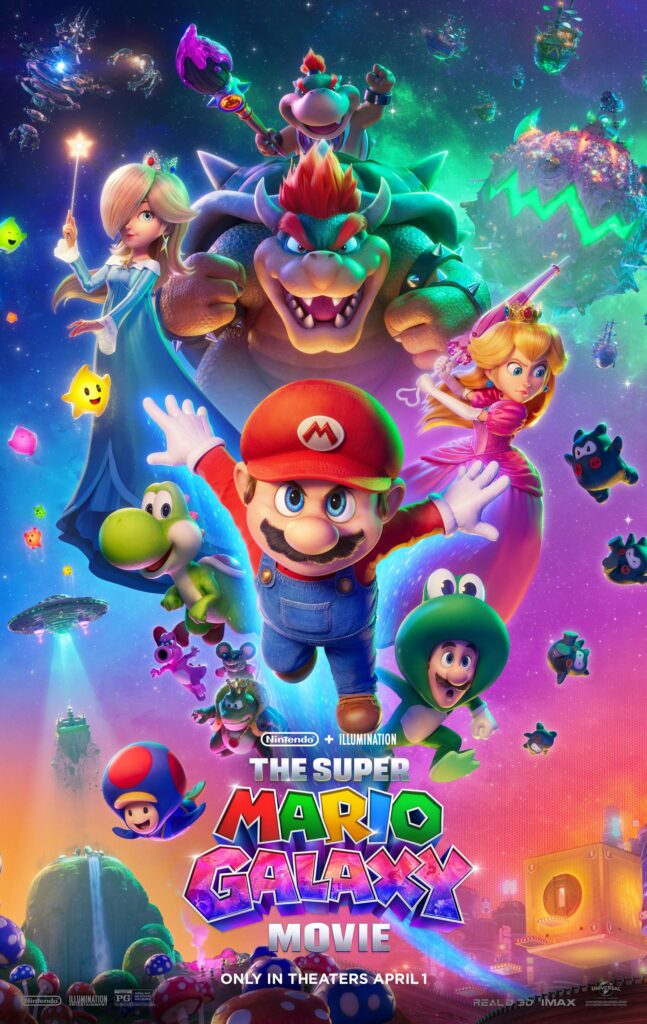
The Super Mario Galaxy Movie Review starts with a simple observation: the film never slows down. It jumps from action to action, joke to joke, and reference to reference. Viewers stay entertained, but they rarely get a moment to breathe.
That speed defines the entire experience.
The movie looks fantastic. The animation shines. The soundtrack feels energetic. Yet the story struggles to keep up with the spectacle. Think of it like a roller coaster with incredible visuals but very little scenery to remember afterward.
This sequel aims to go bigger than its predecessor. It adds more characters, more locations, and more Easter eggs. Unfortunately, bigger does not always mean better. Sometimes it just means busier.
And busy storytelling can feel exhausting.
The Legacy Behind the Franchise
A Character That Built an Entertainment Empire
Mario stands as one of the most recognizable characters in entertainment history. Since his debut in the early 1980s, he has appeared in dozens of games, television shows, and films. Few fictional characters enjoy that level of cultural reach.
The first modern Mario movie proved something important. Video game adaptations could succeed when they respect the source material and focus on fun storytelling.
That success raised expectations for the sequel.
Fans expected stronger world-building, deeper character arcs, and a story that matched the visual scale of the galaxy setting. Instead, the film delivers constant movement without emotional momentum.
It feels impressive in the moment, but forgettable afterward.
Visuals That Carry the Film
Animation Quality Reaches a New Level
Let’s give credit where it belongs. The animation team did exceptional work.
Every scene bursts with color. Galaxies glow with vibrant detail. Characters move smoothly across imaginative landscapes. The film creates a playful cosmic environment that feels alive and energetic.
Modern animation technology allows studios to push visual boundaries. This movie uses that technology confidently. From swirling star systems to floating islands, the visuals consistently impress.
Children will love the bright colors and fast action. Adults will appreciate the technical craftsmanship.
However, visuals alone cannot sustain a full-length story.
Movies need emotional structure, not just visual spectacle.
The Story Problem
Speed Replaces Depth
The biggest issue appears within the first twenty minutes. The story moves too quickly.
Scenes change rapidly. Characters solve problems instantly. Emotional moments arrive and disappear before they develop fully.
Good storytelling requires rhythm. It needs quiet moments between action sequences. Those pauses allow audiences to connect with characters and understand their motivations.
This film rarely provides those pauses.
Instead, it rushes forward as if afraid of losing attention. Ironically, that constant speed creates the opposite effect. Viewers feel overwhelmed rather than engaged.
Easter Eggs Everywhere
Nostalgia Becomes a Distraction
Fans of the Mario franchise will recognize countless references throughout the movie. Familiar items, classic enemies, and iconic locations appear almost nonstop.
At first, these references feel fun.
Later, they feel distracting.
The film relies heavily on nostalgia instead of original storytelling. Each reference generates a quick smile, but it rarely advances the plot. Over time, the constant callbacks start to feel like filler content.
Nostalgia works best when used carefully.
Too much nostalgia feels like a shortcut.
Characters Deserve More Attention
Personality Without Growth
The voice cast delivers strong performances. Actors bring humor and energy to their roles. Dialogue feels lively and playful.
Yet the characters themselves do not change.
They face challenges, but they rarely learn lessons. They encounter danger, but they show little emotional growth. Without character development, the story feels flat.
Audiences connect with characters who evolve.
Growth creates meaning.
And meaning creates memorable stories.
Humor That Moves Too Fast
Comedy Needs Timing
Comedy plays a major role in the film’s tone. Writers fill the script with jokes, visual gags, and playful dialogue.
Some jokes land perfectly.
Others disappear before audiences can react.
Timing matters in comedy. A well-paced joke allows viewers to anticipate the punchline. A rushed joke feels unfinished.
This movie prioritizes speed over timing.
That choice weakens many comedic moments.
Audience Expectations Were Extremely High
Success Created Pressure
The previous Mario film achieved enormous commercial success. It attracted families, gamers, and casual moviegoers worldwide. Naturally, expectations for the sequel increased dramatically.
Studios often respond to success by expanding everything.
More action.
More characters.
More spectacle.
However, expansion introduces complexity. Complexity demands stronger storytelling discipline. Without that discipline, the narrative becomes crowded.
This sequel demonstrates that risk clearly.
It tries to deliver everything at once.
And in doing so, it loses focus.
The Business Reality Behind Big Sequels
Why Studios Choose Spectacle
Large animated films require massive budgets. Studios invest heavily in technology, talent, and marketing. They expect strong returns on that investment.
Spectacle helps attract audiences quickly.
Bright visuals sell tickets. Familiar characters boost merchandise sales. Fast pacing keeps younger viewers engaged.
These strategies make financial sense.
But financial success does not guarantee emotional satisfaction. Audiences remember stories more than visual effects. A powerful narrative creates long-term loyalty.
Studios sometimes forget that truth.
What Viewers Are Saying
Mixed Reactions Across Audiences
Early audience reactions reveal a clear pattern.
Viewers praise the animation quality.
They enjoy the colorful environments.
They question the storytelling depth.
Many parents describe the film as entertaining but exhausting. Children enjoy the action, while adults wish for stronger character moments.
Critics often use similar language.
They admire the visuals but criticize the pacing.
That balance explains the film’s reputation: fun but forgettable.
Lessons the Franchise Can Learn
Story Still Matters Most
Technology continues to improve. Animation becomes more detailed every year. Visual effects grow more impressive with each release.
Yet one rule remains unchanged.
Storytelling drives emotional connection.
A simple, well-paced narrative often outperforms a complex, fast-moving one. Audiences respond to relatable characters, clear motivations, and meaningful challenges.
Future installments could benefit from slowing down slightly.
Give characters time to grow.
Give audiences time to feel.
That approach would strengthen the entire franchise.
Final Verdict
The Super Mario Galaxy Movie Review ends with a balanced conclusion.
The film delivers stunning visuals, energetic humor, and plenty of nostalgic moments. Families will enjoy the colorful adventure. Fans will appreciate the familiar references.
However, the story lacks depth and emotional weight.
The movie moves quickly.
It looks beautiful.
It rarely leaves a lasting impression.
In the end, the sequel feels like fireworks — exciting while they last, but gone moments later.
Read Rec Room Shutting Down: Why a $3.5B Social Gaming Giant Couldn’t Find Profit