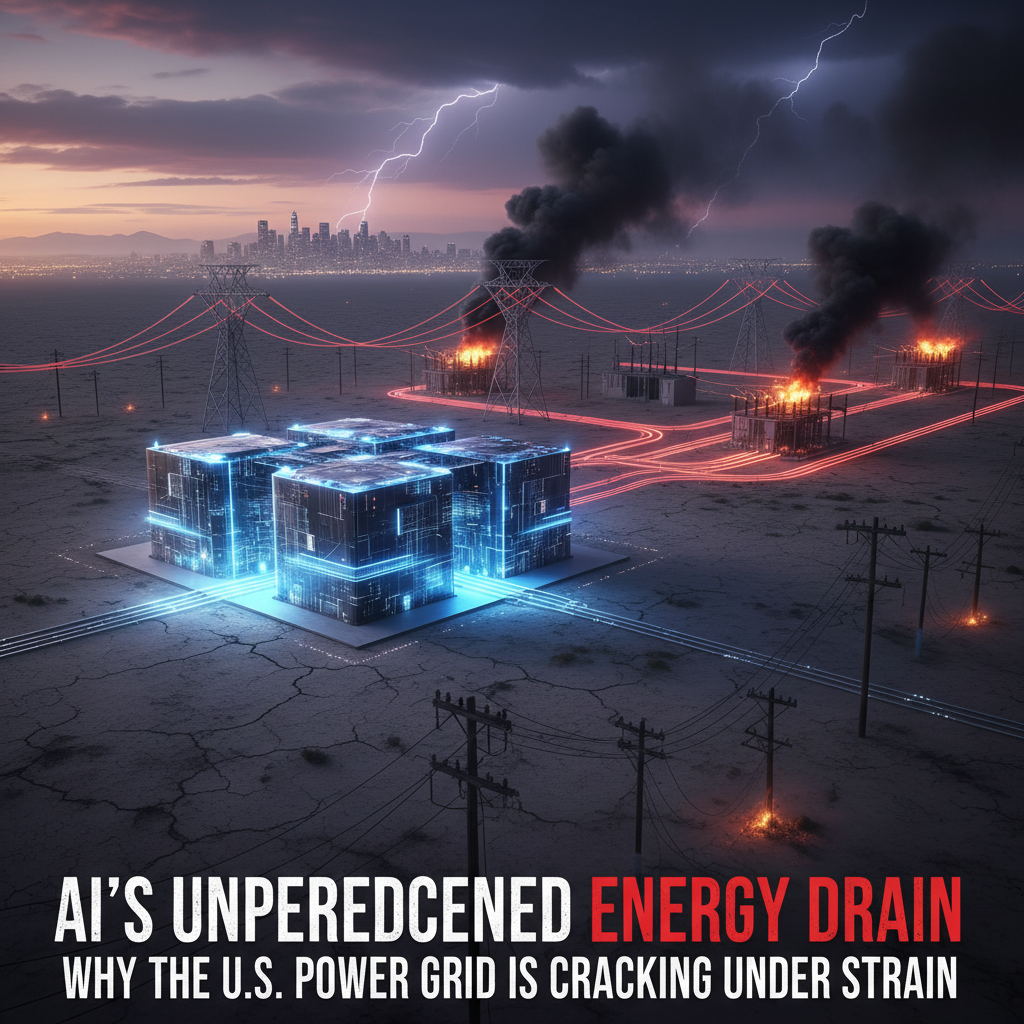
The year is 2026, and the promise of artificial intelligence continues to reshape industries, societies, and daily lives. Yet, beneath the gleaming facade of innovation, a growing crisis looms: AI’s insatiable thirst for power is pushing the United States’ largest electricity grids to their breaking point. From Silicon Valley to the sprawling data centers of Texas, the exponential growth in computing demand is causing an unprecedented strain, leading to higher costs, reliability concerns, and a collective sigh of discontent from consumers, businesses, and utility providers alike. The party, it seems, is over – and no one is happy.
AI’s Voracious Appetite: The New Energy Kingpin
It’s no secret that AI, particularly the large language models (LLMs) and generative AI systems dominating headlines, requires immense computational power. What many don’t realize is the sheer scale of the electricity needed to train these models and keep them running. Each query to an AI chatbot, every generated image, and every complex data analysis contributes to a cumulative energy demand that is spiraling out of control.
- Data Center Boom: Tech giants and startups are rapidly expanding data center infrastructure, purpose-built to house thousands of high-powered GPUs. These facilities are not just consuming energy for processing; they also require massive amounts of power for cooling, security, and networking.
- GPU-Intensive Workloads: Unlike traditional CPUs, GPUs, essential for parallel processing in AI, consume significantly more power. As AI models grow larger and more complex, so does their energy footprint.
- Continuous Operation: AI systems don’t sleep. Training runs can last weeks or months, consuming vast amounts of electricity continuously, followed by 24/7 inference demands.
Projections for AI’s energy consumption are staggering, threatening to outstrip the supply capabilities of even the most robust grids. This isn’t just about turning on a light switch; it’s about powering entire digital cities.
The Grid’s Ticking Time Bomb: A System Under Duress
The U.S. power grid, a complex network of three major interconnections (Eastern, Western, and ERCOT), was largely designed decades ago for predictable industrial and residential loads. It was not built to withstand the sudden, massive, and geographically concentrated demands of the AI revolution.
The Electric Reliability Council of Texas (ERCOT) grid, serving a vast and rapidly growing portion of Texas, offers a stark preview of the challenges. Already strained by extreme weather events and rapid population growth, ERCOT is now grappling with a deluge of requests for new data center connections. Similar pressures are building across other major grids.
- Aging Infrastructure: Much of the grid’s transmission and distribution infrastructure is old and in dire need of modernization. It lacks the capacity to efficiently move the increasing amounts of power required by these energy-hungry data centers.
- Peak Demand Management: AI’s constant load adds a new layer of complexity to peak demand management, making it harder for utilities to balance supply and demand without resorting to costly energy sources or even rolling blackouts.
- Integration Challenges: While renewable energy sources like solar and wind are growing, their intermittent nature makes them difficult to integrate seamlessly on a massive scale without significant battery storage solutions, which themselves are energy-intensive to produce and deploy.
The consequences of this strain are multifaceted, impacting everyone from the smallest household to the largest corporation.
Who’s Feeling the Heat? Stakeholders Sound the Alarm
The growing power crisis ignited by AI’s demands is creating widespread dissatisfaction across various sectors:
- Consumers: Higher electricity bills are an immediate concern as utilities pass on increased costs for infrastructure upgrades and more expensive peaker plants. The threat of blackouts during peak demand periods is also a tangible fear.
- Businesses & Industry: Beyond data centers, other industries face escalating energy costs, impacting their bottom line and competitiveness. Unreliable power supplies can halt operations, leading to significant financial losses.
- Utility Providers & Grid Operators: Caught between surging demand and regulatory pressures, utilities are struggling to invest in infrastructure fast enough. Planning for future capacity has become a monumental task, fraught with uncertainty and escalating capital expenditures.
- Policymakers & Regulators: Faced with constituent complaints and grid reliability concerns, governments are under pressure to devise new policies, incentives, and regulations for energy efficiency, renewable integration, and data center siting.
- Environmental Advocates: The surge in demand often means a reliance on dirtier, fossil-fuel-based power generation to ensure stability, undermining efforts to transition to a greener energy future.
Charting a Sustainable Path: Solutions for the AI Energy Crisis
Addressing this complex challenge requires a multi-pronged approach involving technological innovation, policy changes, and collaborative efforts:
1. Accelerating Grid Modernization & Expansion
Significant investment is needed to upgrade aging infrastructure, build new transmission lines, and implement smart grid technologies that can more efficiently manage and distribute power. This includes robust energy storage solutions like utility-scale batteries.
2. Prioritizing Renewable Energy for Data Centers
Tech companies are increasingly exploring direct investments in solar, wind, and geothermal projects to power their data centers. Policy incentives can further accelerate this shift, making green energy not just an option but a standard for large-scale energy consumers.
3. Developing Energy-Efficient AI
The AI community itself must innovate. Research into ‘green AI’ aims to develop more energy-efficient algorithms, hardware (e.g., specialized AI chips), and training methods that achieve similar results with less power consumption.
4. Demand-Side Management & Siting Strategies
Exploring ways to shift AI workloads to off-peak hours or to regions with abundant, clean, and cheaper energy can help balance the load. Strategic siting of new data centers in areas with existing surplus clean energy or robust grid capacity is crucial.
5. Policy & Regulatory Frameworks
Governments can play a pivotal role by offering tax breaks for energy-efficient data centers, mandating renewable energy procurement, and streamlining permitting processes for new grid infrastructure and renewable projects.
The Future is Now: Building a Resilient AI-Powered Grid
The strain on the U.S. power grid from AI is not a distant threat; it’s a present reality. The collective unhappiness stems from a clear recognition that our technological advancement is outstripping our foundational infrastructure. The path forward demands urgent action, collaboration, and a commitment to innovation across all sectors.
As AI continues its relentless march of progress, ensuring a resilient, sustainable, and powerful grid is paramount. Without it, the very innovations we celebrate today could plunge us into an energy crisis that halts progress and dims the lights on a digitally driven future.
Conclusion
The intricate dance between technological advancement and infrastructure readiness has reached a critical juncture. The U.S. power grid, a silent workhorse of modern society, is sounding the alarm. Ignoring the energy demands of AI is no longer an option. By embracing comprehensive strategies, from grid modernization and renewable energy integration to AI efficiency and thoughtful policy, we can ensure that the promise of artificial intelligence doesn’t come at the cost of grid reliability and environmental sustainability. The time for proactive solutions is now – before the lights go out on the AI revolution.
Leave a Reply