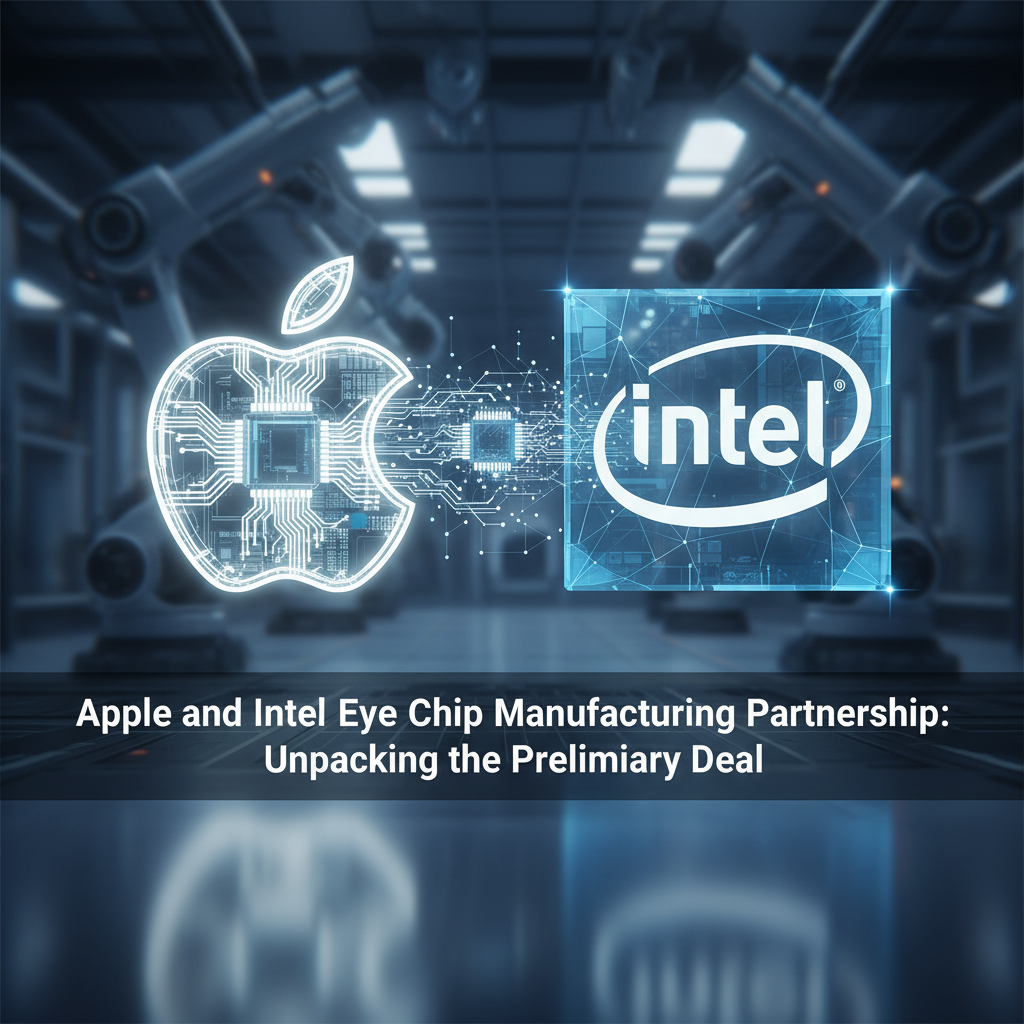
In a development that could reshape the semiconductor landscape, tech giants Apple and Intel are reportedly nearing a preliminary agreement for Intel to manufacture chips for Apple. This news, initially broken by The Wall Street Journal, signals a potentially groundbreaking shift in strategic alliances and supply chain dynamics within the fiercely competitive technology industry. While still in its early stages, this proposed partnership raises critical questions about Apple’s manufacturing strategy, Intel’s foundry ambitions, and the broader implications for industry incumbents like TSMC.
A Surprising Reunion: The Preliminary Agreement
The core of the report suggests that Apple, famously known for its proprietary ‘Apple Silicon’ chips designed in-house, is exploring the possibility of utilizing Intel’s manufacturing facilities. This move would mark a significant pivot, considering Apple’s very public divorce from Intel as a CPU supplier for its Mac line, a process completed with the transition to M-series chips. The agreement is described as preliminary, meaning details are still being ironed out, and a final deal is not guaranteed. However, the mere discussion between these two erstwhile rivals highlights a fascinating strategic realignment.
- Intel Foundry Services (IFS): This potential deal is a direct testament to Intel’s aggressive push into the foundry business, led by CEO Pat Gelsinger. IFS aims to become a major player in contract chip manufacturing, offering its advanced process technologies to external customers.
- Diversified Manufacturing: For Apple, the primary driver behind such a deal would likely be to diversify its chip supply chain, moving beyond its near-exclusive reliance on Taiwan Semiconductor Manufacturing Company (TSMC) for advanced chip production.
Why Now? Apple’s Strategic Diversification
Apple’s strategic considerations for engaging with Intel are multifaceted, primarily centered around supply chain resilience and global geopolitical realities:
- Reducing TSMC Dependency: While TSMC remains a world-leader in chip manufacturing, putting all of Apple’s advanced chip eggs in one basket carries inherent risks, especially given the complex global political climate and potential supply chain disruptions.
- Geopolitical Considerations: The global push for more localized and diversified semiconductor manufacturing, driven by national security and economic concerns, makes a partnership with a U.S.-based manufacturer like Intel particularly attractive for Apple.
- Leveraging Intel’s Expansion: Intel is investing billions in new fabs and advanced process technologies. As these come online, they represent an attractive, albeit nascent, alternative for high-volume manufacturing.
This isn’t about Intel designing Apple’s core M-series or A-series processors, but rather about Intel manufacturing them (or other components) according to Apple’s specifications. This distinction is crucial.
Intel’s Foundry Dream: A Major Validation
For Intel, securing an Apple manufacturing contract, even a preliminary one, would be an monumental victory and a profound validation of its ‘IDM 2.0’ strategy and the Intel Foundry Services initiative. Here’s why:
- Credibility Boost: An Apple endorsement would instantly confer immense credibility on IFS, signaling to other potential customers that Intel’s foundry services are competitive and reliable.
- High-Volume Revenue: Apple is one of the largest purchasers of advanced silicon globally. Even a fraction of Apple’s chip orders would translate into significant revenue and economies of scale for Intel’s fabs.
- Technological Prowess: Manufacturing for Apple would push Intel to accelerate its process technology development and ensure it can meet the stringent quality and performance demands of one of the world’s most demanding clients.
Pat Gelsinger has consistently emphasized that Intel’s future involves serving both its own product lines and external foundry customers. An Apple deal would be the crown jewel of this ambition.
The Broader Industry Ripple Effect
Should this preliminary agreement materialize into a full-fledged partnership, its ramifications would be felt across the entire semiconductor ecosystem:
- Impact on TSMC: While TSMC is unlikely to lose Apple as a primary customer overnight, even a partial shift could affect its long-term growth projections and strategic planning. It could also spur TSMC to further diversify its own client base.
- Increased Competition: The entry of a revitalized Intel Foundry Services, backed by a major client like Apple, would intensify competition in the foundry market, potentially leading to better pricing and more innovation.
- Supply Chain Security: This move highlights the ongoing global effort to de-risk and secure critical supply chains, particularly in semiconductors, which are vital for modern economies.
Challenges and the Road Ahead
Despite the excitement, several hurdles remain before this preliminary agreement could become a robust partnership:
- Technological Readiness: Intel needs to prove its manufacturing processes can meet Apple’s rigorous specifications for performance, power efficiency, and yield at competitive costs.
- Intellectual Property: Safeguarding Apple’s highly sensitive intellectual property within Intel’s facilities would require robust agreements and security protocols.
- Volume and Scale: Ramping up to Apple’s massive production volumes is a significant undertaking that requires proven capacity and reliability.
- Final Negotiations: The term ‘preliminary’ suggests that many details, including pricing, timelines, and specific chip types, are still subject to intense negotiation.
Conclusion: A Potential Game-Changer in the Making
The potential chip-making agreement between Apple and Intel represents a fascinating twist in the tech industry narrative. For Apple, it’s a strategic move towards greater supply chain resilience and diversification. For Intel, it’s a critical validation of its ambitious foundry vision. While the path to a definitive partnership is fraught with technical and logistical challenges, the mere contemplation of such a deal underscores a dynamic and evolving semiconductor landscape where old rivalries might give way to new, pragmatic alliances.
The tech world will be watching closely to see if this preliminary handshake blossoms into a foundational deal that could redefine chip manufacturing for years to come. What are your thoughts on this potential collaboration? Share your insights in the comments below!
Leave a Reply