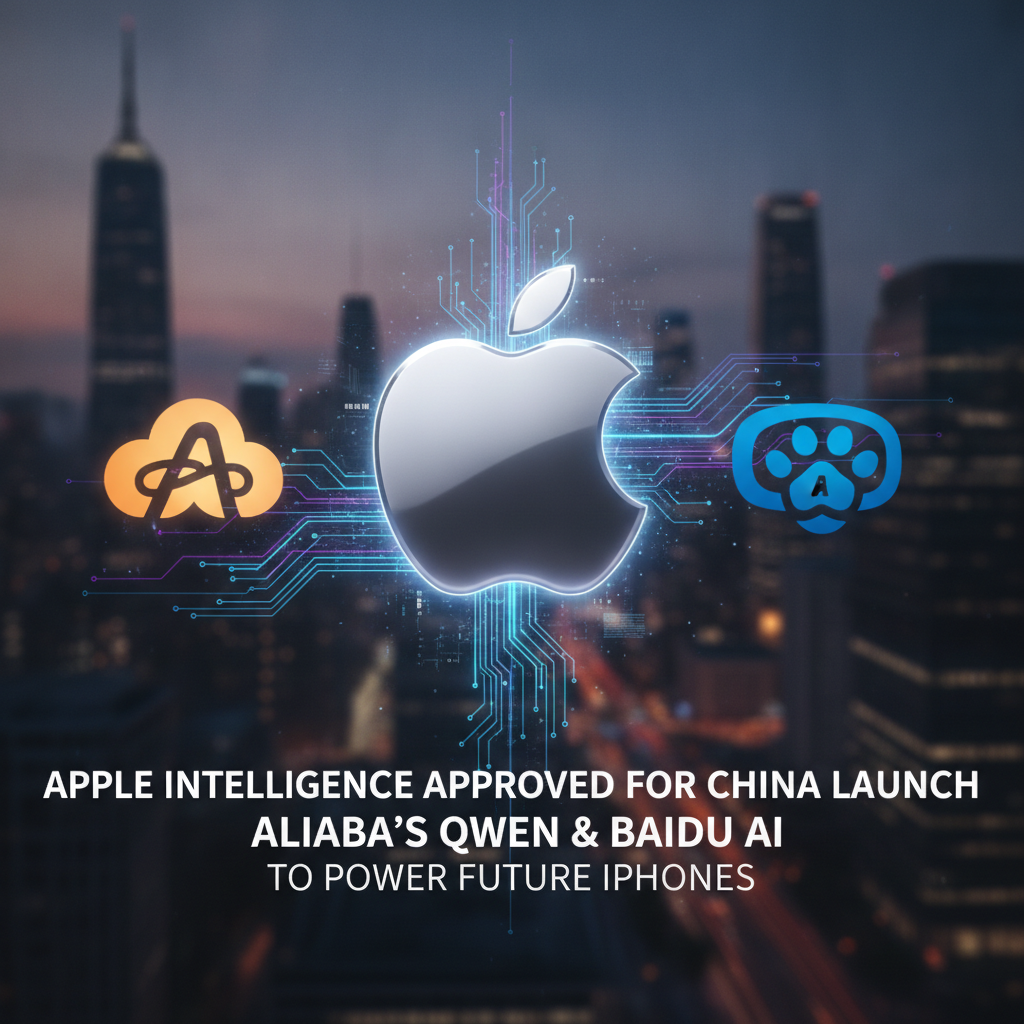
In a monumental development set to reshape the landscape of generative AI in the world’s largest smartphone market, Apple Intelligence has officially received regulatory approval for its highly anticipated launch in China. The Cupertino giant will be integrating its advanced AI capabilities through strategic partnerships with local technology powerhouses, leveraging Alibaba’s cutting-edge Qwen AI model and the extensive AI ecosystem of Baidu.
This landmark approval, slated for mid-2026 according to sources, marks a critical victory for Apple, enabling it to roll out its transformative AI features to millions of iPhone users in China. It’s a testament to Apple’s strategic prowess in navigating complex regulatory environments and forging alliances that respect local compliance and data sovereignty.
A Strategic Alliance for the World’s Most Critical Market
China represents a colossal market for Apple, not just in terms of sales but also for its broader ecosystem of services and devices. However, the introduction of foreign AI technologies faces stringent regulatory hurdles, particularly concerning data processing, content moderation, and national security. The absence of native generative AI capabilities had put Apple at a disadvantage against local competitors like Huawei, Xiaomi, and OPPO, which have been rapidly integrating Chinese-developed AI into their offerings.
By partnering with Alibaba and Baidu, Apple has found a pathway to compliance, demonstrating a willingness to adapt its global AI strategy to meet local requirements. This move ensures that Apple Intelligence features, while retaining Apple’s core design philosophy, will be powered by locally approved and managed AI infrastructure.
The Power of Local Partnerships: Alibaba’s Qwen and Baidu’s AI Expertise
The choice of Alibaba’s Qwen AI as a primary partner is particularly significant. Qwen (Tongyi Qianwen) is one of China’s leading large language models, developed by Alibaba Cloud, known for its robust performance in Chinese language understanding and generation. This partnership will likely see Qwen AI handling the core generative AI tasks within Apple Intelligence for Chinese users, ensuring cultural relevance and linguistic accuracy.
- Alibaba’s Qwen AI: Expected to serve as the backbone for generative text, summarization, idea generation, and possibly image generation functionalities within Apple Intelligence. Its integration will ensure that these features are finely tuned for the Chinese language and cultural context, while adhering to local content regulations.
- Baidu’s Contribution: While specifics are still emerging, Baidu’s long-standing leadership in Chinese search, mapping, and general AI services suggests its involvement could extend to specific domain knowledge integration, enhanced search capabilities within iOS, or even specialized AI features related to its robust ecosystem. Baidu’s extensive experience with Chinese internet regulations further strengthens the compliance framework.
These collaborations are crucial for addressing data residency requirements and ensuring that user data processed by Apple Intelligence within China remains within the country, managed by local partners and subject to Chinese laws.
What Apple Intelligence Will Bring to Chinese Users
Chinese iPhone users can anticipate a transformative upgrade to their user experience with Apple Intelligence. While specific feature sets will undoubtedly be localized, the core functionalities are expected to include:
- Enhanced Siri: A more intelligent, context-aware, and conversational Siri, capable of understanding complex requests and performing multi-step actions across apps.
- Generative Writing Tools: Features to help users compose emails, summarize articles, brainstorm ideas, and refine text across various applications.
- Image Generation & Editing: Tools for creating unique images, generating ‘Genmoji’, and intelligent photo editing based on natural language prompts.
- Smart Notifications & Organization: AI-powered prioritization of notifications, intelligent summaries, and improved organization of information within apps like Mail, Messages, and Notes.
- On-Device Processing: For personal context, leveraging Apple silicon, with more complex generative tasks offloaded to secure cloud infrastructure powered by Alibaba’s Qwen AI.
Crucially, Apple’s emphasis on user privacy and security will remain paramount, with the architecture designed to protect personal data while complying with local regulations.
Navigating the Regulatory Landscape: A Blueprint for Global AI Expansion
This approval for Apple Intelligence in China is more than just a win for Apple; it sets a precedent for how global technology companies can introduce advanced AI services into highly regulated markets. China’s strict AI regulations, particularly the 2023 Generative AI Service Management Measures, require rigorous security assessments and approvals for large language models. Apple’s strategy of deep local partnership offers a potential blueprint for others seeking to enter or expand within the Chinese AI ecosystem.
The Future of Apple in China and the Global AI Race
The launch of Apple Intelligence will significantly bolster Apple’s competitive position in China. It will offer iPhone users a compelling reason to stick with the brand, providing AI capabilities that were previously a strength of domestic Android devices. This move could revitalize Apple’s market share and services growth in the region.
Globally, this partnership highlights the increasingly complex interplay between technological innovation, geopolitical dynamics, and market access. Apple’s ability to seamlessly integrate advanced AI while respecting diverse regulatory frameworks will be a key differentiator in the ongoing global AI race.
Conclusion
The approval and impending launch of Apple Intelligence in China, powered by the formidable capabilities of Alibaba’s Qwen AI and Baidu, represents a defining moment for Apple and the broader tech industry. It underscores a pragmatic approach to innovation, balancing cutting-edge technology with the imperative of local compliance and cultural relevance. As iPhones in China prepare to unlock a new era of intelligent features, the world watches how this strategic alliance will shape the future of AI in one of its most vital markets.