
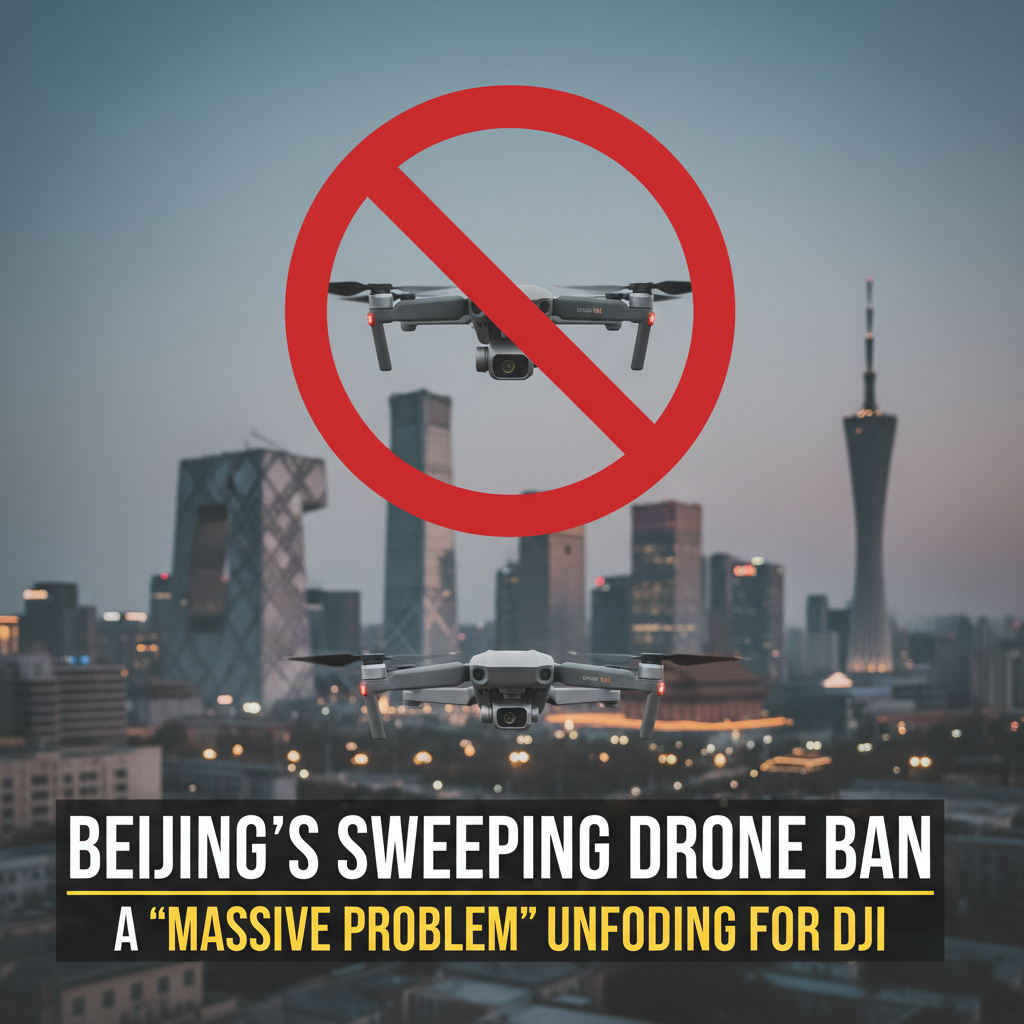
For years, drones have soared from niche hobby to indispensable tools, transforming industries from logistics and agriculture to filmmaking and urban planning. At the heart of this aerial revolution stands DJI, a Chinese tech titan that has dominated the global drone market, largely from its base in Shenzhen. Yet, even a market leader isn’t immune to regulatory headwinds. Beijing’s recent, stringent drone ban isn’t just another local ordinance; it’s a profound, multi-faceted challenge that poses a ‘massive problem’ for DJI, threatening to ripple through its operations, market strategy, and brand image.
Understanding Beijing’s Drone Ban: What It Means
Beijing, a city of immense historical and political significance, has implemented one of the most comprehensive drone bans seen in a major global capital. The new regulations impose severe restrictions on unmanned aerial vehicles (UAVs) within its administrative area. Key elements of the ban include:
- Extensive No-Fly Zones: Large swaths of the city, especially around government buildings, military installations, and cultural sites like the Forbidden City, are now off-limits to drones.
- Altitude Limitations: Even in permitted areas, strict altitude restrictions are in place, severely curtailing potential applications.
- Mandatory Registration & Approval: Operators are required to register their drones and obtain explicit approval for flights, a process that can be arduous and often denied for recreational use.
- Security Focus: The primary motivation behind these stringent drone regulations is public safety and national security, especially given the city’s political calendar.
While security is paramount, the scope and strictness of this ban create an immediate and tangible impact on the entire drone ecosystem.
DJI’s ‘Massive Problem’: Unpacking the Impact
As a global leader, DJI’s success is deeply intertwined with market access and operational freedom. Beijing’s ban hits the company on several critical fronts:
1. Direct Market Contraction and Lost Sales
Beijing is not just China’s capital; it’s a massive economic hub with a significant population of tech-savvy consumers and businesses. The ban directly translates to a lost market for DJI’s recreational drones (like the Mavic series) and its advanced enterprise solutions (Agras for agriculture, Matrice for inspections).
- Recreational Market: Hobbyists can no longer freely fly their drones, severely dampening sales in one of China’s most affluent cities.
- Commercial & Enterprise Applications: Industries relying on drones for mapping, surveying, construction monitoring, infrastructure inspection, and delivery services within Beijing face immense hurdles, if not outright impossibility. This directly impacts sales of high-value commercial drones and associated services.
2. Symbolic Blow and Brand Image Concerns
DJI is a Chinese success story, often seen as a national champion of innovation. Being severely restricted in its own country’s capital carries significant symbolic weight.
- ‘Not In Our Own Backyard’: The perception that even a leading domestic tech firm cannot operate freely in its home capital could subtly erode its brand image, especially internationally.
- Regulatory Precedent: This ban sets a precedent. If Beijing, a symbol of China’s authority, enacts such strict rules, other major Chinese cities – or even international capitals – might follow suit, creating a fragmented and challenging global regulatory landscape for DJI.
3. Operational & R&D Challenges
While DJI’s primary R&D is centered in Shenzhen, the inability to freely operate and test drones in a major urban environment like Beijing could limit crucial real-world data collection and product validation, especially for urban air mobility or advanced commercial applications.
4. Geo-Fencing and Software Adaptation Headaches
DJI already employs sophisticated geo-fencing technology to prevent flights in restricted areas globally. The Beijing ban necessitates immediate and intricate updates to its drone software and firmware. This isn’t a simple task:
- It requires precise mapping of new no-fly zones.
- It must be deployed to existing and new drones.
- It can lead to user frustration if not implemented flawlessly, potentially bricking drones for users who once had flight access.
This constant need for regulatory adaptation adds complexity and cost to DJI’s product development and maintenance.
Beyond DJI: Wider Implications for the Drone Industry
While DJI bears the brunt, Beijing’s ban sends a chilling message to the entire drone industry, both within China and globally.
- Other Chinese Manufacturers: Smaller domestic drone companies face similar, if not more severe, challenges in market access and operational scope.
- Drone Service Providers: Businesses offering drone-based services in Beijing will likely see their operations cease or drastically reduce, potentially leading to job losses and business closures.
- Innovation Dampening: Overly restrictive regulations can stifle innovation, making it harder for companies to test new technologies or for startups to emerge in highly controlled environments.
Navigating the New Reality: DJI’s Path Forward
For DJI, the Beijing ban isn’t a temporary setback; it’s a fundamental shift requiring strategic adaptation. The company will likely:
- Double Down on International Markets: Focus even more heavily on expanding its footprint and market share in regions with more favorable drone regulations.
- Advocate for Responsible Usage: Continue to develop and promote technologies that ensure safe and compliant drone operation, hoping to influence future regulatory frameworks.
- Diversify Product Lines: While still core, the ban might encourage DJI to accelerate diversification into other robotic or imaging technologies less susceptible to airspace restrictions.
- Enhanced Geo-Fencing and Compliance: Continue to lead in implementing robust safety features and compliance mechanisms directly into its products, positioning itself as a leader in responsible drone technology.
Conclusion: A Defining Moment for Drone Dominance
Beijing’s drone ban is far more than a local inconvenience; it’s a significant regulatory pivot that directly challenges the operational freedom and market dominance of DJI. For the world’s leading drone manufacturer, this represents a ‘massive problem’ that spans lost sales, symbolic blows, and complex technological adjustments. How DJI navigates these turbulent regulatory skies will not only define its resilience but also offer crucial insights into the future of urban drone operations and the delicate balance between innovation, security, and public policy.
The drone industry watches closely as this scenario unfolds, understanding that today’s Beijing ban could be tomorrow’s global trend.
Leave a Reply