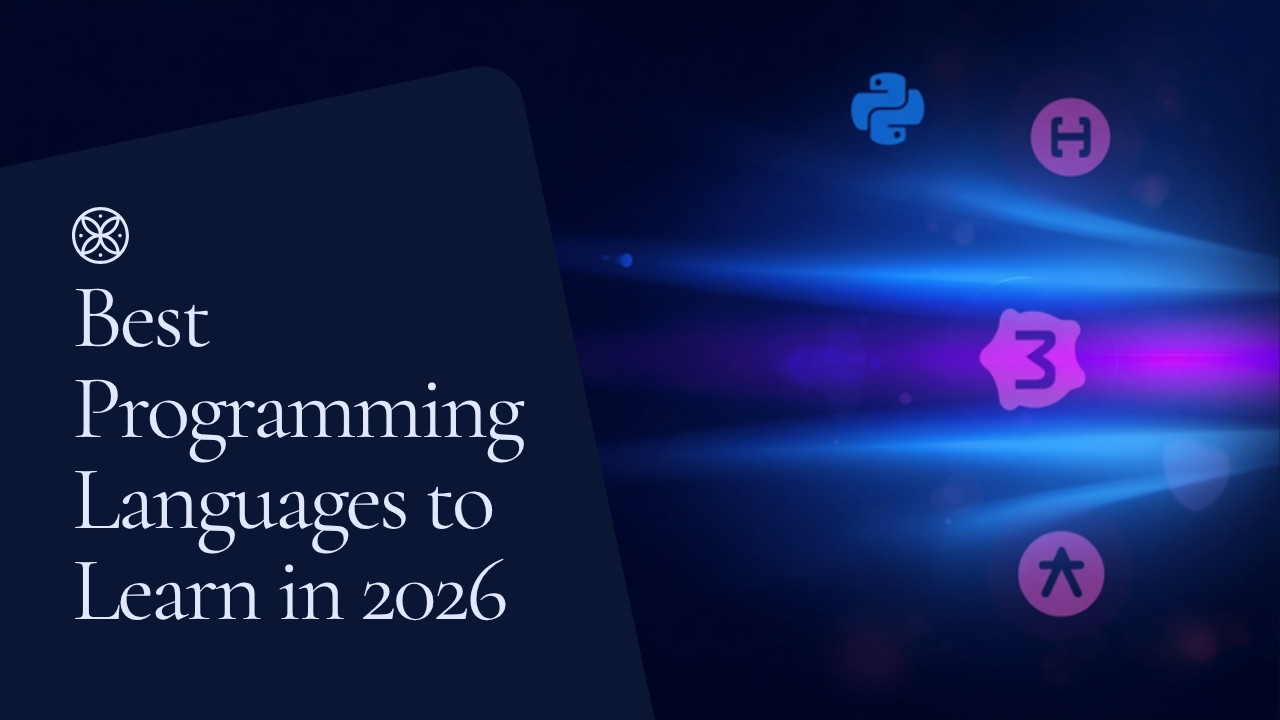
Every year the “best language to learn” debate gets settled a little differently depending on which chart you look at. In 2026 the picture is genuinely split: Python holds the widest lead in its history on the TIOBE Index, at roughly 19-22% depending on the month, well clear of second place. JavaScript still tops Stack Overflow’s usage survey at around 66% of developers. And TypeScript quietly overtook both of them on GitHub, becoming the most-used language by active contributor count after adding more than a million contributors in a single year. No single ranking tells the whole story, so the honest answer to “what should I learn” depends on which of those signals actually matters for your goals.
Why the Rankings Don’t Agree
Four different sources get cited for “most popular” language, and they measure different things. TIOBE counts search-engine mentions of a language’s name, which tracks general buzz and reference-lookup behavior. PYPL uses Google Trends data on tutorial searches, which skews toward what beginners are actively learning. GitHub’s Octoverse counts real contributor activity in code repositories, showing what’s actually being built with. And job-market and salary data show what employers are paying for right now. A language can rank very differently across these four lenses and still be a smart choice — Go, for example, has slipped on TIOBE’s search-based index even as real-world cloud and infrastructure hiring for it has stayed strong.


The Strongest Choices for 2026, by Use Case
- Python — the default first language for most beginners, and still the backbone of AI, machine learning, and data work. It leads the TIOBE Index by the widest margin in its history and posted the biggest year-over-year gain of any major language on Stack Overflow’s 2025 survey.
- JavaScript — the language of the web browser, and still the most-used language overall according to Stack Overflow’s developer survey. Essentially required for front-end work and useful well beyond it through Node.js.
- TypeScript — JavaScript with static typing, now the most active language on GitHub by contributor count. Increasingly the default choice for serious, maintainable front-end and full-stack codebases.
- Java — dropped to its lowest-ever TIOBE position in 2026, but remains deeply embedded in enterprise software, Android development, and large-scale backend systems, so hiring demand hasn’t disappeared.
- C# — logged one of the largest ranking gains of the year, driven by the .NET ecosystem, Azure cloud services, cross-platform tools like .NET MAUI, and its dominance in game development through Unity.
- Go (Golang) — fell on search-popularity indices, but stays a strong pick for cloud-native services, microservices, and DevOps tooling, where it’s a staple for infrastructure and platform teams.
- Rust — the most-admired language in Stack Overflow’s 2025 survey, commanding one of the largest salary premiums in the industry. Momentum is also being pushed by policy: a U.S. CISA deadline is pressing critical-infrastructure vendors toward memory-safe languages like Rust.
- SQL — not flashy, but close to unavoidable. Nearly every data-facing role, from data analysis to backend development, assumes working SQL knowledge.

How to Actually Choose
Start with the kind of work you want to do, not the leaderboard. If you’re new to programming and want the most transferable foundation, Python’s readable syntax and huge community make it the easiest on-ramp, and it doubles as the practical entry point into AI and data work. If web development is the goal, JavaScript is non-negotiable and TypeScript is increasingly what employers expect on top of it. If you’re aiming at enterprise, backend, or Android roles, Java or C# open the most doors, while Go and Rust are worth adding once you have a language or two under your belt and want to move into infrastructure, systems, or higher-paying specialist work. Whichever you pick, check current local job postings directly rather than relying on a single global ranking — demand shifts by region and by quarter, and rankings like TIOBE measure search interest, not hiring.
The Bottom Line
There’s no single “best” programming language for 2026, because the four major ways of measuring popularity — search interest, tutorial demand, GitHub activity, and salary data — each point in a slightly different direction. Python remains the safest general-purpose starting point, JavaScript and TypeScript are close to mandatory for web work, and specialist languages like Rust and Go reward developers who already have the fundamentals and want to move into higher-demand, higher-paying niches. The most reliable strategy is still the oldest one: pick a language that matches the work you actually want to do, and let real job postings — not just index rankings — confirm you’re on the right track.