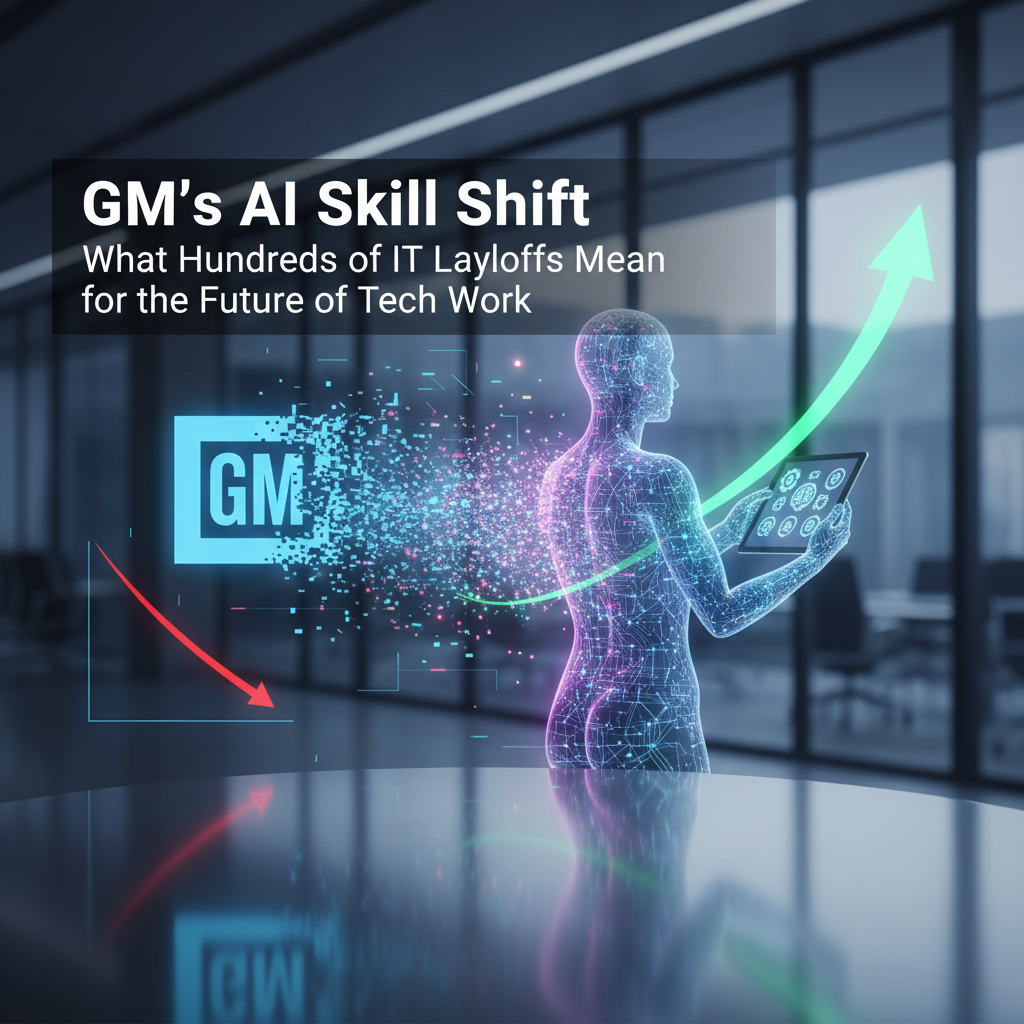
The automotive giant General Motors (GM) has made headlines with a significant strategic pivot: the layoff of hundreds of its IT workers, not due to financial distress, but with the explicit aim of hiring new talent possessing stronger Artificial Intelligence (AI) skills. This bold move, reported by TechCrunch, isn’t just a corporate restructuring; it’s a stark indicator of the profound technological shift sweeping through industries worldwide, and a wake-up call for IT professionals everywhere.
The Catalyst: GM’s Bold Move Towards an AI-Driven Future
GM’s decision to shed traditional IT roles in favor of AI expertise underscores a critical evolution within the automotive sector. Once focused predominantly on mechanical engineering and manufacturing, the industry is now a hotbed of software innovation, autonomous driving research, and data analytics. From optimizing supply chains with predictive AI to developing next-generation infotainment systems and self-driving capabilities, AI is becoming the engine of future growth for companies like GM.
This isn’t merely about cost-cutting; it’s a strategic investment in the future. By reallocating resources towards individuals proficient in AI, machine learning, and advanced data science, GM is signaling its intent to lead the charge in a competitive, tech-driven automotive landscape. The hundreds of IT workers impacted represent roles that, while crucial in the past, are now being evaluated against the immediate and future demands of an AI-first strategy.
The Rise of AI Skills: A New Workforce Mandate
The Shifting Landscape of IT
For decades, traditional IT roles encompassed network administration, software maintenance, help desk support, and basic database management. While these functions remain vital, their nature is rapidly changing, often becoming automated or requiring integration with AI systems. The demand has now shifted dramatically towards specialized AI skills.
What AI Skills Are In Demand?
Companies are actively seeking professionals who can:
- Develop and deploy AI models: Expertise in machine learning, deep learning frameworks (TensorFlow, PyTorch), and algorithm development.
- Manage and analyze big data: Data scientists, data engineers, and analysts capable of processing vast datasets to feed AI algorithms.
- Implement AI solutions: AI architects and engineers who can integrate AI into existing systems and create new AI-powered applications.
- Understand ethical AI: Professionals who can ensure AI systems are fair, transparent, and compliant with regulations.
- Prompt engineering and AI literacy: Even non-developers need skills to effectively interact with and leverage AI tools.
This shift emphasizes a move from maintaining existing systems to innovating and building intelligence into new ones. The workforce development challenge is immense, requiring a significant overhaul of skill sets.
What This Means for IT Professionals: Adapt or Be Left Behind?
The Urgency of Reskilling and Upskilling
GM’s actions serve as a powerful cautionary tale and a call to action for IT workers across all industries. The days of static skill sets are over. Continuous learning and adaptation are no longer optional but imperative for career longevity. Here’s how IT professionals can navigate this technological shift:
- Embrace AI Fundamentals: Start with understanding core AI concepts, machine learning principles, and their practical applications. Online courses, certifications, and bootcamps are invaluable resources.
- Specialize in AI Applications: Identify areas where AI intersects with your current expertise. For example, a network engineer might explore AI for network optimization and security, while a software developer could pivot to MLOps (Machine Learning Operations).
- Develop Data Literacy: AI is data-hungry. Understanding data collection, cleaning, analysis, and ethical usage is foundational.
- Leverage Existing Skills: Many traditional IT skills (e.g., problem-solving, logical thinking, system architecture) are transferable and can provide a strong foundation for learning AI.
- Network and Collaborate: Engage with AI communities, attend industry events, and seek out mentors to stay abreast of the latest developments and opportunities in the tech job market.
Beyond GM: A Broader Industry Trend
While GM’s move is prominent, it’s part of a larger, global workforce transformation. Companies in finance, healthcare, retail, and manufacturing are all grappling with how to integrate AI to boost efficiency, innovation, and customer experience. This means the demand for AI skills will only intensify, creating both challenges for those with outdated skills and immense opportunities for those willing to adapt.
This is not an isolated incident; it’s a blueprint for digital transformation. Expect more companies to follow suit, re-evaluating their workforce needs in light of rapid advancements in artificial intelligence. The long-term impact on the tech job market will be a significant shift in roles and responsibilities.
Navigating the Future of Work with AI
It’s crucial to view AI not just as a job displacement threat but also as a powerful tool for augmentation and innovation. AI can automate mundane tasks, allowing human workers to focus on more complex, creative, and strategic endeavors. The future of work will likely involve a synergistic relationship between human intelligence and artificial intelligence, requiring a new breed of professionals who can effectively manage, utilize, and collaborate with AI systems.
The goal is not to become an AI expert overnight, but to cultivate an AI-ready mindset—one that is curious, adaptive, and committed to continuous learning in an ever-evolving technological landscape.
Conclusion: The AI Imperative
GM’s decision to lay off hundreds of IT workers to hire those with stronger AI skills serves as a powerful testament to the irreversible impact of artificial intelligence on the global economy and workforce. It highlights an urgent imperative for individuals and organizations alike: embrace the AI revolution, invest in upskilling, and strategically adapt to the demands of a new digital era. Those who proactively develop the necessary AI skills will not only secure their own professional futures but will also drive the innovation that defines tomorrow’s industries.
Is your skill set ready for the AI revolution, or will you be left behind?
Leave a Reply