
Google’s upcoming Pixel 11 is expected to be one of the most exciting Android smartphones of 2026—but it also comes with some disappointing news for buyers. Google has officially confirmed that the Pixel 11 series will see a price increase, making it more expensive than previous generations.
The company says the decision wasn’t made lightly. A combination of rising component costs, especially memory chips, and ongoing supply chain challenges has forced Google to adjust pricing across its next-generation flagship lineup. Here’s everything you need to know about why the Pixel 11 costs more in 2026.
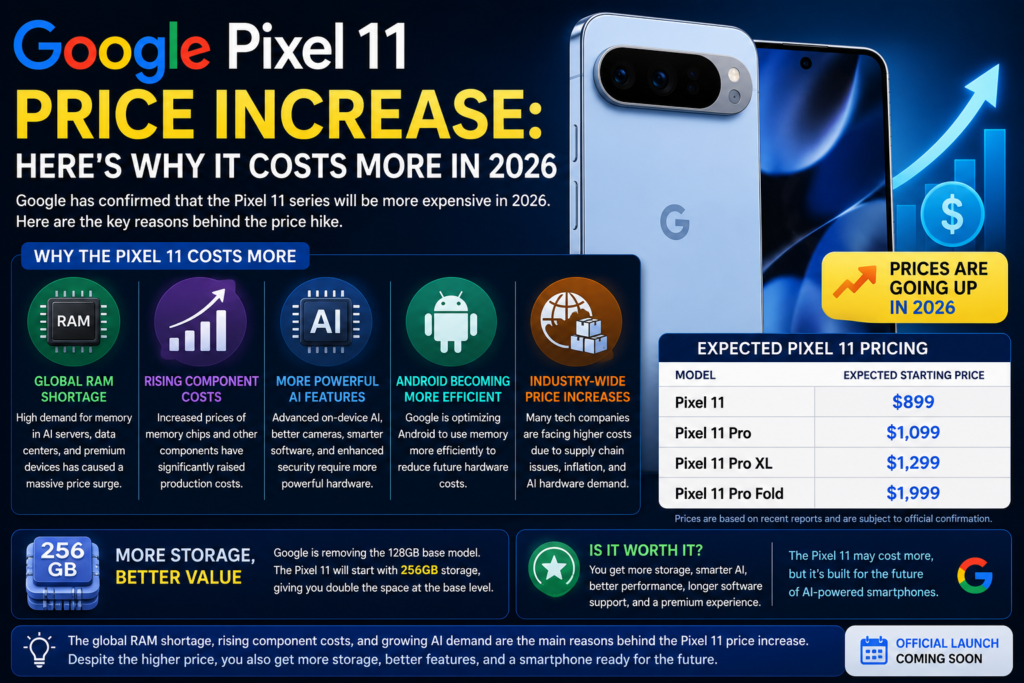
Google Confirms Pixel 11 Price Hike
Ahead of the Made by Google event, Google executives confirmed that the company would raise Pixel pricing due to an unprecedented increase in memory costs.
According to Google, the global RAM market has experienced one of its biggest price spikes ever, making smartphone production significantly more expensive than in previous years. The company says it absorbed higher costs for as long as possible, but current market conditions made a price adjustment unavoidable.
The Biggest Reason: Global RAM Shortage
The primary reason behind the Pixel 11’s higher price is the worldwide memory crisis.
Demand for high-performance DRAM has surged because of:
- AI servers and data centers
- Cloud computing expansion
- Premium smartphones
- AI-powered PCs
- Enterprise hardware
This increased demand has pushed RAM prices dramatically higher, affecting nearly every major electronics manufacturer. Google says the cost of memory has risen several times compared with last year, significantly increasing production expenses.
AI Features Require More Powerful Hardware
Modern smartphones rely heavily on artificial intelligence.
The Pixel 11 is expected to include:
- Faster on-device AI processing
- Advanced photo editing
- Smarter voice assistance
- Improved language translation
- Enhanced security features
- More powerful Gemini AI experiences
These features require faster processors and high-speed memory, adding to manufacturing costs.
Storage Upgrade Helps Offset the Price
While the Pixel 11 is expected to cost more, buyers may also receive better value.
Reports suggest Google is eliminating the 128GB base storage option and making 256GB the standard entry-level configuration for many Pixel 11 models.
Although the starting price increases, users also receive double the storage compared to previous base models.
Android Is Becoming More RAM Efficient
Google isn’t only increasing prices—it is also working to reduce future hardware costs.
The company has confirmed that Android engineers are optimizing the operating system to use memory more efficiently. Better RAM management should improve multitasking while reducing pressure on hardware requirements in future devices.
Industry-Wide Price Increases
Google isn’t the only company facing higher costs.
Many technology manufacturers have recently raised prices due to:
- Rising memory prices
- Supply chain challenges
- Increased AI hardware demand
- Higher manufacturing costs
- Inflation affecting electronic components
The Pixel 11 reflects a broader trend across the consumer electronics industry rather than an isolated pricing decision.
Expected Pixel 11 Pricing
While Google hasn’t published its full official pricing yet, recent reports indicate the lineup could start at around:
| Model | Expected Starting Price |
|---|---|
| Pixel 11 | $899 |
| Pixel 11 Pro | $1,099 |
| Pixel 11 Pro XL | $1,299 |
| Pixel 11 Pro Fold | $1,999 |
These figures remain subject to official confirmation at launch.
Is the Higher Price Worth It?
For buyers planning to upgrade, the higher cost may be justified if the Pixel 11 delivers:
- Improved Tensor performance
- Better cameras
- Longer software support
- More AI-powered features
- Larger base storage
- Enhanced battery efficiency
Users upgrading from older Pixel devices may notice a significant improvement, while recent Pixel owners may want to compare features before deciding.
What This Means for Smartphone Buyers
The Pixel 11 price increase highlights a major shift in the smartphone industry.
As AI becomes central to modern devices, manufacturers are investing more in advanced chips, memory, and software capabilities. These improvements deliver better performance but also increase production costs.
Consumers should expect flagship smartphones across multiple brands to remain more expensive until component prices stabilize.
Final Thoughts
Google’s Pixel 11 price increase is largely driven by the global RAM shortage, rising component costs, and the growing demand for AI-powered hardware. While paying more is never welcome, the Pixel 11 is also expected to offer larger base storage, smarter AI features, and meaningful software improvements that may help justify its higher price.
As Google officially unveils the Pixel 11 lineup, buyers will get a clearer picture of whether the additional cost delivers enough value to make it one of the best Android smartphones of 2026.