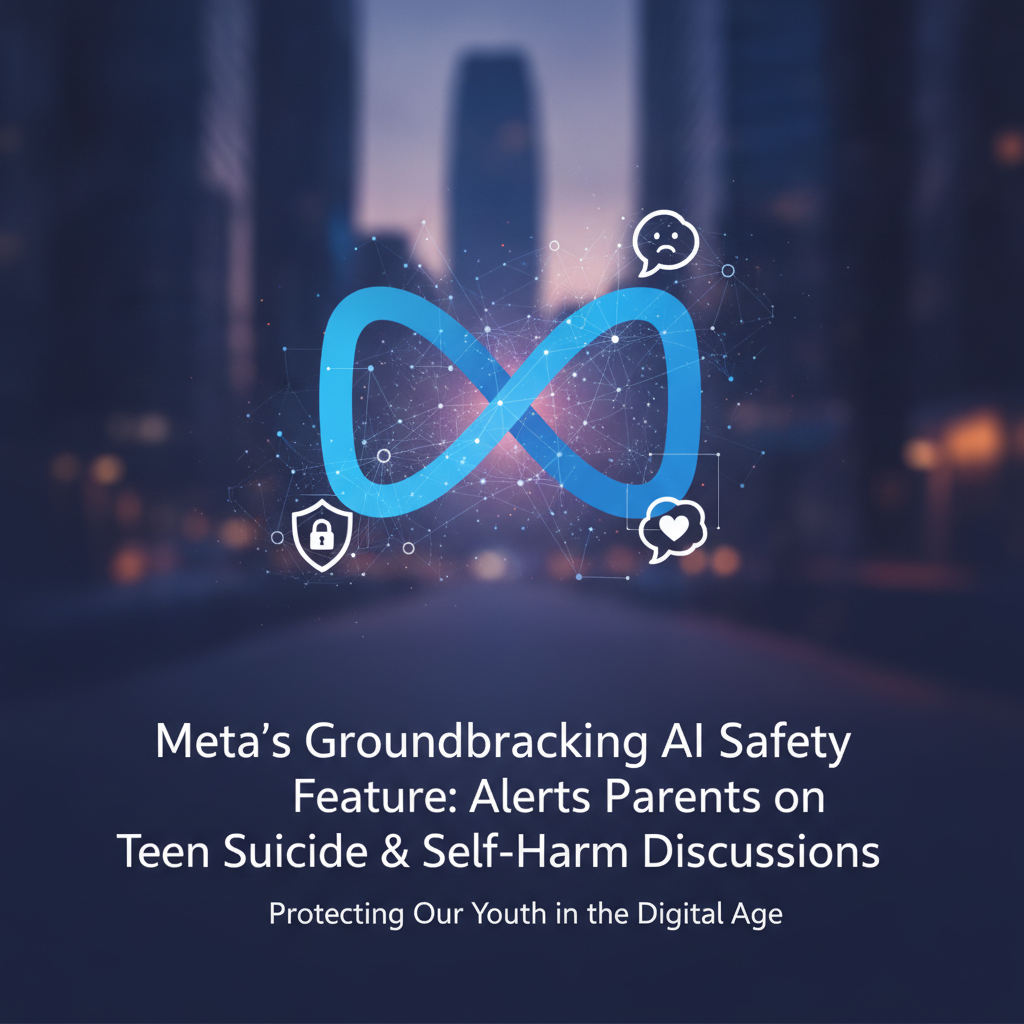
In a significant move poised to reshape the landscape of digital safety and AI ethics, Meta has announced a critical new feature: it will now alert parents if their teen discusses suicide or self-harm with its AI chatbot. This development, effective immediately, marks a pivotal moment in the ongoing efforts to protect young users online, directly addressing the growing concerns surrounding adolescent mental health and the evolving role of artificial intelligence in their lives.
As AI chatbots become more sophisticated and integrated into daily interactions, their potential impact on vulnerable populations, especially teenagers, has been a subject of intense scrutiny. Meta’s latest initiative aims to harness AI’s power not just for communication, but for crucial intervention, offering a new layer of support for families navigating the complexities of the digital age.
How Meta’s New Parental Alert System Works
The core of this new feature lies in Meta’s advanced AI monitoring capabilities. When a teen interacts with one of Meta’s proprietary AI chatbots across its platforms (e.g., within Messenger, Instagram, or a dedicated AI app), the system will employ sophisticated natural language processing (NLP) to detect specific phrases, keywords, and conversational patterns indicative of suicide ideation or self-harm. Upon identifying such sensitive discussions, the system is programmed to trigger an immediate, discreet alert to the parent or guardian linked to the teen’s account through Meta’s Family Center or established parental supervision tools.
Parents will receive a notification detailing that a conversation with concerning content has occurred, without necessarily revealing the full transcript to protect some degree of the teen’s privacy, but providing enough context to prompt a conversation or intervention. Meta emphasizes that this system is designed as a safety net, not a surveillance tool, aiming to bridge a critical communication gap when teens might be struggling in silence.
Addressing a Growing Crisis: Teen Mental Health and Digital Interaction
The timing of this feature is no accident. Global statistics continue to highlight a worrying trend in adolescent mental health, with rates of anxiety, depression, and self-harm on the rise. Concurrently, AI chatbots have become ubiquitous, offering teens a seemingly non-judgmental space to explore thoughts and feelings they might hesitate to share with humans. While this can be beneficial, there’s also an inherent risk if a chatbot is the sole confidant for serious mental health crises.
Meta’s move acknowledges the dual-edged sword of AI. By proactively identifying and flagging distress signals, the company aims to facilitate real-world support, enabling parents to step in and offer help or seek professional assistance before a situation escalates. This positions Meta as a more active participant in the digital well-being of its youngest users.
The Delicate Balance: Safety vs. Privacy
As with any parental oversight tool, this new feature raises important questions about privacy and autonomy for teenagers. Critics might argue that such alerts could erode trust between teens and their parents, or between teens and the platforms they use. Meta is acutely aware of this delicate balance.
The company states its commitment to transparency, ensuring that teens and parents are informed about the alert system from the outset. Educational resources will be provided to help families understand the feature’s purpose and to encourage open dialogue about mental health, privacy boundaries, and responsible AI use. The goal isn’t to spy, but to provide a mechanism for support in life-threatening situations, drawing a clear line where safety takes precedence.
Meta’s Broader Commitment to Youth Safety
This new parental alert system is the latest in a series of initiatives from Meta aimed at enhancing youth safety across its platforms. In recent years, the company has invested heavily in age verification technologies, introduced stricter content moderation policies for teen accounts, implemented time limits, and offered a suite of parental supervision tools through its Family Center. This AI chatbot alert further solidifies Meta’s evolving strategy to build a safer online environment, recognizing its significant responsibility as a platform host for billions of users worldwide.
Implications for Parents, Teens, and the Future of AI Ethics
For parents, this feature offers a potentially life-saving tool, providing an early warning system that was previously unavailable. It underscores the importance of actively engaging with available parental controls and fostering open communication with their children about their online experiences and mental well-being.
For teens, while the initial reaction might be mixed, the ultimate goal is support. It’s a reminder that their digital interactions are not entirely private, especially when their safety is at stake, and encourages them to seek help from trusted adults or professionals. This development also sets a precedent for other tech companies developing AI tools, pushing the conversation forward on ethical AI design, platform responsibility, and the imperative to prioritize user safety, especially for minors.
Conclusion: A Step Towards a Safer Digital Future
Meta’s decision to alert parents about teen discussions of suicide or self-harm with its AI chatbots is a bold and necessary step. While challenging the traditional boundaries of digital privacy, it prioritizes the paramount issue of adolescent mental health. This move not only enhances safety for young users but also ignites crucial conversations about the future of AI ethics, parental oversight, and the collective responsibility to create supportive online environments. As technology continues to evolve, finding innovative ways to protect our most vulnerable users will remain a critical imperative.