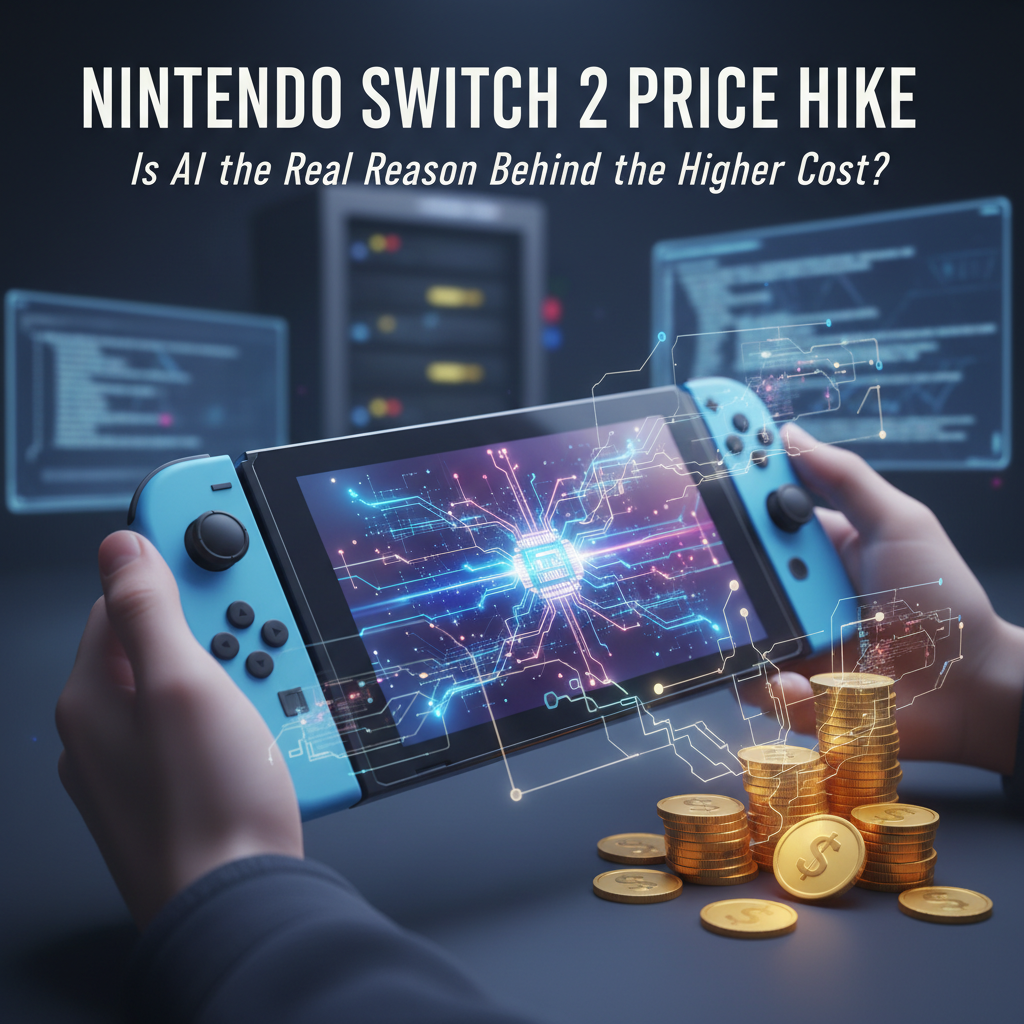
The gaming world is buzzing with anticipation for the Nintendo Switch 2. As rumors swirl about its features and potential launch window, one particular whisper has caught everyone’s attention: a likely price hike. While component shortages and inflation are often cited as culprits, a more surprising factor is emerging from the shadows: Artificial Intelligence.
Could the cutting-edge AI technology packed into the next-generation console be the primary driver behind a steeper price tag? Let’s dive into how AI’s growing influence might reshape not just the Switch 2’s capabilities, but also your wallet.
The Unavoidable Truth: Switch 2’s Potential Premium Tag
For years, Nintendo has walked a tightrope, offering innovative gaming experiences without breaking the bank. The original Switch launched at $299, a competitive price point that contributed to its massive success. However, industry analysts and insider reports strongly suggest that the Nintendo Switch 2 price will be notably higher.
Current economic conditions, including global inflation and increased manufacturing costs, certainly play a role. But these factors alone might not fully explain the rumored jump. This is where AI enters the conversation, hinting at a new kind of expense for cutting-edge consoles.
AI Hardware: The New Cost Frontier for Consoles
When we talk about AI’s impact on console pricing, we’re largely referring to specialized hardware. Modern devices, from smartphones to laptops, are increasingly integrating Neural Processing Units (NPUs) or dedicated AI accelerators. These chips are designed to efficiently handle complex AI calculations, far more so than traditional CPUs or GPUs alone.
For the Switch 2, this AI hardware is expected to power features like NVIDIA’s DLSS (Deep Learning Super Sampling) or similar proprietary upscaling technologies. DLSS uses AI to render games at a lower resolution and then intelligently upscale them to a higher resolution, resulting in crisp visuals with significantly less computational demand. This is a game-changer for a portable console, allowing for impressive graphics without sacrificing battery life or requiring a massive, power-hungry chip.
However, integrating these advanced, specialized AI components comes at a premium. Research and development costs are substantial, and the manufacturing process for these cutting-edge chips is often more expensive than for conventional processors. This direct cost is then passed down the supply chain, directly contributing to a higher Switch 2 price hike.
Beyond Upscaling: What AI Promises for the Switch 2 Experience
While enhanced visuals via upscaling are a major benefit, the integration of AI hardware in the Switch 2 could unlock a host of other exciting possibilities:
- Smarter NPCs and Dynamic Worlds: AI could lead to more believable and adaptive non-player characters, as well as game environments that react more intelligently to player actions.
- Personalized Gaming: Imagine games that dynamically adjust difficulty, content, or even storylines based on your playstyle, all powered by on-device AI.
- Improved Performance & Efficiency: AI can optimize system resources in real-time, ensuring smoother gameplay and longer battery life, even with demanding titles.
- New Gameplay Mechanics: Developers could harness AI for innovative game design, from advanced procedural generation to hyper-realistic physics.
These aren’t just minor upgrades; they represent a significant leap in potential gaming experiences, offering a glimpse into the future of console technology. This added value, however, inevitably translates into a higher upfront cost for consumers.
The Broader Market Trend: AI’s Footprint on Tech Pricing
The impact of AI on pricing isn’t limited to gaming consoles. Across the entire tech industry, “AI-ready” devices and components command higher prices. The insatiable demand for powerful GPUs to train large AI models has driven up the cost of graphics cards, affecting both gamers and data centers. Companies like NVIDIA, a key partner for Nintendo, are at the forefront of this AI boom, and their innovations, while powerful, are not cheap.
As AI becomes increasingly fundamental to future tech, expect to see its influence on pricing continue to grow. Consoles, designed to be forward-compatible for several years, must integrate these nascent technologies to remain relevant, making them susceptible to these market forces that dictate modern console pricing.
Nintendo’s Balancing Act: Innovation vs. Affordability
Nintendo has always excelled at creating unique, fun, and accessible gaming experiences. Their success often hinges on striking a perfect balance between technological innovation and consumer affordability. The Switch 2 presents a fresh challenge: how to incorporate game-changing AI capabilities without alienating their broad user base.
The marketing around the Nintendo Switch 2 will likely emphasize these AI-driven enhancements as key selling points, justifying the increased investment. The question for consumers will be whether the promised improvements in graphics, performance, and gameplay experiences are worth the premium.
Conclusion: A Smarter, Pricier Future for the Switch?
The rumored price hike for the Nintendo Switch 2 is multi-faceted, but the role of advanced AI hardware appears to be a significant, if unexpected, contributor. Integrating dedicated NPUs and AI-powered upscaling technologies promises a more visually stunning, efficient, and potentially innovative gaming experience on Nintendo’s next console.
While the prospect of paying more might sting, it reflects a broader industry shift where AI is no longer a niche feature but a foundational element of next-generation hardware. As gamers, we may need to adjust our expectations for console pricing, understanding that the pursuit of smarter, more immersive experiences often comes with a higher cost.
What are your thoughts? Are you willing to pay a premium for an AI-enhanced Nintendo Switch 2?
Leave a Reply