
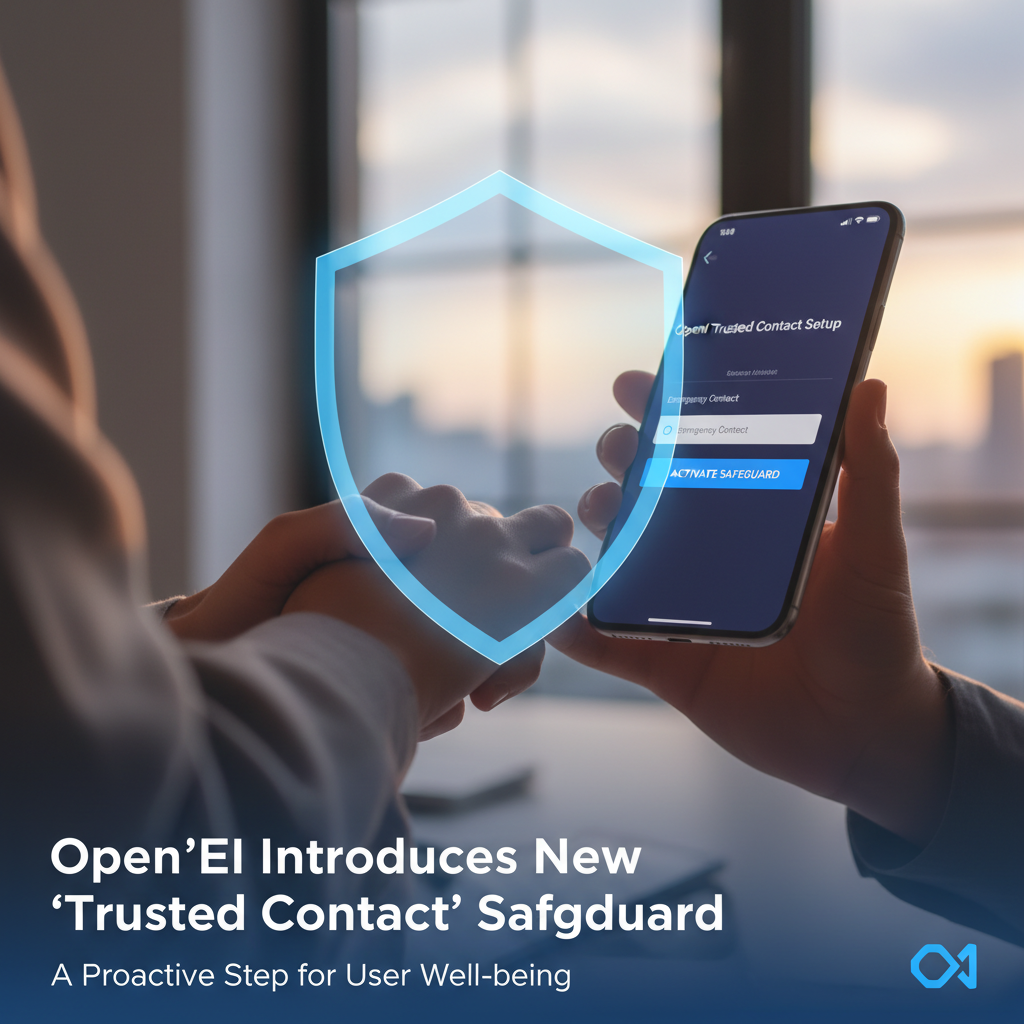
In a significant move to bolster user safety and promote responsible AI development, OpenAI has announced a groundbreaking new feature: the ‘Trusted Contact’ safeguard. This innovative system is designed to provide a crucial safety net for users exhibiting signs of distress or possible self-harm, marking a pivotal moment in the ongoing conversation around AI ethics and mental health support.
Understanding the OpenAI ‘Trusted Contact’ Safeguard
The new safeguard allows users of OpenAI’s platforms, such as ChatGPT, to designate one or more trusted individuals as emergency contacts. Should the AI detect conversational patterns or expressions that strongly suggest a user is at risk of self-harm, and direct intervention attempts by the AI prove insufficient or are declined, the system can, with explicit prior user consent, notify the designated trusted contact.
How It Works: A Consent-Driven Approach
- Opt-In System: The feature is entirely voluntary. Users must actively opt-in and provide consent for the safeguard to be activated, demonstrating OpenAI’s commitment to user autonomy and privacy.
- AI Detection: Advanced AI models are trained to identify specific language cues, tone, and context that indicate a heightened risk of self-harm. This detection is designed to be sensitive yet robust, minimizing false positives while ensuring critical signs are not missed.
- Initial AI Intervention: Before escalating, the AI will first attempt to engage the user directly, offering resources, crisis lines, and empathetic support.
- Consent for Contact: If direct intervention is ineffective, and the risk persists, the system will prompt the user (if capable) or, based on pre-granted consent, notify the trusted contact. The notification is designed to be informative without revealing private conversational details, focusing on the user’s well-being and the need for support.
- Privacy-Centric Design: OpenAI emphasizes that user conversations remain private. The system is engineered to notify contacts about the *risk* to the user, not the specific content of their interactions with the AI, unless explicitly permitted by the user.
The Critical Need for AI-Powered Mental Health Support
As AI tools become more integrated into our daily lives, their potential to serve as a resource for those in distress also grows. Many individuals confide in AI chatbots, viewing them as non-judgmental listeners. This makes AI uniquely positioned to identify moments when human intervention might be critical but is not being sought directly.
The prevalence of mental health challenges, including thoughts of self-harm, underscores the urgency of this development. By introducing the OpenAI Trusted Contact safeguard, the company is stepping into a sensitive yet vital role, leveraging technology to potentially save lives and foster a safer digital environment.
Balancing Safety, Privacy, and Ethical AI
This initiative sparks important discussions about the ethical considerations of AI. OpenAI acknowledges the delicate balance required between user safety and individual privacy. The opt-in nature of the safeguard, coupled with a focus on minimal necessary disclosure, reflects an attempt to navigate these complex waters responsibly.
This move aligns with OpenAI’s broader mission of developing responsible AI and ensuring that its advanced models are not only powerful but also beneficial and safe for humanity. It demonstrates a proactive approach to addressing the foreseeable challenges that come with increasingly sophisticated AI.
OpenAI’s Broader Commitment to Responsible AI
The ‘Trusted Contact’ safeguard is a testament to OpenAI’s ongoing efforts in AI safety and alignment. It builds upon existing measures designed to prevent harmful content generation, mitigate bias, and ensure that AI models operate within ethical boundaries. This new feature solidifies the company’s position as a leader not just in AI innovation, but also in the crucial realm of ethical AI development and user safety.
Implications for the Future of AI Interaction
This safeguard sets a precedent for how AI developers might integrate preventative mental health support directly into their platforms. It transforms AI from a mere conversational agent into a potential first line of defense in mental health crises, offering a new dimension of digital well-being. Other AI companies may well follow suit, leading to a broader industry standard for AI-powered mental health interventions.
Conclusion: A Step Towards a Safer AI Future
OpenAI’s introduction of the ‘Trusted Contact’ safeguard is a commendable and necessary evolution in AI self-harm prevention. By empowering users to enlist a digital safety net, OpenAI is taking a significant stride towards creating more empathetic, responsive, and ultimately, safer AI systems. This feature underscores the immense potential of AI not just as a tool for productivity and creativity, but as a crucial ally in safeguarding human well-being in the digital age.
Leave a Reply