
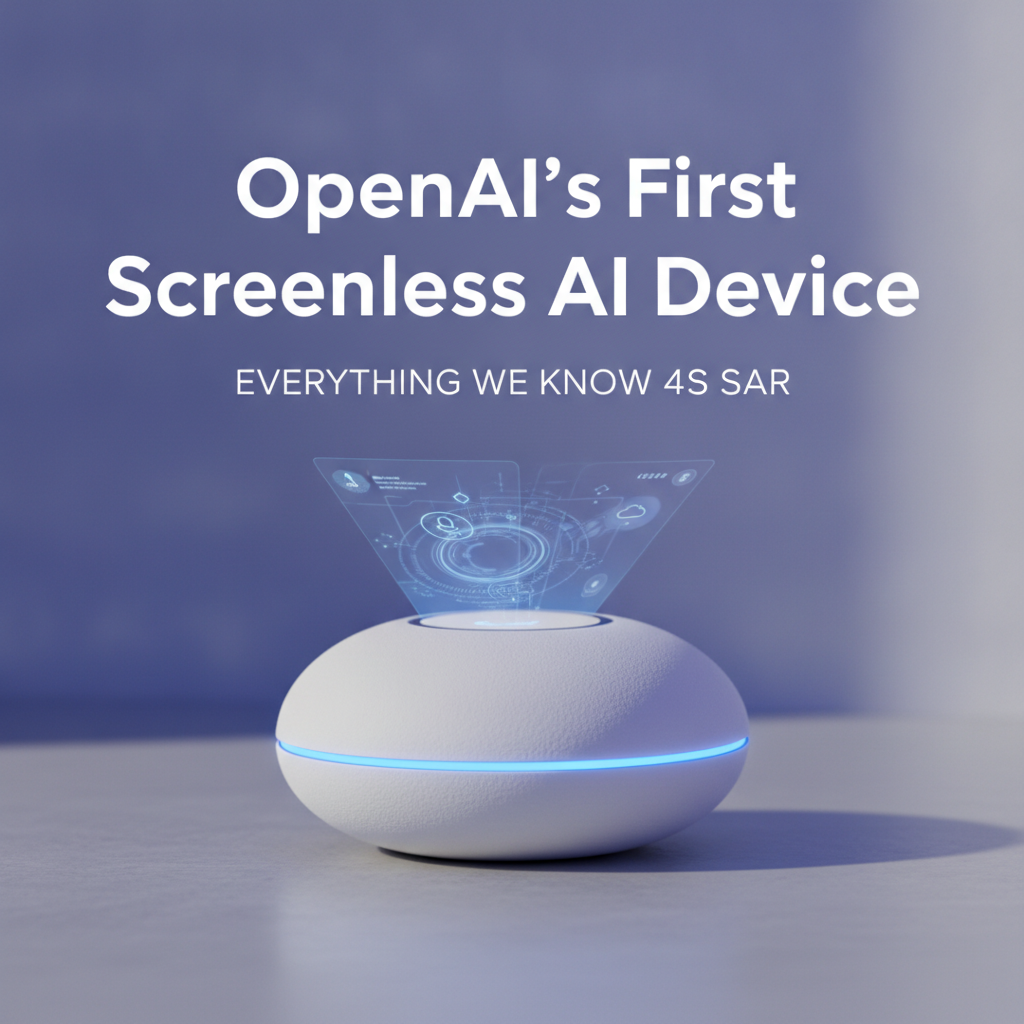
OpenAI, the trailblazing force behind ChatGPT and DALL-E, has consistently pushed the boundaries of artificial intelligence, primarily through groundbreaking software. Now, it appears the company is making a decisive leap into the hardware arena. Recent reports, including an insightful piece from Bloomberg, suggest OpenAI’s inaugural physical device will be a revolutionary screenless AI companion, aiming to integrate AI seamlessly and intuitively into our daily lives. This isn’t just another smart gadget; it’s a bold vision for how we interact with intelligence itself.
A Glimpse into the Future: The Moveable, Screenless AI Speaker
According to emerging details, OpenAI’s first foray into hardware is envisioned as a “moveable, screenless speaker built as an AI companion.” This description alone paints a compelling picture of a device designed for simplicity, immediacy, and pervasive intelligence. Let’s break down the key characteristics we know:
- Screenless Design: This is perhaps the most radical aspect. By removing the screen, OpenAI signals a departure from traditional device interaction, focusing squarely on voice and auditory cues. The goal is to make AI interaction more natural, mirroring human conversation without the visual distractions of apps and interfaces.
- Moveable Form Factor: The term “moveable” implies portability and versatility. This device isn’t meant to be stationary like a smart home hub; it’s designed to accompany users throughout their day, whether at home, in the office, or on the go. Imagine an AI that’s always with you, ready to assist.
- Speaker Functionality: As a primary speaker, the device will likely feature high-quality audio output for responses, music, podcasts, and perhaps ambient sounds. Input will undoubtedly be voice-activated, leveraging OpenAI’s advanced natural language processing capabilities.
- Dedicated AI Companion: This isn’t just a speaker with AI features; it’s being built from the ground up as an “AI companion.” This suggests a deeper, more personalized, and proactive relationship with the user, moving beyond simple command-and-response into true assistive intelligence.
Why Screenless? OpenAI’s Vision for Natural AI Interaction
The decision to go screenless is a profound statement. It reflects a growing industry trend towards more natural, less intrusive technology. OpenAI’s motivations likely include:
- Reducing Digital Friction: In an increasingly screen-saturated world, a screenless device offers a refreshing alternative, allowing users to access powerful AI without adding another glowing rectangle to their lives.
- Promoting Natural Language: By removing visual interfaces, the device forces a reliance on voice, which is humanity’s most fundamental form of communication. This could lead to more intuitive and seamless interactions with AI.
- Ubiquitous and Contextual AI: A moveable, screenless device can integrate more smoothly into various environments, offering contextual assistance that understands your surroundings and current needs without requiring you to pull out a phone or laptop.
- Focus on Presence, Not Distraction: The device aims to be a helpful presence, always available, rather than a demanding interface that pulls attention away from the real world.
Potential Capabilities and Everyday Impact
While specific features are still under wraps, we can speculate on the transformative capabilities a dedicated OpenAI AI companion might offer:
- Proactive Assistance: Beyond answering questions, it could anticipate needs, suggest tasks, manage schedules, and provide timely reminders without being explicitly prompted.
- Context-Aware Information: Leveraging its portability and advanced AI, it could provide relevant information based on your location, time of day, and ongoing activities.
- Seamless Communication: Facilitating calls, messages, and even complex multi-person interactions through natural voice commands.
- Enhanced Productivity & Creativity: Acting as a sounding board for ideas, helping draft content, summarize meetings, or even generate creative prompts on the fly.
- Personalized Learning & Entertainment: Delivering tailored news updates, personalized learning experiences, or curating entertainment based on your preferences.
The Road Ahead: Challenges and Expectations
Venturing into hardware presents unique challenges for OpenAI. Key considerations will include:
- User Adoption: Educating consumers on the benefits of a screenless experience and overcoming ingrained habits of screen-based interaction.
- Privacy and Trust: As an always-on, listening device, robust privacy safeguards and transparent data policies will be paramount to building user trust.
- Differentiation: How will it stand out from existing smart speakers or other emerging AI-first hardware devices like the Humane AI Pin or Rabbit R1? Its success will hinge on truly unique capabilities powered by OpenAI’s advanced models.
- Hardware Expertise: Building reliable, aesthetically pleasing, and user-friendly hardware requires significant manufacturing and design prowess, an area where OpenAI is relatively new.
Fitting into OpenAI’s Broader Ecosystem
This screenless AI device isn’t just a standalone product; it’s likely a crucial piece of OpenAI’s long-term vision. It could serve as:
- A Physical Interface for GPT Models: Offering a direct, natural way to interact with the most powerful AI language models without needing a computer or smartphone.
- A Data Collection Hub: Providing real-world usage data that can further refine and improve OpenAI’s AI models.
- A Democratizing Tool: Making advanced AI more accessible to a broader audience, extending its reach beyond digital platforms into everyday physical environments.
Conclusion
OpenAI’s rumored screenless AI device represents a bold and potentially transformative step towards a future where AI isn’t confined to our screens but becomes an omnipresent, natural companion. By prioritizing voice, mobility, and simplicity, OpenAI is redefining how we interact with intelligence itself. While many details remain under wraps, the vision of a moveable, voice-first AI speaker promises a more intuitive and integrated experience with artificial intelligence. As we eagerly await official announcements, one thing is clear: OpenAI is not just building smarter software; they’re shaping the future of human-AI interaction.
What are your thoughts on a screenless AI companion? Share your predictions and excitement in the comments below!