
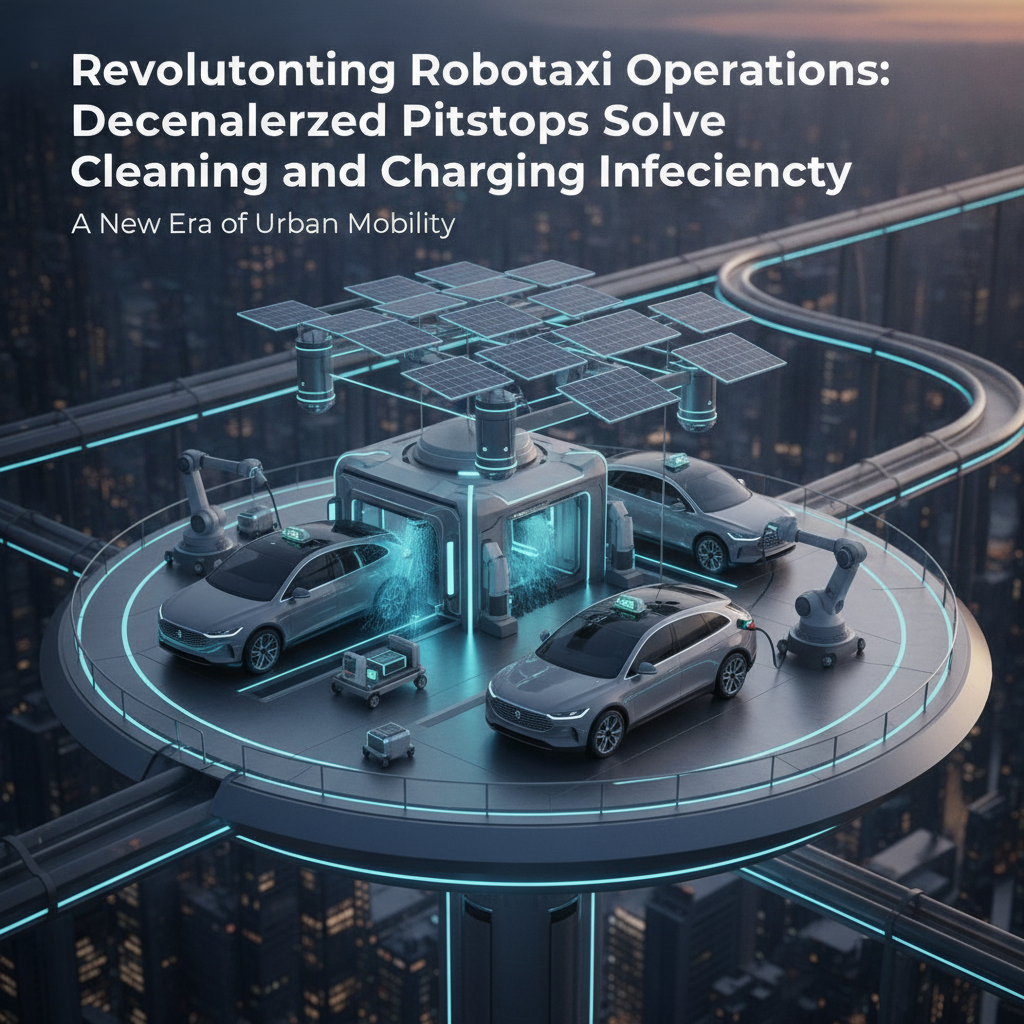
The promise of autonomous robotaxi fleets delivering seamless, on-demand transportation is quickly becoming a reality. Yet, behind the scenes, a significant operational hurdle has persisted: how do these self-driving vehicles get cleaned and charged efficiently without wasting valuable time and mileage? Traditionally, robotaxis have had to drive considerable distances to centralized depots for these essential services, a process that saps profitability and diminishes fleet availability.
Enter a groundbreaking Silicon Valley startup, armed with $10 million in funding, poised to disrupt this paradigm. Their innovative solution? A network of decentralized "pitstops" designed specifically to provide quick, localized cleaning and charging for autonomous vehicles, promising to unlock unprecedented levels of efficiency for the burgeoning robotaxi industry.
The Hidden Drain on Robotaxi Efficiency: The Problem of Dead Miles
Imagine a fleet of autonomous vehicles constantly ferrying passengers across a city. Every few shifts, each vehicle needs to return to a central hub, often miles away from its operational zone, just to get a wash and a power boost. This seemingly minor logistical challenge creates several costly inefficiencies:
- Wasted Mileage and Energy: Every mile driven without a passenger is a "dead mile," consuming battery power (or fuel) and adding wear and tear without generating revenue.
- Increased Downtime: The longer a robotaxi spends traveling to and from a depot, the less time it’s available to serve customers, directly impacting fleet utilization and profitability.
- Higher Operational Costs: Beyond energy consumption, these dead miles contribute to maintenance costs, labor for managing depots, and the sheer overhead of maintaining large, centralized facilities.
- Scalability Challenges: As robotaxi fleets grow, the demands on centralized infrastructure become immense, potentially bottlenecking expansion.
- Environmental Impact: Unnecessary travel contributes to a larger carbon footprint, counteracting some of the sustainability benefits of autonomous electric vehicles.
Introducing the Game-Changing Solution: Decentralized AV Pitstops
This visionary startup is tackling the problem head-on by building a network of smaller, strategically located facilities – essentially, pitstops for robotaxis. These automated stations are designed to offer a rapid and efficient turnaround for cleaning and charging, right where the vehicles operate most frequently. The core concept is simple yet powerful: bring the service to the robotaxi, rather than making the robotaxi travel for the service.
Key features and benefits of these decentralized pitstops include:
- Automated & Rapid Service: Robotaxis can autonomously enter these stations for quick, robotic washes and high-speed charging, minimizing human intervention and turnaround time.
- Optimized Location: Placed in high-demand areas or strategic points within a city, these pitstops drastically reduce the "dead miles" a robotaxi needs to travel for maintenance.
- Maximized Fleet Uptime: With faster, more convenient servicing, robotaxis spend more time on the road, generating revenue, and less time out of service.
- Lower Operational Expenses: By cutting down on unnecessary travel, energy consumption, and centralized infrastructure needs, fleet operators can significantly reduce their overall costs.
- Enhanced Scalability: A distributed network of smaller stations is inherently more scalable and adaptable to expanding fleet sizes and service areas than a few large depots.
- Improved Sustainability: Reduced travel translates directly to lower energy consumption and emissions, reinforcing the eco-friendly potential of autonomous EV fleets.
A New Era for Autonomous Vehicle Fleet Management
This innovation isn’t just about cleaning cars; it’s about fundamentally reshaping the economics and logistics of autonomous vehicle operations. By solving the inefficiency of robotaxi cleaning and charging, this startup is enabling greater profitability, smoother operations, and accelerated growth for robotaxi companies worldwide. Their $10 million in funding is a clear testament to the market’s belief in the critical need for such infrastructure.
Beyond the Horizon: The Future of Autonomous Mobility
The implications of this decentralized model extend far beyond the immediate cost savings. It paves the way for:
- Hyper-Localized Services: Robotaxi fleets can become even more responsive and omnipresent within urban environments.
- Smarter Grid Integration: Decentralized charging stations can play a role in smart grid management, balancing energy demand more effectively.
- Autonomous Logistics Optimization: The principles could be applied to other autonomous vehicles, like delivery robots, requiring similar servicing.
Conclusion
The journey towards a fully autonomous future is paved with both technological breakthroughs and ingenious infrastructural solutions. The challenge of robotaxi cleaning and charging inefficiency, once a quiet bottleneck, is now being directly addressed by forward-thinking innovators. By building a network of smart, decentralized pitstops, this Silicon Valley startup is not just cleaning and charging cars; they are cleaning up the operational model of autonomous mobility, driving the entire industry towards a more efficient, sustainable, and profitable future.
Leave a Reply