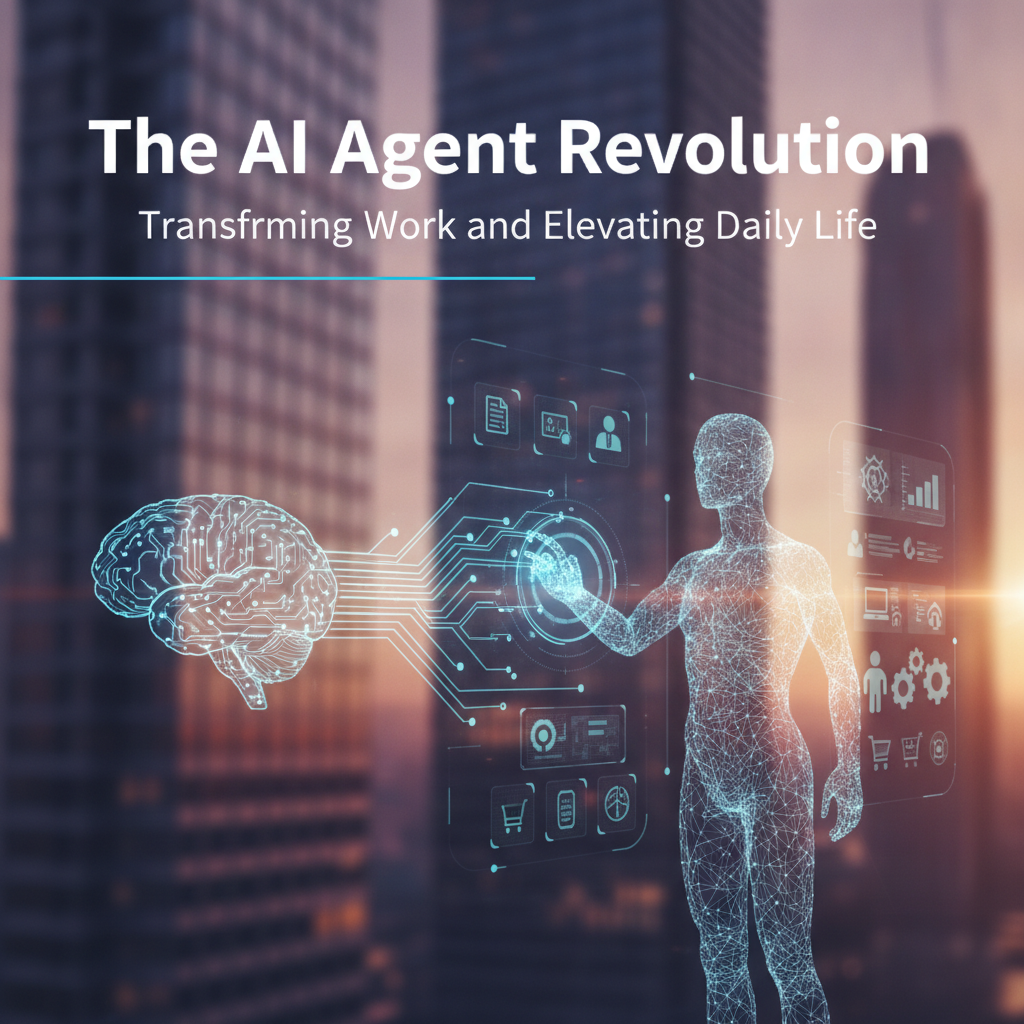
Artificial intelligence is no longer confined to the realms of science fiction or academic research labs. It’s rapidly evolving, and at its forefront are AI agents – sophisticated autonomous entities poised to redefine our professional and personal landscapes. Far beyond simple chatbots, these intelligent agents are set to become indispensable partners, fundamentally altering how we work, learn, interact, and live.
As we navigate the mid-2020s, the shift is palpable. Businesses are integrating AI agents to streamline operations, while individuals are beginning to experience their power in daily routines. This isn’t just an upgrade; it’s a revolution that promises unprecedented efficiency, hyper-personalization, and a rethinking of human-machine collaboration. Let’s dive into what AI agents are and how they are already shaping our future, from the boardroom to the living room.
What Exactly Are AI Agents?
At their core, AI agents are autonomous software entities designed to perceive their environment, make decisions, and take actions to achieve specific goals, often without direct human intervention once configured. Unlike traditional software that simply executes commands, AI agents exhibit:
- Proactivity: They don’t wait for instructions but initiate actions based on learned patterns and goals.
- Reactivity: They respond to changes in their environment in real-time.
- Social Ability: Many can interact with humans or other AI agents, sharing information and coordinating tasks.
- Learning: They continuously adapt and improve their performance over time through experience.
Think of Siri or Alexa as nascent forms; modern AI agents take this concept to a new level, possessing greater autonomy, problem-solving capabilities, and the ability to handle more complex, multi-step objectives across various domains.
The Transformative Impact on Work
The workplace is arguably where AI agents will have their most profound and immediate impact. From automating tedious tasks to providing strategic insights, they are redefining productivity and the very nature of employment.
Automating the Mundane, Amplifying Human Potential
One of the most immediate benefits of AI agents in the workplace is the automation of routine, repetitive, and time-consuming tasks. Imagine agents handling:
- Data Entry and Management: Automatically extracting, categorizing, and updating information across systems.
- Scheduling and Logistics: Coordinating meetings, travel arrangements, and project timelines with minimal human oversight.
- Report Generation: Compiling data, analyzing trends, and drafting comprehensive reports based on specified parameters.
- Customer Service: Intelligent chatbots and virtual assistants resolving queries, escalating complex issues, and providing personalized support 24/7.
By offloading these tasks, human employees are freed to focus on higher-value activities that demand creativity, critical thinking, strategic planning, and interpersonal skills – areas where human ingenuity still reigns supreme.
Intelligent Decision Support and Personalized Insights
AI agents excel at processing and analyzing vast datasets far beyond human capacity. This enables them to provide invaluable decision support:
- Market Analysis: Identifying emerging trends, predicting consumer behavior, and assessing competitive landscapes.
- Financial Forecasting: Modeling economic scenarios and recommending investment strategies.
- Personalized Learning and Development: Tailoring training modules and skill-building exercises for employees based on their performance and career goals.
This level of insight empowers leaders and teams to make more informed, data-driven decisions, reducing risk and uncovering new opportunities.
Seamless Collaboration and Enhanced Productivity
AI agents are emerging as effective digital team members. They can:
- Coordinate Project Workflows: Assigning tasks, monitoring progress, and flagging potential bottlenecks.
- Facilitate Communication: Summarizing lengthy email threads, drafting responses, and ensuring information flows efficiently across departments.
- Optimize Resource Allocation: Identifying the best use of time, budget, and personnel for optimal project outcomes.
This enhanced collaboration leads to more streamlined operations, fewer errors, and a significant boost in overall organizational productivity.
Reskilling and the Evolution of Job Roles
While some fear job displacement, the more realistic future involves a transformation of job roles. The rise of AI agents necessitates new skills and creates entirely new professions:
- AI Trainers and Validators: Individuals who teach AI agents, correct their errors, and ensure their outputs are accurate and ethical.
- Prompt Engineers: Experts in crafting effective queries and instructions to maximize AI agent performance.
- Human-AI Collaboration Specialists: Professionals who design and manage workflows where humans and AI agents work together seamlessly.
Continuous learning and adaptability will be key for the workforce of the future, focusing on skills that complement AI, such as creativity, emotional intelligence, and complex problem-solving.
Revolutionizing Our Daily Lives
Beyond the office, AI agents are weaving themselves into the fabric of our personal lives, promising a future of unprecedented convenience, personalization, and efficiency.
Hyper-Personalized Assistants
Imagine a personal assistant that truly understands your preferences, anticipates your needs, and proactively manages your life:
- Health and Wellness: Monitoring vital signs, tracking diet and exercise, scheduling appointments, and providing personalized health recommendations.
- Financial Management: Budgeting, tracking expenses, identifying savings opportunities, and even executing trades based on your financial goals.
- Travel and Leisure: Planning trips, booking flights and accommodations, and suggesting activities tailored to your interests and budget.
These agents will learn from your habits and preferences, evolving into truly indispensable companions that simplify complex aspects of daily living.
Smart Homes That Truly Understand
The concept of smart homes will advance beyond simple remote control. AI agents will orchestrate a symphony of interconnected devices, creating an environment that adapts to your presence and preferences:
- Proactive Climate Control: Adjusting temperature based on occupancy, weather forecasts, and your personal comfort history.
- Energy Optimization: Learning usage patterns to minimize waste and reduce utility bills.
- Predictive Maintenance: Monitoring appliances and systems to anticipate and schedule repairs before breakdowns occur.
Your home will become a truly intelligent ecosystem, anticipating your needs and acting autonomously to create an optimal living experience.
Transforming Learning and Personal Development
AI agents offer unparalleled opportunities for personalized education and skill acquisition:
- Adaptive Tutors: Identifying learning gaps, providing tailored content, and adapting teaching methods to individual student paces.
- Language Coaches: Offering immersive, personalized practice and feedback.
- Fitness and Wellness Guides: Designing customized workout plans, tracking progress, and motivating individuals towards their goals.
This personalization makes learning more engaging, effective, and accessible to everyone, regardless of their background or learning style.
Enhanced Accessibility and Well-being
For individuals with disabilities, AI agents can be life-changing, providing support and independence. Furthermore, they can contribute to general well-being by:
- Mental Health Support: Offering therapeutic conversations, mindfulness exercises, and connecting users with professional help when needed.
- Companionship: For the elderly or those living alone, AI agents can provide interactive engagement and monitor for safety.
Navigating the Future: Challenges and Ethical Considerations
While the promise of AI agents is vast, their widespread adoption comes with crucial challenges and ethical considerations that must be addressed proactively:
- Data Privacy and Security: AI agents rely on vast amounts of personal and professional data. Protecting this information from breaches and misuse is paramount.
- Algorithmic Bias: If trained on biased data, AI agents can perpetuate or even amplify societal biases, leading to unfair or discriminatory outcomes.
- Job Displacement: While new jobs will emerge, careful planning and investment in reskilling programs are necessary to mitigate potential job losses in certain sectors.
- Ethical Governance: Developing clear ethical guidelines and regulatory frameworks for the development and deployment of autonomous AI agents is critical to ensure they operate safely, transparently, and beneficially.
- Control and Autonomy: Defining the boundaries of AI agent autonomy and ensuring human oversight remain crucial.
Preparing for the AI Agent Era
The future with AI agents isn’t just coming; it’s already here. To thrive in this evolving landscape, both individuals and organizations need to adapt:
- Embrace Lifelong Learning: Continuously acquire new skills, particularly those that complement AI capabilities like creativity, critical thinking, and emotional intelligence.
- Understand AI Capabilities: Learn how AI agents work, their strengths, and their limitations to leverage them effectively and ethically.
- Develop a Growth Mindset: Be open to new ways of working and living, and view AI as a tool for augmentation, not replacement.
- Advocate for Responsible AI: Engage in discussions about ethical AI development, policy, and governance to help shape a beneficial future for everyone.
Conclusion
AI agents represent a pivotal leap in artificial intelligence, moving beyond tools that merely assist us to autonomous entities that actively participate and even anticipate our needs. They are not simply changing how we perform tasks; they are redefining the very structure of work, enabling unprecedented levels of productivity, personalization, and innovation. Simultaneously, they are enriching our daily lives, offering new levels of convenience, accessibility, and tailored experiences.
While challenges related to ethics, privacy, and job evolution must be carefully navigated, the trajectory is clear: AI agents are set to be the most impactful technological advancement of our generation. By understanding their potential, addressing their complexities, and embracing a collaborative future between humans and intelligent machines, we can collectively shape a world that is more efficient, insightful, and profoundly personal.