
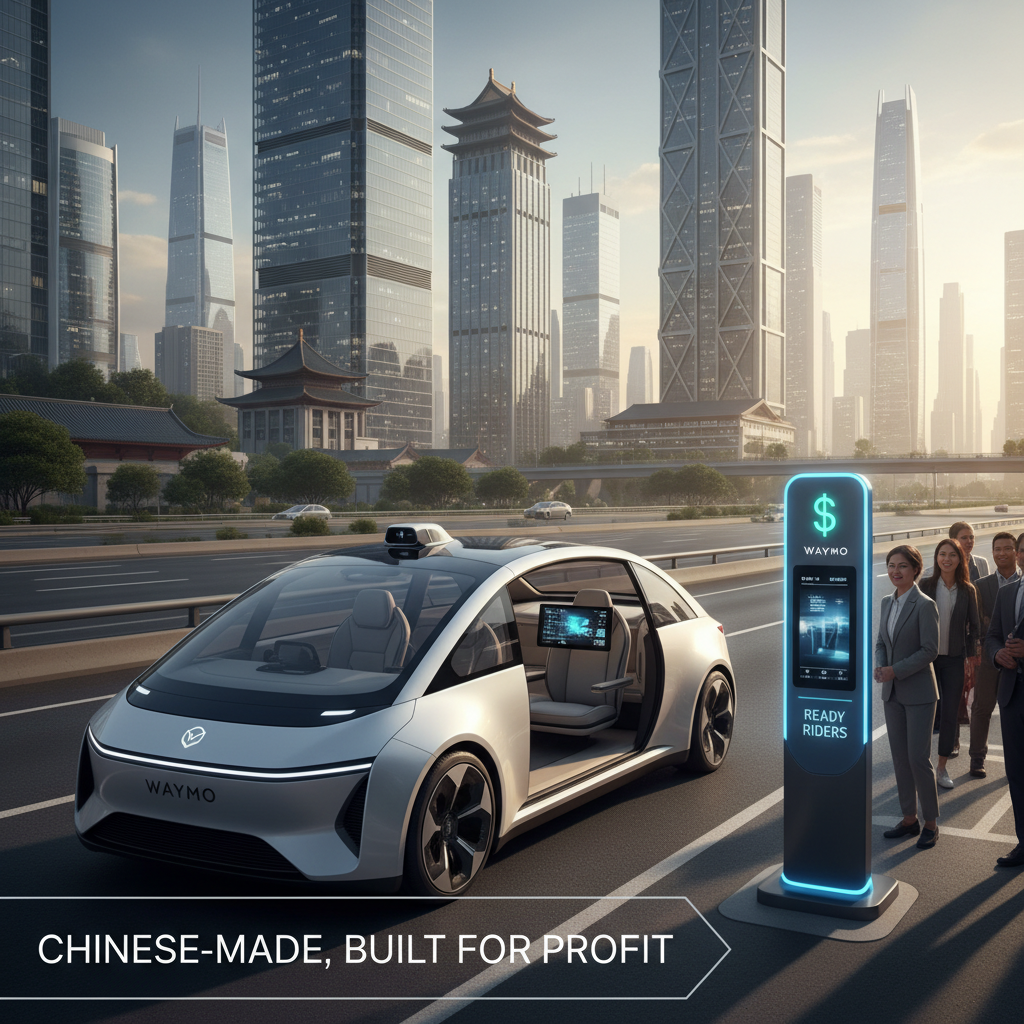
The autonomous vehicle industry is on the cusp of a significant transformation, and Waymo, a pioneer in self-driving technology, is leading the charge with its latest strategic move. Today marks a pivotal moment as Waymo officially unveils and deploys its newest robotaxi – a vehicle meticulously engineered not just for safety and comfort, but crucially, for commercial viability. This next-generation autonomous vehicle is making headlines for several reasons: it’s Chinese-made, fundamentally built to make money, and perhaps most excitingly for consumers, it’s now accepting riders in select service areas. This isn’t just an upgrade; it’s a clear declaration of Waymo’s intent to scale its operations globally and achieve widespread profitability.
A Global Collaboration: The “Chinese-Made” Advantage in Autonomous Manufacturing
One of the most striking details about Waymo’s new robotaxi is its origin: manufactured in China. This strategic decision highlights a growing trend in the automotive industry, where global partnerships are essential for accelerating innovation and scaling production efficiently. While Waymo has previously partnered with traditional automakers like Chrysler and Jaguar Land Rover, this new venture likely involves a deeper collaboration with a Chinese manufacturing powerhouse, potentially leveraging advanced electric vehicle platforms from companies like Geely (who owns Zeekr, a common partner in AV projects).
The implications of this “Chinese-made” approach are multifaceted:
- Cost Efficiency: Access to robust supply chains and highly efficient manufacturing processes in China can significantly reduce the unit cost of each robotaxi, a critical factor for achieving profitability in a capital-intensive industry.
- Rapid Scaling: Chinese manufacturing capabilities are renowned for their speed and capacity, enabling Waymo to rapidly ramp up production and deploy a larger fleet of vehicles much faster than before.
- Innovation Hub: China is a global leader in EV technology and smart manufacturing, offering Waymo access to cutting-edge components and engineering expertise that can further enhance its autonomous driving systems.
This collaboration underscores Waymo’s commitment to leveraging the best global resources to bring autonomous mobility to the masses.
Engineered for Profit: Waymo’s Commercial Imperative Takes Center Stage
For years, autonomous vehicle development has been an enormous investment, often without immediate returns. With this new robotaxi, Waymo is signaling a definitive shift from pure R&D to aggressive commercialization. Every aspect of this new vehicle, from its design to its operational framework, has been optimized with a clear goal: to generate substantial revenue and achieve sustainable profitability.
Key aspects contributing to its profit-driven design include:
- Purpose-Built Design: Unlike retrofitting existing cars, a purpose-built autonomous vehicle can optimize interior space for passenger comfort, integration of sensors, and durability for high-mileage commercial operation. This reduces maintenance costs and extends vehicle lifespan.
- Enhanced Efficiency: The vehicle is likely all-electric, minimizing fuel costs. Furthermore, improved sensor integration and software mean more efficient routing and faster response times, maximizing vehicle utilization and reducing operational overhead.
- Scalable Operations: By standardizing the vehicle platform and manufacturing process, Waymo can more easily expand its services into new cities and regions, quickly scaling its fleet to meet growing demand.
- Data-Driven Optimization: With millions of miles driven, Waymo’s continuous learning systems will refine operational strategies, pricing models, and service areas to maximize revenue per ride and overall fleet profitability.
This strategic focus on unit economics and operational efficiency positions Waymo as a formidable contender in the burgeoning robotaxi market.
The Future is Now: Waymo’s New Robotaxi is Accepting Riders Today
The most exciting news for the public is that Waymo’s latest robotaxi is not just a concept or a prototype; it’s ready for prime time. The company has announced that the new vehicles are officially accepting riders in its expanded service areas, bringing safe, convenient, and reliable autonomous transportation to more people than ever before.
What can riders expect?
- Seamless Experience: Booking a ride through the Waymo One app remains as intuitive as ever, with enhanced features potentially offering more personalization or real-time updates.
- Superior Comfort: The purpose-built interior is designed for passenger comfort, with spacious seating, charging ports, and an intuitive in-cabin interface to manage the ride.
- Unwavering Safety: Waymo’s industry-leading safety record and rigorous testing protocols underpin every journey, ensuring a secure and reliable experience for all passengers. The vehicles are equipped with an advanced suite of sensors and redundant systems for ultimate peace of mind.
- Expanded Availability: While specific initial launch cities for this new fleet will be critical, the “now accepting riders” announcement suggests a significant expansion beyond existing operational zones, or a substantial increase in vehicle density within current cities like Phoenix, San Francisco, and potentially Los Angeles.
This immediate deployment signifies Waymo’s confidence in its technology and its readiness to move beyond pilot programs into widespread public service.
Broader Implications: Reshaping the Autonomous Vehicle Industry and Urban Mobility
Waymo’s latest announcement sends ripples throughout the entire autonomous vehicle ecosystem. This strategic pivot towards a Chinese-made, profit-driven, and immediately deployable robotaxi sets a new benchmark for the industry. It signals a maturation of the AV sector, moving past technological showcases towards viable commercial models.
The impact will be felt on several fronts:
- Competitive Pressure: Rivals will be forced to re-evaluate their own manufacturing strategies and commercial timelines to keep pace with Waymo’s efficiency and scale.
- Global Collaboration: It validates the model of international partnerships as a key accelerator for AV development and deployment.
- Sustainable Urban Mobility: As these electric robotaxis become more prevalent, they promise to reduce traffic congestion, lower emissions, and provide more accessible transportation options for diverse communities.
- Economic Impact: The creation of new jobs in operations, maintenance, and fleet management, alongside potential shifts in traditional transport sectors.
Waymo isn’t just building cars; it’s building a future where autonomous transportation is an everyday reality.
Conclusion: The Dawn of a New Autonomous Era
With its newest robotaxi – Chinese-made for maximum efficiency, strategically designed for profitability, and immediately available to riders – Waymo is not just advancing its own mission; it’s pushing the entire autonomous vehicle industry forward. This bold move underscores the company’s readiness to transition from a technological innovator to a market leader in sustainable and commercially successful self-driving services. The future of urban mobility is here, and it’s electric, autonomous, and ready to pick you up.
Are you ready to experience the next generation of transportation?
Leave a Reply