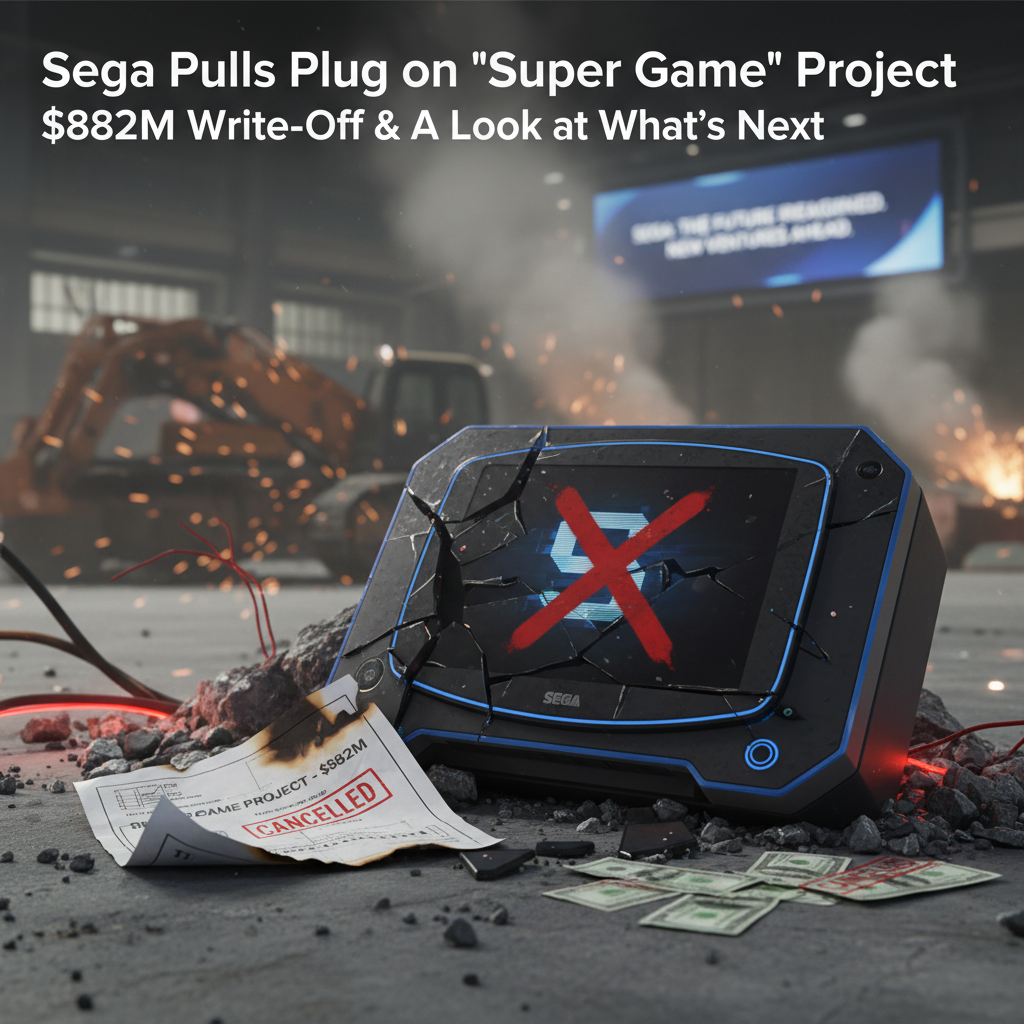
In a bombshell announcement that has sent ripples through the gaming industry, Sega has officially confirmed the cancellation of its ambitious and long-gestating ‘Super Game’ project. The strategic decision comes with a staggering financial write-down of $882 million, signaling a significant pivot in the company’s future direction. While the news marks the end of one highly anticipated venture, Sega also took the opportunity to detail its reinvigorated schedule for upcoming games, assuring fans that its commitment to innovative and beloved experiences remains steadfast.
The Demise of the ‘Super Game’: A Costly Farewell
The ‘Super Game’ initiative, first unveiled years ago, was envisioned as Sega’s foray into the next generation of gaming – an expansive, multi-year project aiming to create a groundbreaking, global AAA title with persistent online elements and cross-media potential. It represented a substantial investment in resources, talent, and strategic planning, meant to elevate Sega’s standing in the competitive modern gaming landscape.
However, industry insiders had long speculated about the challenges facing such an ambitious undertaking. Developing a game of that scale, especially one striving for unprecedented innovation, is fraught with difficulties, including ballooning budgets, technical hurdles, and the ever-shifting demands of the market. While Sega has not detailed the specific reasons for the cancellation beyond a strategic review, it’s clear the project faced significant obstacles that ultimately led to its discontinuation.
The $882 million write-down is a stark reminder of the immense financial risk involved in large-scale game development. This figure represents the impaired value of assets and investments made into the ‘Super Game’ that will no longer yield future returns, impacting Sega’s financial performance for the current fiscal year. It’s a heavy price to pay, but one Sega leadership believes is necessary to streamline operations and refocus its development efforts.
A Strategic Pivot and Lessons Learned
The cancellation of the ‘Super Game’ is more than just a financial setback; it represents a crucial strategic pivot for Sega. It suggests a re-evaluation of its approach to major AAA development, perhaps leaning away from overly ambitious, long-term speculative projects in favor of more manageable, high-quality titles that leverage existing, beloved IPs or established development pipelines. This move aligns with a broader industry trend where studios are increasingly scrutinizing the viability and profitability of live-service and open-world mega-projects.
For Sega, this could mean a renewed focus on:
- Core Franchises: Doubling down on iconic series like Sonic the Hedgehog, Yakuza/Like a Dragon, Persona, and Total War.
- Development Efficiency: Prioritizing achievable scope and realistic timelines.
- Audience Engagement: Focusing on titles that directly resonate with their existing fanbase while also attracting new players.
What’s Next: Sega’s Upcoming Game Schedule
Despite the significant news of the ‘Super Game’ cancellation, Sega was quick to reassure its fanbase by outlining a robust schedule for upcoming titles across various platforms. This forward-looking stance indicates that the company is not retreating but rather re-strategizing its path forward.
While specific titles and release dates will be detailed in future announcements, Sega hinted at:
- New Entries in Beloved Series: Fans can expect continuations and spin-offs from Sega’s most popular intellectual properties, potentially including the next major Sonic adventure, further expansions in the Like a Dragon universe, and new tactical experiences from Creative Assembly.
- Atlus Dominance: The acclaimed Atlus division is expected to continue its strong run with highly anticipated JRPGs, building on the success of titles like Persona and Shin Megami Tensei.
- Remasters and Remakes: Investments in modernizing classic Sega titles for contemporary audiences, tapping into nostalgia while introducing them to a new generation of players.
- Strategic Mobile Growth: A continued focus on expanding Sega’s presence in the lucrative mobile gaming market with new titles and enhanced existing ones.
The message is clear: while one chapter closes, Sega is gearing up for an exciting future, likely with a more focused and sustainable development strategy.
The Road Ahead for Sega
The cancellation of the ‘Super Game’ is undoubtedly a significant moment in Sega’s recent history. It’s a painful but necessary step for a company navigating the complexities of modern game development. The $882 million write-off underscores the financial realities of the industry, but the simultaneous commitment to a strong slate of upcoming games highlights Sega’s resilience and determination.
As Sega re-calibrates its strategy, fans and investors alike will be watching closely to see how this shift impacts the quality and frequency of its future releases. The hope is that by shedding the burden of an overly ambitious project, Sega can now concentrate its considerable talent and resources on delivering the high-quality, memorable gaming experiences it is known for.
Leave a Reply