
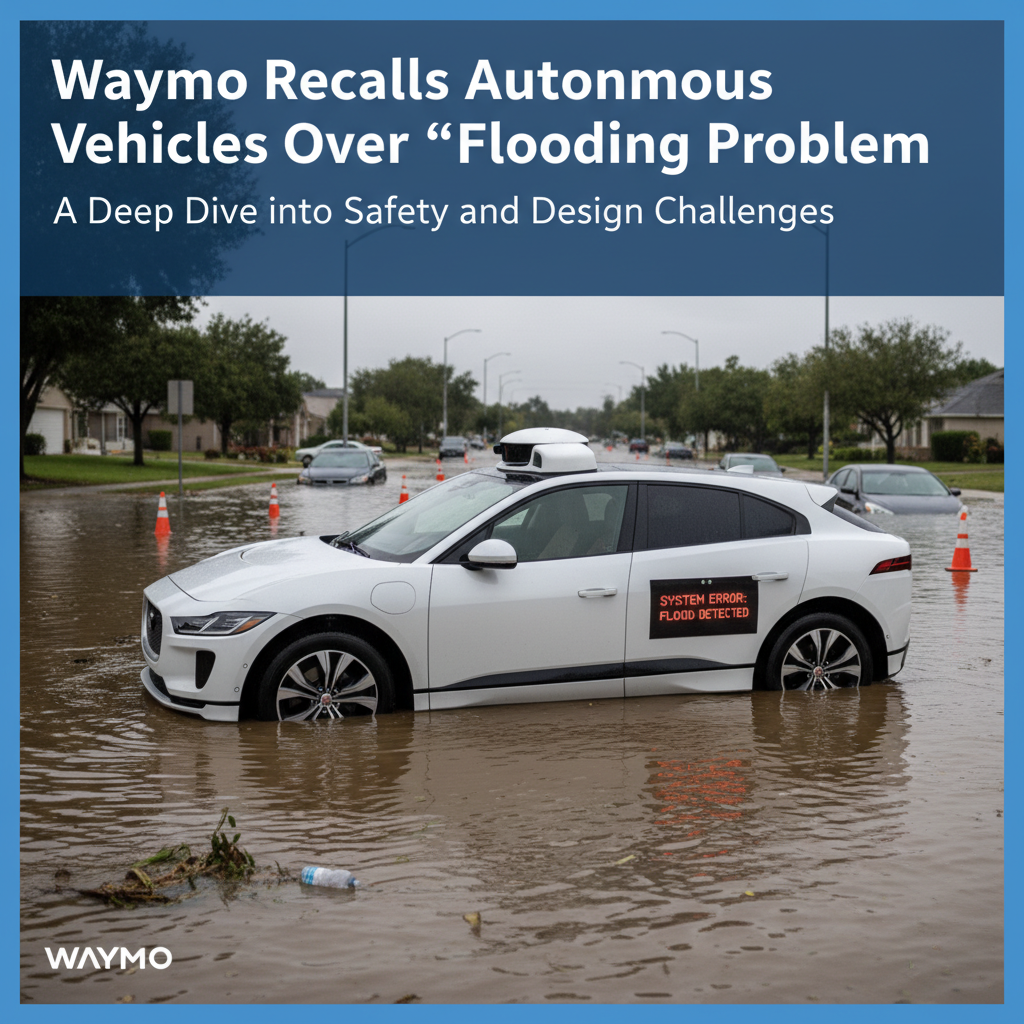
In a significant development for the autonomous vehicle industry, Waymo, a leader in self-driving technology, has announced a recall of its vehicles to address an unexpected “flooding problem.” While details are still emerging, this recall underscores the complex challenges of deploying sophisticated AI-driven systems in real-world, unpredictable environments.
Understanding the Waymo Recall and the ‘Flooding Problem’
Waymo, a subsidiary of Alphabet (Google’s parent company), operates one of the most advanced and extensive autonomous ride-hailing services. Their vehicles, equipped with an array of sensors—including LiDAR, radar, and cameras—alongside powerful onboard computers, navigate complex urban and suburban landscapes without human intervention.
The current recall is specifically aimed at rectifying a vulnerability that Waymo describes as a “flooding problem.” While not a catastrophic structural failure, early reports suggest the issue pertains to water intrusion affecting critical electronic components or sensor performance during certain environmental conditions, particularly heavy rain or driving through standing water. This could potentially lead to:
- Degraded Sensor Performance: Water on lenses or within sensor housing can obscure vision, reduce accuracy, or cause false readings for cameras, LiDAR, and radar units.
- Electronic Malfunctions: Water seepage into control units, wiring harnesses, or power supplies can lead to short circuits, system resets, or complete component failure.
- Software Glitches: While less direct, compromised hardware can feed corrupted data to the vehicle’s AI, potentially leading to incorrect decisions or emergency system shutdowns.
The safety implications are paramount. Any compromise to the vehicle’s ability to accurately perceive its surroundings or execute commands could increase the risk of an incident, even if Waymo’s robust safety systems are designed to initiate minimal risk maneuvers in such scenarios.
Waymo’s Proactive Response and Solutions
As a company that prides itself on its rigorous safety record and extensive testing, Waymo’s proactive recall demonstrates their commitment to addressing potential issues head-on. The solutions being implemented are expected to involve a multi-pronged approach:
- Hardware Modifications: Enhancing waterproofing and sealing around critical sensors and electronic enclosures. This might include improved gaskets, drain designs, or protective coatings.
- Software Updates: Implementing software adjustments to better detect and compensate for potential water-related sensor degradation, or to trigger safer fallback modes more quickly when such conditions are identified.
- Service and Inspection: Recalled vehicles will undergo thorough inspection and necessary modifications at Waymo service centers.
Waymo has emphasized that the recall is preventative, aimed at ensuring the highest level of safety and reliability across its fleet. Transparency and swift action are crucial for maintaining public trust in autonomous technology.
Broader Implications for the Autonomous Vehicle Industry
This Waymo recall, while specific to a flooding issue, highlights several critical considerations for the broader autonomous vehicle industry:
- Environmental Robustness: AVs must operate flawlessly in all reasonable weather conditions. Protecting sensitive electronics and sensors from water, dust, extreme temperatures, and vibrations is a constant engineering challenge.
- Complexity of Integration: The integration of diverse sensors, complex software, and vehicle hardware creates intricate dependencies. A seemingly minor environmental factor can have cascading effects.
- Continuous Improvement: The development of autonomous technology is an iterative process. Recalls, while concerning, are part of the learning curve and demonstrate a system of checks and balances necessary for public safety.
- Regulatory Scrutiny: Regulatory bodies like NHTSA (National Highway Traffic Safety Administration) are closely monitoring AV safety. Proactive recalls demonstrate a company’s responsibility and help build a framework for future industry standards.
The Road Ahead for Autonomous Safety
The Waymo recall for a “flooding problem” serves as a potent reminder that even the most advanced technology faces real-world challenges. It underscores the importance of not just artificial intelligence, but also robust physical engineering, meticulous testing across diverse environments, and a transparent approach to safety.
As autonomous vehicles become more prevalent, incidents like this, and the industry’s response to them, will continue to shape public perception and regulatory frameworks. Waymo’s swift action to address this issue reinforces their commitment to delivering safe and reliable self-driving experiences, proving that even as the technology evolves, fundamental engineering principles remain paramount.
What are your thoughts on this Waymo recall? Share your insights in the comments below!
Leave a Reply