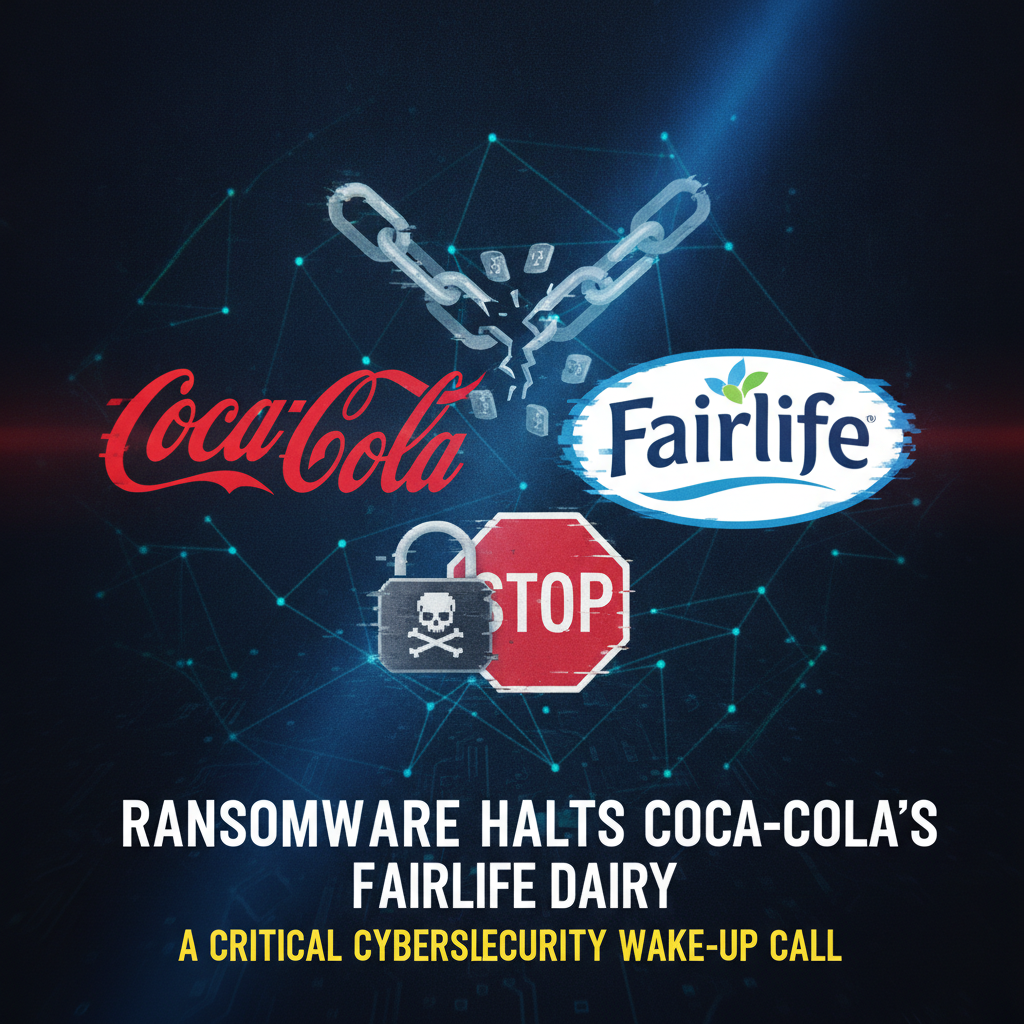
In a stark reminder of the ever-present and evolving threat landscape, global beverage giant Coca-Cola was forced to suspend production at its Fairlife dairy facility following a sophisticated ransomware attack. The incident, which came to light on July 16, 2026, sent ripples through the food and beverage industry, underscoring the severe operational and financial consequences when critical industrial control systems fall victim to cyber espionage.
Fairlife, a premium dairy brand partially owned by Coca-Cola, found its processing and packaging lines grinding to a halt, demonstrating that no sector, however traditional or seemingly resilient, is immune to the digital dangers lurking online. This event serves as a potent wake-up call, emphasizing the urgent need for robust cybersecurity measures across all industrial operations, particularly within the critical infrastructure sectors.
The Incident: When Digital Threats Freeze Physical Production
Details emerging from the TechCrunch report indicate that the ransomware infiltrated Fairlife’s operational technology (OT) network, which manages everything from milk processing equipment to inventory control and packaging machinery. This direct impact on OT systems is particularly concerning because it transcends data theft, directly disrupting physical processes vital for production.
- Operational Paralysis: The ransomware effectively locked down or encrypted critical systems, making it impossible to operate machinery, monitor production flows, or manage logistics.
- Production Suspension: With systems compromised, Fairlife had no choice but to halt all production to prevent further damage, contain the breach, and begin recovery efforts.
- Supply Chain Disruption: A prolonged shutdown at a major dairy facility like Fairlife inevitably leads to gaps in the supply chain, affecting retailers and ultimately, consumers who rely on its products.
While the exact ransomware variant and the demands made are typically kept under wraps during ongoing investigations, the pattern aligns with increasingly aggressive tactics seen from cybercriminal groups targeting high-value industrial targets.
Broader Implications: Beyond the Dairy Aisle
A cyberattack of this magnitude against a Coca-Cola-associated entity has far-reaching consequences:
1. Supply Chain Vulnerability Exposed
The Fairlife incident highlights the fragility of modern, interconnected supply chains. A single point of failure, even at a subsidiary level, can have a cascading effect, leading to product shortages, missed delivery windows, and strained relationships with distributors and retailers. For the food and beverage industry, this also raises concerns about product integrity and safety if systems monitoring critical processes are compromised.
2. Economic Repercussions and Recovery Costs
The financial toll of a ransomware attack extends far beyond any potential ransom payment. It includes:
- Lost revenue from suspended production.
- Costs of forensic investigation and remediation.
- Investment in new security infrastructure and personnel.
- Potential legal fees and regulatory fines if data breaches occurred.
- Brand damage and loss of consumer trust.
3. A Wake-Up Call for OT Security
Industrial Control Systems (ICS) and Operational Technology (OT) networks have historically been less prioritized for cybersecurity than traditional IT networks. However, as these systems become more digitized and interconnected, they present a lucrative target for attackers. The Fairlife attack unequivocally demonstrates that compromising OT can lead to real-world physical disruption, making OT security an imperative, not an afterthought, for all manufacturers.
Fortifying Defenses: Essential Cybersecurity Measures for Manufacturers
The Fairlife incident serves as a critical blueprint for how companies, especially in manufacturing and critical infrastructure, must bolster their cyber defenses. Here are key strategies:
- Robust Network Segmentation: Isolate OT networks from IT networks and segment within OT to limit the lateral movement of threats. This prevents a breach in one area from crippling the entire operation.
- Advanced Endpoint Protection & Detection (EDR/XDR): Deploy cutting-edge security solutions on all endpoints, including industrial control systems, to detect and respond to threats in real-time before they escalate.
- Regular Backups & Disaster Recovery: Implement a comprehensive backup strategy for all critical data and system configurations, ensuring they are stored offline and tested regularly for quick recovery in case of an attack.
- Employee Training & Awareness: Human error remains a significant vulnerability. Regular cybersecurity training, especially phishing awareness, can turn employees into a strong first line of defense.
- Comprehensive Incident Response Planning: Develop and regularly test a detailed incident response plan. Knowing who does what, when, and how during an attack can significantly reduce downtime and damage.
- Vulnerability Management & Patching: Regularly scan for vulnerabilities in IT and OT systems and apply patches promptly to close security gaps that attackers might exploit.
- Zero Trust Architecture: Adopt a “never trust, always verify” approach, requiring strict verification for every user and device trying to access resources, regardless of their location.
The Future of Industrial Cybersecurity: A Continuous Battle
As industries embrace Industry 4.0 and the Industrial Internet of Things (IIoT), the attack surface will only expand. The Fairlife attack is a precursor of what could become a more common occurrence if organizations fail to adapt their security posture. Proactive investment in cybersecurity, treating it as a core business function rather than just an IT expense, is no longer optional—it’s foundational to operational continuity and competitive advantage.
Conclusion: Cybersecurity Isn’t Optional, It’s Operational
The ransomware attack on Coca-Cola’s Fairlife dairy facility is a potent reminder that the digital realm has tangible impacts on the physical world. For manufacturers, particularly those in the food and beverage industry, the lessons are clear: robust cybersecurity is not just about protecting data; it’s about safeguarding production, supply chains, brand reputation, and ultimately, consumer access to essential goods. By prioritizing comprehensive cybersecurity strategies, businesses can transform potential vulnerabilities into resilient strengths, ensuring operations continue smoothly even in the face of evolving cyber threats.