
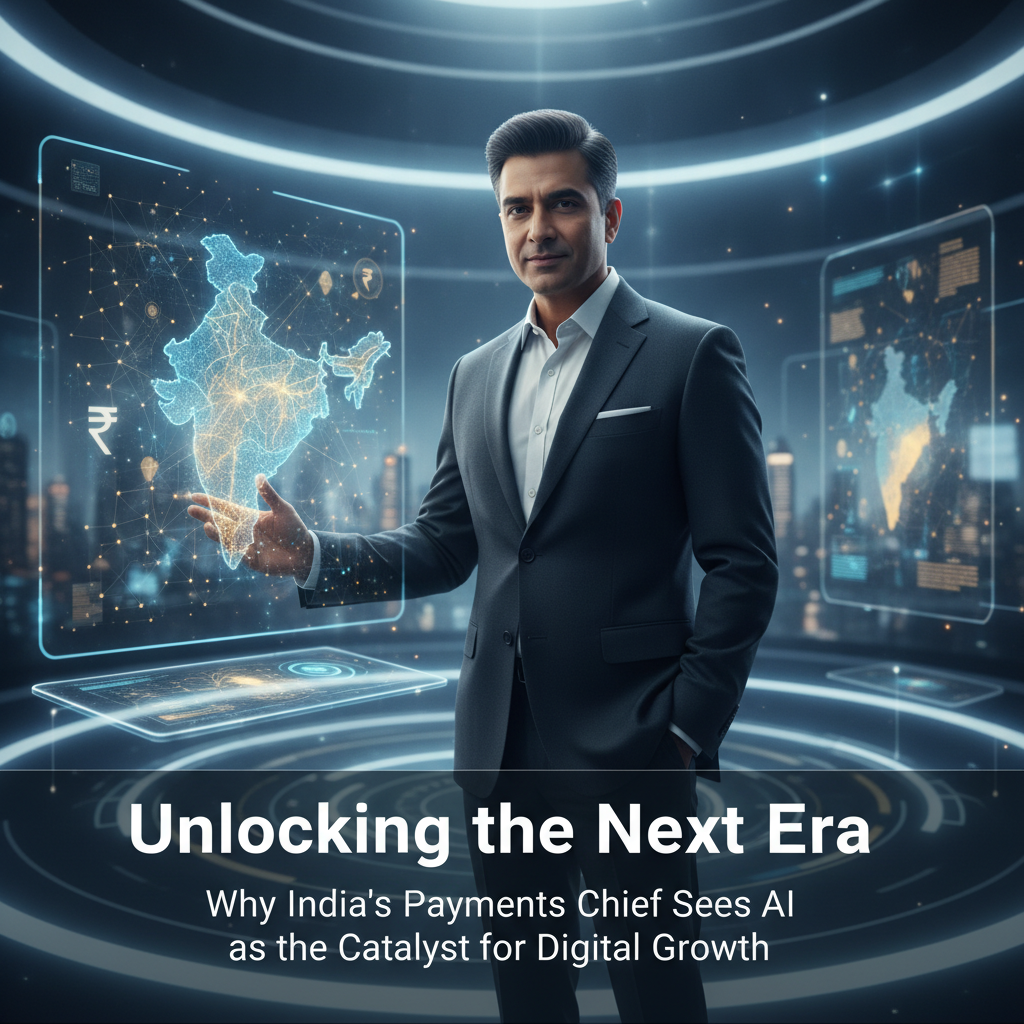
India’s digital payment landscape is nothing short of revolutionary. From the ubiquitous Unified Payments Interface (UPI) facilitating billions of transactions monthly to its rapid adoption across diverse socio-economic strata, the nation has set a global benchmark for financial inclusion and innovation. But as the digital economy continues its relentless expansion, what lies ahead? According to a prominent Indian payments chief, the next significant surge in digital payment growth will be inextricably linked with one powerful technology: Artificial Intelligence (AI).
The Current Landscape: India’s Digital Payment Prowess
India’s journey towards a less-cash economy has been meteoric. Driven by government initiatives, a tech-savvy population, and robust infrastructure like Aadhaar and UPI, digital transactions have become commonplace. This rapid evolution has not only brought convenience but also a massive amount of data – a goldmine for insights and optimization. However, sustained growth demands more than just infrastructure; it requires intelligence to address evolving user needs, security threats, and operational complexities.
Why AI, Why Now? The Vision of India’s Payments Chief
The vision articulated by the Indian payments chief underscores a strategic understanding of AI’s multifaceted potential. It’s not merely about automating existing processes but fundamentally reimagining how payments are initiated, processed, secured, and experienced. The chief’s perspective suggests that AI will be the crucial enabler for:
- Scaling Infrastructure: Handling ever-increasing transaction volumes with greater efficiency.
- Mitigating Risks: Combatting sophisticated fraud in real-time.
- Enhancing User Experience: Making payments more intuitive, personalized, and seamless.
- Driving Financial Inclusion: Reaching underserved populations with tailored, accessible solutions.
Key Areas Where AI Will Transform Indian Payments
AI’s impact will ripple across the entire digital payment ecosystem. Here are some of the critical domains poised for significant transformation:
Enhanced Fraud Detection and Security
As digital payments grow, so does the sophistication of cyber threats. AI and machine learning algorithms are unparalleled in their ability to analyze vast datasets, identify anomalies, and detect fraudulent patterns in real-time. This proactive approach will significantly bolster the security of transactions, building greater trust among users and reducing financial losses for both consumers and institutions. The chief’s emphasis on AI likely stems from the need to stay ahead of these evolving threats.
Hyper-Personalized User Experiences
Imagine a payment system that truly understands your habits, preferences, and needs. AI can analyze past transaction data, spending patterns, and even location to offer personalized payment options, relevant loyalty programs, or timely reminders. This level of personalization will make digital payments not just a utility, but an integral and delightful part of daily life, driving higher engagement and adoption.
Streamlining Operations and Efficiency
From back-end reconciliation and settlement processes to customer support, AI can dramatically improve operational efficiency. AI-powered chatbots can handle routine queries, freeing human agents for complex issues. Predictive analytics can optimize liquidity management for banks and payment providers, reducing costs and improving overall system performance. This operational streamlining is vital for managing the sheer scale of India’s digital transactions.
Financial Inclusion and Accessibility
While India has made strides in financial inclusion, a significant portion of the population remains underserved. AI can play a pivotal role here by developing more intuitive interfaces for less tech-savvy users, providing credit scoring for those without formal credit histories, and even using voice-based or vernacular language AI to facilitate payments in remote areas. This is where AI moves beyond efficiency to become a tool for social good, aligning with national goals.
Navigating the Challenges and Seizing the Opportunity
The path forward isn’t without its challenges. Data privacy concerns, the need for robust regulatory frameworks, and the ethical implications of AI deployment will require careful consideration. However, the proactive stance of India’s payments chief suggests a readiness to address these hurdles strategically.
The opportunity is immense. By leveraging AI, India can not only solidify its position as a global leader in digital payments but also unlock new avenues for economic growth, fostering a truly inclusive and intelligent financial ecosystem.
Conclusion: AI – The Unstoppable Force in India’s Payment Future
The assertion by India’s payments chief is a clear signal: AI is not just another technological fad but a fundamental pillar for the next era of digital payment growth. From fortifying security and personalizing experiences to driving operational excellence and expanding financial access, AI’s transformative potential is undeniable. As India continues to innovate and lead in the fintech space, the strategic integration of AI will undoubtedly cement its place at the forefront of the global digital economy, shaping how billions transact and interact with their money in the years to come.
Leave a Reply