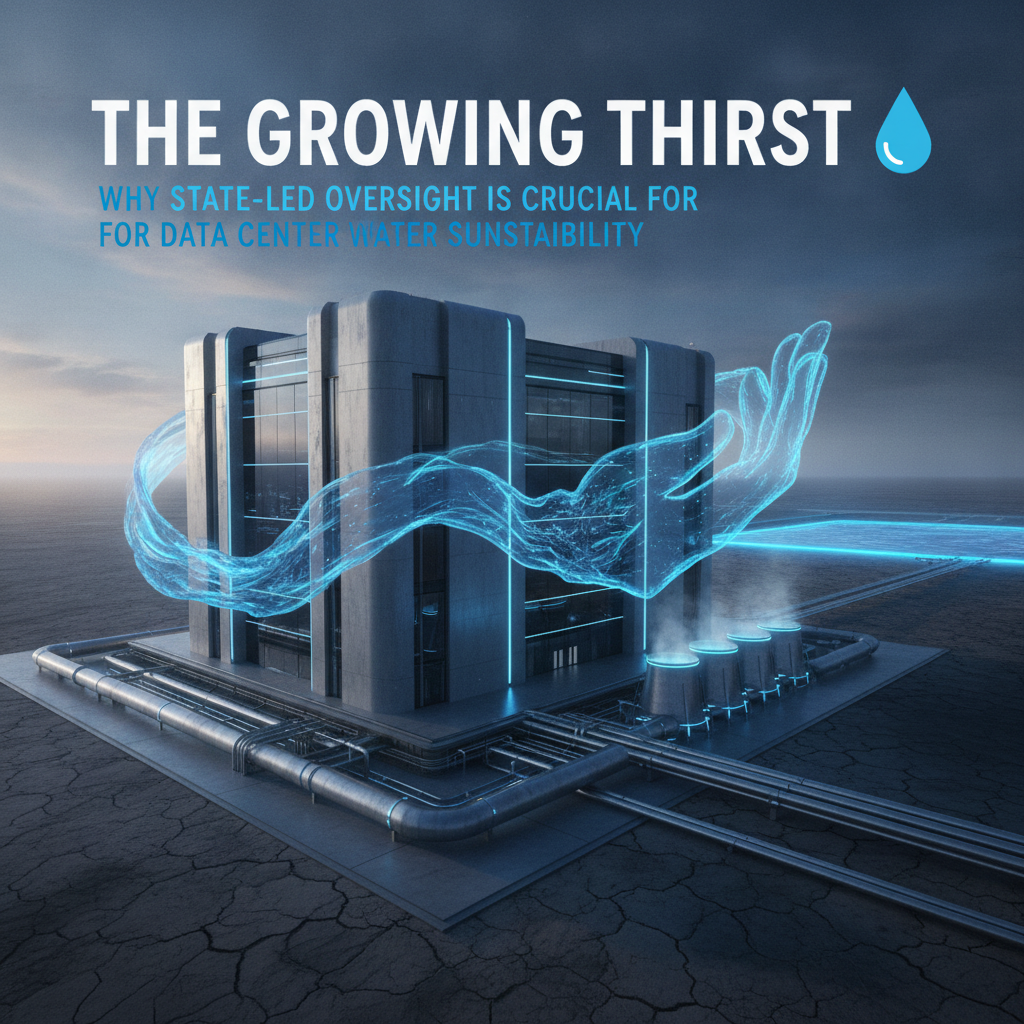
In an increasingly digital world, data centers are the unseen backbone of our economy and daily lives. From streaming movies to powering AI, these facilities consume vast amounts of energy – and often, an equally significant volume of water. As concerns over water scarcity mount globally, the environmental footprint of data centers is coming under closer scrutiny. A recent report has brought this issue to the forefront, urging U.S. states to take the lead in overseeing data center water usage to ensure a sustainable future.
This blog post will delve into the critical need for robust data center water oversight, explore the reasons behind the report’s recommendations, and discuss what state-led initiatives could mean for the industry and the environment.
The Unseen Torrent: Data Centers’ Water Footprint
While often associated with electricity consumption, data centers are also incredibly water-intensive operations. Their primary water use comes from cooling systems, particularly evaporative cooling, which relies on evaporating water to dissipate heat generated by servers. As server racks become denser and demand for high-performance computing (HPC) and artificial intelligence (AI) grows, so does the heat output – and the need for efficient cooling.
- Evaporative Cooling: Highly efficient in terms of energy, but consumes significant amounts of water.
- Non-Evaporative Cooling: Often uses less water but can be more energy-intensive, or requires access to large bodies of water for direct cooling.
- Indirect Water Use: Water is also consumed in the generation of electricity that powers these facilities, a factor known as embedded water.
Estimates suggest that some data centers can consume millions of gallons of water annually, comparable to the daily usage of small towns. In regions already facing water stress, this poses a significant challenge, impacting local communities, agriculture, and ecosystems. Without proper data center water oversight, this escalating demand could lead to severe environmental and social conflicts.
A Critical Call to Action: The Report’s Recommendations for State Leadership
The recent report underscores a critical gap in current regulatory frameworks: a lack of comprehensive and consistent data center water management. Historically, federal oversight has focused more on energy efficiency, while water regulation often falls to local municipalities or regional water authorities, which may lack the specific expertise or coordinated approach needed for large-scale industrial consumers like data centers.
The report advocates for states to take the helm for several compelling reasons:
- Regional Water Context: Water availability and stress vary significantly across different states. State-level governance can better tailor policies to local hydrological conditions and water rights.
- Existing Infrastructure: States already possess established environmental protection agencies and water resource management departments that can integrate data center regulations into broader water conservation efforts.
- Comprehensive Data Collection: States can mandate transparent reporting of water withdrawal and consumption by data centers, providing crucial data for informed policy-making and fostering accountability.
- Standardized Efficiency Requirements: Implementing state-specific efficiency standards for cooling systems and promoting the adoption of advanced water-saving technologies can drive innovation within the industry.
By stepping up, states can ensure that the rapid growth of the digital economy doesn’t come at the expense of vital water resources, fostering both technological advancement and environmental stewardship.
Benefits of Proactive State-Led Data Center Water Oversight
Implementing effective state water regulation for data centers offers a multitude of benefits, extending beyond mere compliance:
- Enhanced Water Security: By managing consumption, states can better protect their water supply for all users, including residents, agriculture, and industry, mitigating the risk of future shortages.
- Environmental Protection: Reduced water withdrawal can preserve natural habitats, support aquatic ecosystems, and lessen the impact on rivers, lakes, and aquifers.
- Industry Resilience: Data center operators benefit from clear guidelines and predictable regulations, reducing the risk of operational disruptions due to water scarcity or public backlash. Proactive measures can also lead to more efficient, cost-effective operations in the long run.
- Innovation and Green Tech Adoption: Mandates and incentives can spur investment in cutting-edge water-efficient cooling technologies, such as direct-to-chip liquid cooling, adiabatic cooling, and greywater recycling systems.
- Public Trust and Transparency: Greater transparency regarding water usage can build public trust and demonstrate a commitment to corporate social responsibility by data center operators.
Navigating the Path Forward: Challenges and Opportunities
While the call for state-led data center water oversight is clear, its implementation will present challenges. States will need to:
- Develop Expertise: Build internal capacity to understand data center specific water usage and cooling technologies.
- Foster Collaboration: Work closely with industry stakeholders to create practical, effective, and fair regulations.
- Ensure Consistency (Where Possible): While tailored to local conditions, some level of cross-state communication and best practice sharing could be beneficial.
However, these challenges also present significant opportunities for states to become leaders in sustainable tech infrastructure, attracting responsible investments and driving a new era of environmentally conscious digital growth.
Conclusion: A Sustainable Digital Future Requires Responsible Water Management
The report urging states to lead data center water oversight is a timely reminder that our digital advancements must be balanced with responsible resource management. As data centers continue to expand, their thirst for water will only intensify. Proactive, comprehensive state-level regulation is not just an environmental imperative; it’s an economic and social necessity for ensuring the long-term sustainability and resilience of both our digital infrastructure and our precious water resources. The future of the cloud depends as much on innovative cooling solutions and smart policy as it does on silicon and software.
Leave a Reply