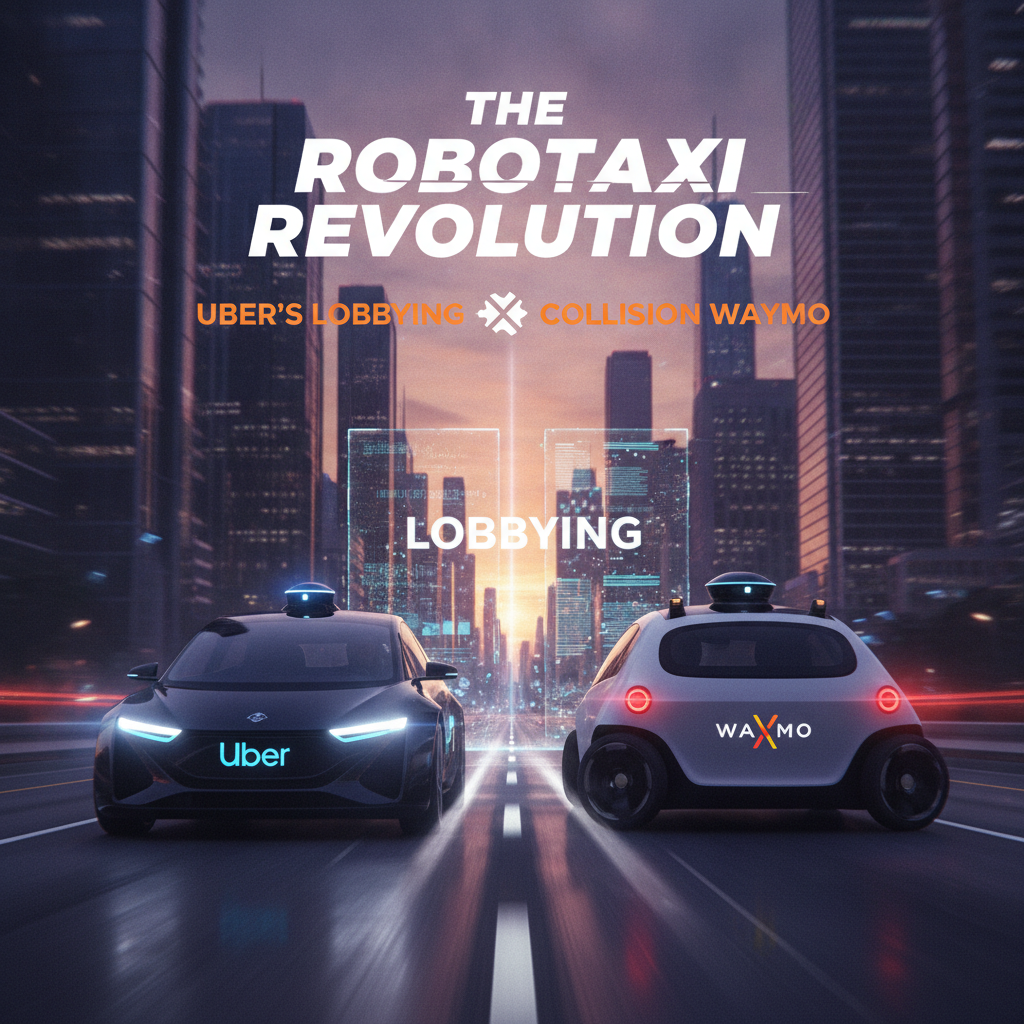
The race to deploy self-driving cars isn’t just being fought on test tracks and in Silicon Valley labs; it’s increasingly playing out in the corridors of power. Uber, the global ride-hailing giant, is embarking on an aggressive lobbying campaign to accelerate the adoption and regulation of robotaxis. This strategic push, aimed at shaping the future of urban mobility, is inevitably setting the stage for a high-stakes confrontation with Waymo, Google’s autonomous vehicle pioneer, which has spent years meticulously building its lead and advocating for a more cautious, safety-first regulatory framework. This isn’t merely about market share; it’s about defining the very rules by which the next generation of transportation will operate.
Uber’s Ambitious Play: Reshaping the AV Landscape
While Uber famously sold its ATG (Advanced Technologies Group) self-driving unit to Aurora in 2020, its ambition to integrate autonomous vehicles into its network remains undimmed. Rather than developing the technology in-house, Uber’s strategy has shifted: partner with leading AV developers and aggressively lobby to create a favorable regulatory environment for their eventual large-scale deployment.
Uber’s playbook is well-known: disrupt existing industries by challenging established norms and regulations. With robotaxis, they appear to be applying a similar philosophy. Their lobbying efforts often focus on:
- Streamlining Permits: Pushing for faster, less restrictive permitting processes for autonomous vehicle operations at state and local levels.
- Standardizing Regulations: Advocating for unified national or state-level regulations to prevent a patchwork of differing rules that could impede scaling.
- Expanding Operational Zones: Seeking to accelerate the expansion of autonomous service areas, rather than incremental rollouts.
- Influencing Policy: Working with legislators to craft laws that support their vision for integrating AVs into a ride-hailing network, potentially even challenging existing mandates for human safety drivers.
For Uber, the integration of autonomous fleets offers a pathway to significantly reduce operational costs, eliminate the complexities of managing human drivers, and potentially unlock immense new revenue streams. The goal is to ensure the regulatory environment is ripe for their partners’ (and by extension, their own) rapid scaling.
Waymo’s Established Lead and Cautious Approach
In stark contrast, Waymo has long been the frontrunner in the autonomous vehicle space, boasting millions of miles driven on public roads and established commercial operations in cities like Phoenix and San Francisco. Waymo’s strategy has been characterized by:
- Incremental Expansion: A deliberate, data-driven approach to expanding service areas, prioritizing safety and reliability above all else.
- Rigorous Testing: Years of extensive testing, simulation, and validation before commercial deployment.
- Safety-First Advocacy: Consistent advocacy for robust safety standards, transparent reporting, and careful oversight from regulatory bodies.
- Building Public Trust: A focus on educating the public and demonstrating the safety and benefits of its self-driving cars gradually.
Waymo’s position is that premature or overly lax regulations could jeopardize public trust and set back the entire industry. They have invested heavily in proving their technology’s safety and reliability within existing, often stringent, regulatory frameworks.
The Collision Course: A Battle for Regulatory Supremacy
The clash between Uber’s aggressive lobbying and Waymo’s established, safety-focused approach creates a fundamental tension in the AV regulatory landscape. Uber’s desire for rapid deployment and simplified rules directly challenges Waymo’s interest in maintaining high standards and a controlled rollout, which implicitly protects its hard-won lead.
Potential flashpoints in this ongoing regulatory battle include:
- Safety Standards: Disagreements over the metrics for safety validation, testing requirements, and incident reporting.
- Permitting Process: Debates over the speed and thoroughness of permits for commercial robotaxi services.
- Operational Restrictions: Conflicts regarding where and when autonomous vehicles can operate (e.g., specific neighborhoods, adverse weather conditions).
- Public Perception: Both companies are vying to shape public opinion, with safety and convenience often at odds.
This isn’t just a corporate rivalry; it has profound implications for urban planning, public safety, and the future of transportation jobs. Regulators, caught between innovation and caution, face the complex task of navigating these powerful, competing interests.
Beyond the Battle: What This Means for the Future of Robotaxis
The outcome of this regulatory tug-of-war between Uber and Waymo will significantly influence the pace and direction of the robotaxi revolution. If Uber’s lobbying efforts succeed in loosening regulations, it could accelerate widespread deployment but might also raise concerns about oversight and safety. Conversely, if Waymo’s more cautious approach prevails, it could ensure a more controlled rollout, albeit a slower one, prioritizing safety and public confidence.
Ultimately, consumers stand to benefit from the innovation and competition that this dynamic rivalry fosters. However, the path to a fully autonomous future depends heavily on effective and balanced regulation that encourages technological advancement while steadfastly protecting public interest and safety.
The autonomous vehicle industry is at a pivotal moment. As Uber and Waymo continue their high-stakes dance in the halls of power, one thing is clear: the future of transportation will be shaped not just by code and sensors, but by policy and persuasion.
Leave a Reply