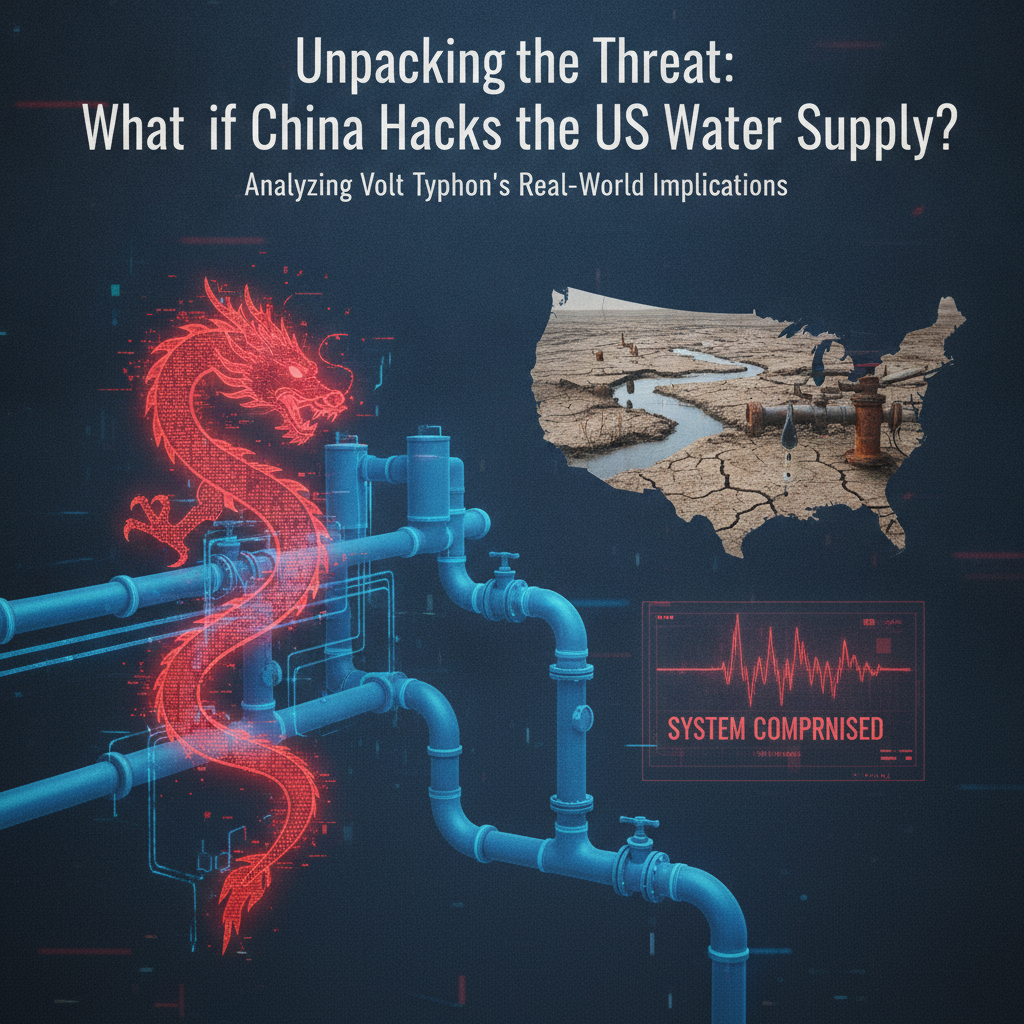
The thought of a foreign adversary disrupting our most basic necessities is unsettling, to say the least. Yet, in an increasingly digital and geopolitically charged world, the question isn’t just hypothetical: What happens if China hacks the US water supply? This isn’t the stuff of dystopian fiction; it’s a genuine national security concern, underscored by real-world threats like the sophisticated state-sponsored hacking group known as Volt Typhoon.
Recent reports, including those from cybersecurity experts and government agencies, highlight Volt Typhoon’s sustained efforts to infiltrate critical US infrastructure, including water treatment plants. These aren’t just data breaches; they’re reconnaissance missions aimed at gaining persistent access, potentially for disruptive or destructive purposes during a crisis. Let’s delve into the cascading consequences of such an attack and what’s being done to prevent it.
The Real Threat: Understanding Volt Typhoon and Critical Infrastructure
Volt Typhoon, identified by Western intelligence agencies as a state-sponsored actor linked to China, has been observed lurking in the IT networks of critical infrastructure organizations across the US and its allies. Their objective appears to be maintaining stealthy, long-term access, positioning themselves to disrupt essential services like communications, energy, transportation, and crucially, water, in the event of a geopolitical conflict.
- Stealth and Persistence: Volt Typhoon prioritizes remaining undetected, often using legitimate network administration tools to blend in with normal traffic.
- Target: Their focus isn’t just on data theft but on operational technology (OT) systems that control physical processes, like the Supervisory Control and Data Acquisition (SCADA) systems that manage water flow, pressure, and chemical treatment.
- Strategic Positioning: The intent is likely to cause widespread panic and disruption, potentially undermining public confidence and diverting resources during a broader conflict.
Immediate Impacts: When the Water Stops Flowing (or Worsens)
A successful cyberattack on the US water supply would trigger an immediate crisis with severe repercussions:
1. Public Health Emergency
This is the most direct and terrifying consequence. Hackers could:
- Shut down water flow: Depriving homes, hospitals, and businesses of clean drinking water, sanitation, and fire suppression capabilities.
- Contaminate water supplies: Tampering with chemical treatment processes (e.g., chlorine levels) could make water unsafe to drink, leading to widespread illness and even death.
- Overwhelm wastewater systems: Releasing untreated sewage into communities or natural environments, creating an environmental disaster and further health risks.
2. Daily Life Disruption and Panic
Modern society relies on clean, accessible water for virtually everything. A disruption would mean:
- Inability to cook, clean, or maintain hygiene: Leading to unsanitary conditions and rapid spread of disease.
- Closure of businesses and schools: Economic activity would grind to a halt without essential water services.
- Emergency services strain: Hospitals would struggle to operate, and firefighters would be severely hampered without water pressure.
- Social unrest: Panic, fear, and frustration could lead to widespread civil disturbances as people search for potable water.
Cascading Consequences: Beyond the Faucet
The impact wouldn’t be confined to individual households; it would ripple through the entire national infrastructure:
1. Economic Devastation
- Agricultural collapse: Crops and livestock would suffer without irrigation and drinking water.
- Manufacturing halts: Industries requiring water for cooling, processing, or cleaning would shut down.
- Supply chain disruption: The movement of goods and services would be severely impacted.
2. National Security Implications
A large-scale water crisis could pose a direct threat to national security:
- Military readiness: Bases and personnel rely on municipal water supplies.
- Psychological warfare: The ability to inflict such widespread suffering without a single kinetic shot fired is a powerful psychological weapon.
- Diversion of resources: The government would be forced to divert immense resources to disaster relief, potentially at a critical time.
3. Environmental Damage
Disruptions to wastewater treatment could lead to significant pollution of rivers, lakes, and coastal areas, harming ecosystems and further endangering public health.
Defending the Lifeline: US Preparedness and Response
While the scenario is grim, the US government and critical infrastructure operators are not oblivious to these threats. Significant efforts are underway to bolster defenses:
1. Government Initiatives
- CISA (Cybersecurity and Infrastructure Security Agency): Actively works with critical infrastructure sectors to share threat intelligence, provide cybersecurity assessments, and offer guidance for resilience.
- National Cybersecurity Strategy: Emphasizes public-private partnerships, information sharing, and improving the cybersecurity posture of critical infrastructure.
- Enhanced Monitoring: Intelligence agencies are constantly tracking sophisticated threat actors like Volt Typhoon to detect and disrupt their activities.
2. Industry Best Practices
Water utilities themselves are implementing advanced cybersecurity measures:
- Network Segmentation: Isolating OT networks from IT networks to prevent breaches in one from affecting the other.
- Multi-Factor Authentication (MFA): Strengthening access controls for critical systems.
- Regular Vulnerability Assessments and Penetration Testing: Proactively identifying and fixing weaknesses.
- Incident Response Plans: Developing and regularly testing plans to quickly detect, contain, and recover from cyberattacks.
- Employee Training: Educating staff on cybersecurity best practices and identifying phishing attempts.
3. Public Awareness and Emergency Preparedness
Citizens also play a role by understanding basic emergency preparedness, such as having a supply of non-perishable food and water for several days in case of any disruption.
The Path Forward: Resilience and Collaboration
Securing the nation’s water supply is an ongoing, evolving challenge that requires continuous investment and collaboration. It’s not just about building taller walls, but about creating resilient systems that can withstand attacks and recover quickly. This includes:
- Investing in advanced cybersecurity technologies and skilled personnel.
- Fostering robust public-private partnerships for information sharing and coordinated defense.
- Developing international norms and agreements around cyber warfare to deter state-sponsored attacks.
- Enhancing the physical security of water infrastructure alongside digital defenses.
Conclusion
The scenario of China hacking the US water supply, driven by the real-world activities of groups like Volt Typhoon, is a stark reminder of our critical infrastructure’s vulnerability in the cyber age. The consequences would be catastrophic, impacting public health, economy, and national security. However, through diligent defense, strategic partnerships, and constant vigilance, the US is working to build robust cyber resilience, ensuring that while the threat is real, our ability to prevent, detect, and respond to such attacks is stronger than ever. Safeguarding our water isn’t just a technical challenge; it’s a collective responsibility.
Leave a Reply