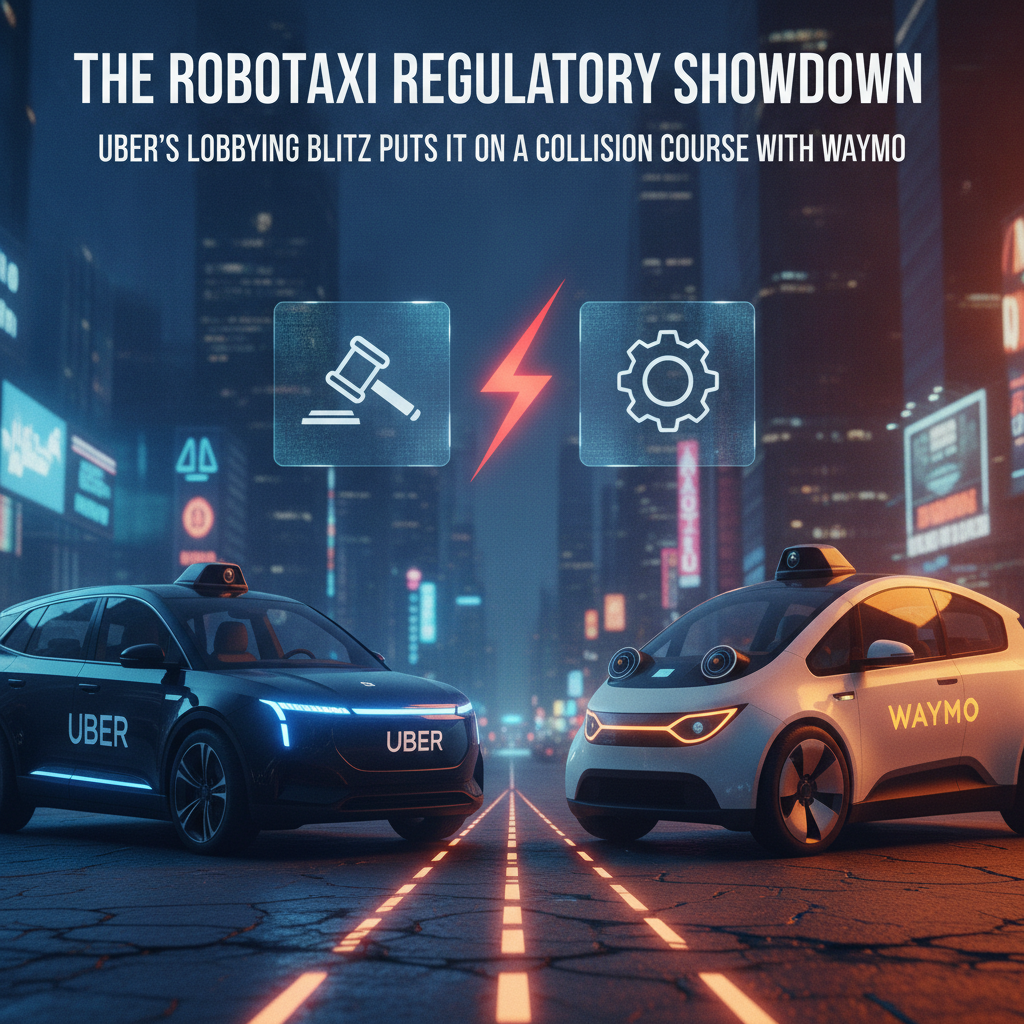
As autonomous vehicles move from sci-fi to our city streets, the battle for regulatory influence is heating up, with Uber’s aggressive lobbying efforts setting the stage for a monumental clash with Waymo.
The High Stakes of the Autonomous Race
The vision of a future powered by robotaxis — self-driving vehicles that offer on-demand transport without a human behind the wheel — is rapidly evolving from a futuristic dream into an imminent reality. For companies like Uber, the stakes couldn’t be higher. Having revolutionized the ride-hailing industry, Uber now faces the imperative to adapt and dominate the next frontier: autonomous mobility. With its own internal self-driving car program (ATG) largely divested, Uber’s strategy has pivoted. Instead of building the vehicles, it aims to be the ubiquitous platform where various autonomous vehicle fleets operate, integrating them seamlessly into its existing network.
This pivot, however, requires a clear, favorable regulatory environment. And that’s precisely where Uber’s aggressive robotaxi lobbying efforts come into play, potentially putting it on a direct collision course with Waymo, Google’s pioneering self-driving car company, which has spent years meticulously navigating the regulatory landscape.
Uber’s Lobbying Machine: A New Strategy for Autonomous Dominance
Uber’s history is replete with regulatory battles, from challenging taxi medallions to redefining labor laws for gig workers. It’s a company that understands the power of policy influence. Now, as the AV competition intensifies, Uber is applying that same playbook to the robotaxi regulation arena.
Their lobbying efforts are reportedly focused on:
- Streamlining Deployment: Pushing for regulations that simplify and accelerate the deployment of autonomous vehicles, reducing bureaucratic hurdles at state and local levels.
- Standardized Frameworks: Advocating for more unified state or even federal guidelines, which would prevent a patchwork of differing local rules that complicate scaled operations.
- Flexible Operational Models: Ensuring that regulations allow for diverse operational models, making it easier for Uber to integrate various third-party AV fleets onto its platform.
- Challenging Incumbents: Potentially seeking to loosen restrictions that might favor existing AV operators who have invested heavily in proving safety and gaining specific permits over many years.
This strategy isn’t just about making it easier for robotaxis to exist; it’s about making it easier for them to thrive, specifically on platforms like Uber’s, thus securing its long-term relevance in urban mobility.
Waymo’s Measured Approach vs. Uber’s Aggression
In stark contrast to Uber’s fast-moving, often confrontational approach, Waymo has spent over a decade developing, testing, and carefully expanding its self-driving technology. Their strategy has been one of incremental, safety-first deployment, building trust with regulators and the public through meticulous data and transparent operations.
Waymo has invested significantly in:
- Rigorous Testing: Accumulating millions of real-world and simulated miles to prove the safety and reliability of its technology.
- Building Relationships: Collaborating closely with local and state authorities, often being among the first to secure permits for driverless operations in cities like Phoenix and San Francisco.
- Public Education: Actively engaging with communities to demystify self-driving cars and address concerns.
Uber’s push for potentially less stringent or faster regulatory pathways could directly undermine Waymo’s carefully constructed narrative of safety and reliability, and the competitive advantage gained from its long, cautious journey. Waymo might see Uber’s lobbying as an attempt to level the playing field unfairly, potentially compromising the safety standards that the industry, and regulators, have been working towards.
The Regulatory Battlefield: States, Cities, and Federal Oversight
The landscape for autonomous vehicle lobbying is incredibly complex. There’s a delicate balance between encouraging innovation and ensuring public safety. Regulators at various levels are grappling with questions of liability, data privacy, cybersecurity, and the impact on traditional labor markets.
- State vs. Federal: Should AV regulation be primarily federal, ensuring uniformity, or left to states, allowing for local nuances and experimentation? This is a key battleground.
- Safety Standards: How can regulators set clear, enforceable safety standards without stifling technological progress?
- Public Perception: A single high-profile incident involving a robotaxi can significantly set back public acceptance and regulatory progress for the entire industry.
Uber’s aggressive push aims to shape this nascent regulatory framework in its favor, potentially setting precedents that could benefit all companies looking to leverage AVs, but especially those focused on platform integration rather than solely vehicle development.
Beyond Waymo: The Broader Implications for the AV Industry
While the immediate conflict is between Uber and Waymo, the outcomes of this tech rivalry will ripple across the entire autonomous vehicle industry. Other players like Cruise, Zoox, and Motional are also vying for market share and grappling with regulatory hurdles.
If Uber’s lobbying efforts succeed in creating a more permissive regulatory environment, it could:
- Accelerate Deployment: Potentially speed up the widespread adoption of robotaxis across more cities.
- Intensify Competition: Lowering barriers could bring more players, and more autonomous vehicles, onto city streets faster.
- Shape Market Structure: Solidify the role of ride-hailing platforms as the primary interface for autonomous services, rather than direct-to-consumer AV fleets.
Conversely, if Waymo’s more cautious approach prevails, or if Uber’s aggressive tactics create backlash, it could lead to stricter rules, slower deployment, and a more fragmented, localized AV market.
Conclusion: The Future of Autonomous Transport Hangs in the Balance
The regulatory clash between Uber and Waymo isn’t just a corporate spat; it’s a foundational battle that will define the future of urban mobility. Uber seeks to clear the path for rapid, large-scale integration of autonomous fleets into its vast network, leveraging its platform dominance. Waymo, meanwhile, champions a slower, more deliberate, and safety-validated expansion, building trust from the ground up.
As policymakers weigh these competing visions, the decisions made today about robotaxi regulation will determine not only who wins the race for market dominance but also the pace, safety, and accessibility of autonomous transport for everyone. Keep a close watch on statehouses and federal discussions; the next chapter of the future of transport is being written there.
Leave a Reply