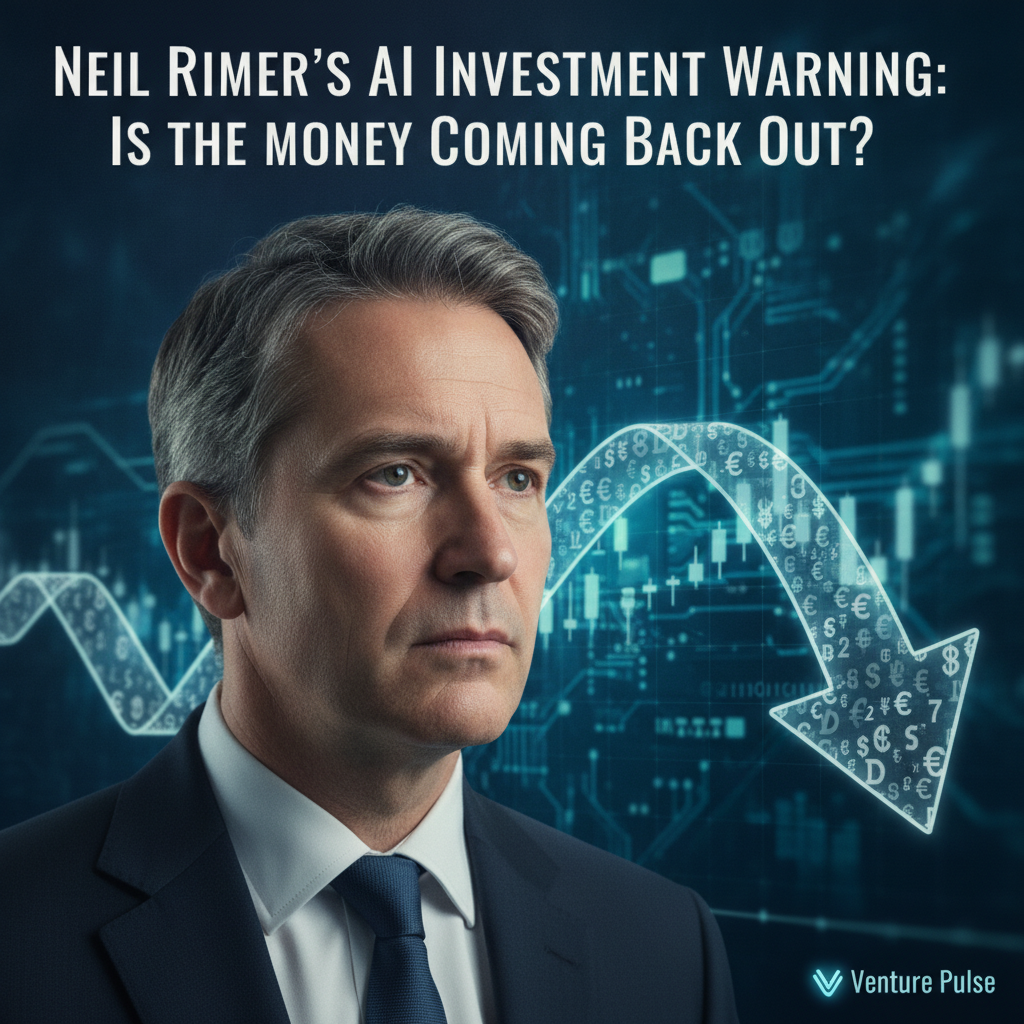
Venture capitalist Neil Rimer of Index Ventures offers a provocative forecast: the flood of capital into AI may soon recede. What does this mean for the future of artificial intelligence and the tech landscape?
The AI Gold Rush: A Historical Perspective
The past few years have witnessed an unprecedented surge in investment into artificial intelligence. From foundational models and large language models (LLMs) to AI-powered applications across every industry, venture capitalists, institutional investors, and tech giants have poured billions into AI startups and research. This “AI Gold Rush” has fueled rapid innovation, created new unicorns, and reshaped the technological landscape.
However, amidst the excitement, seasoned investors often look for signs of market correction or overvaluation. Tech cycles are notorious for their booms and busts, and the question on many minds is whether AI is immune to these historical patterns.
Neil Rimer’s Prophetic Stance: A Cooling Market?
Enter Neil Rimer, co-founder of the influential European venture capital firm Index Ventures. Known for his keen insight and extensive experience across multiple tech cycles, Rimer’s predictions carry significant weight. He recently articulated a bold perspective: the massive influx of AI capital is due for a reversal, suggesting that a significant portion of the “AI money is coming back out.”
Why might Rimer hold such a view? His outlook likely stems from several factors:
- Market Saturation & Overvaluation: A crowded market often leads to inflated valuations for companies that may not yet have sustainable business models or clear paths to profitability. When the supply of capital exceeds the immediate commercial viability of projects, a correction becomes inevitable.
- Long ROI Horizons: While AI promises transformative change, the actual return on investment (ROI) for many advanced AI projects can be years away. Investors, particularly those looking for quicker returns, might pull back as the reality of long development cycles and complex implementations sets in.
- Economic Headwinds: Broader economic conditions, such as rising interest rates, inflation, or geopolitical instability, can make investors more risk-averse, leading them to divest from higher-risk, long-term ventures like some AI startups.
- Lessons from Past Cycles: Rimer has navigated previous tech booms and busts, understanding that periods of irrational exuberance are often followed by consolidation and a flight to quality. The dot-com bubble and subsequent corrections serve as stark reminders.
Nuance and Counterarguments: Is All AI Money Equal?
While Rimer’s warning is potent, it’s crucial to consider the nuances of the AI landscape. Not all AI investments are created equal, and some segments might be more resilient than others:
- Foundational AI & Infrastructure: Investment in core AI research, powerful chips, and essential infrastructure might continue unabated, as these are fundamental to all future AI advancements.
- Proven Use Cases: AI solutions with clear, demonstrable value propositions and immediate ROI (e.g., enterprise automation, targeted drug discovery) could still attract strong funding.
- Strategic Corporate Investments: Large tech companies and corporations will likely continue to invest heavily in AI, seeing it as a strategic imperative for competitive advantage, regardless of broader VC trends.
- Global Competition: The race for AI supremacy among nations and global tech giants ensures sustained investment in critical areas.
Furthermore, a “correction” doesn’t necessarily mean the end of AI innovation. It could signify a maturation of the market, where investors become more discerning, favoring companies with robust business models, strong leadership, and genuine problem-solving capabilities over hype.
Implications for Startups and Investors
For AI startups, Rimer’s perspective serves as a vital call for prudence. This could mean:
- Focusing on Profitability: Shifting from a “growth at all costs” mentality to prioritizing sustainable revenue generation and clear paths to profitability.
- Lean Operations: Managing burn rates effectively and optimizing resource allocation.
- Stronger Value Proposition: Clearly articulating and demonstrating the unique value and defensibility of their AI solutions.
For investors, it underscores the importance of thorough due diligence, diversified portfolios, and a long-term strategic vision. Betting on foundational technology and companies solving real-world problems with AI, rather than just chasing the latest trend, becomes paramount.
The Road Ahead: Navigating the AI Investment Landscape
Neil Rimer’s forecast is a powerful reminder that even the most transformative technologies are subject to market dynamics. While AI’s long-term potential remains undeniable, the journey for investors and entrepreneurs will likely involve periods of intense growth followed by adjustments.
The ultimate outcome isn’t just about whether money comes out, but about how the market adapts, how innovation continues, and which AI ventures are built on truly solid foundations. As the AI revolution continues, critical insights from figures like Neil Rimer are invaluable in navigating its complex and often unpredictable trajectory.