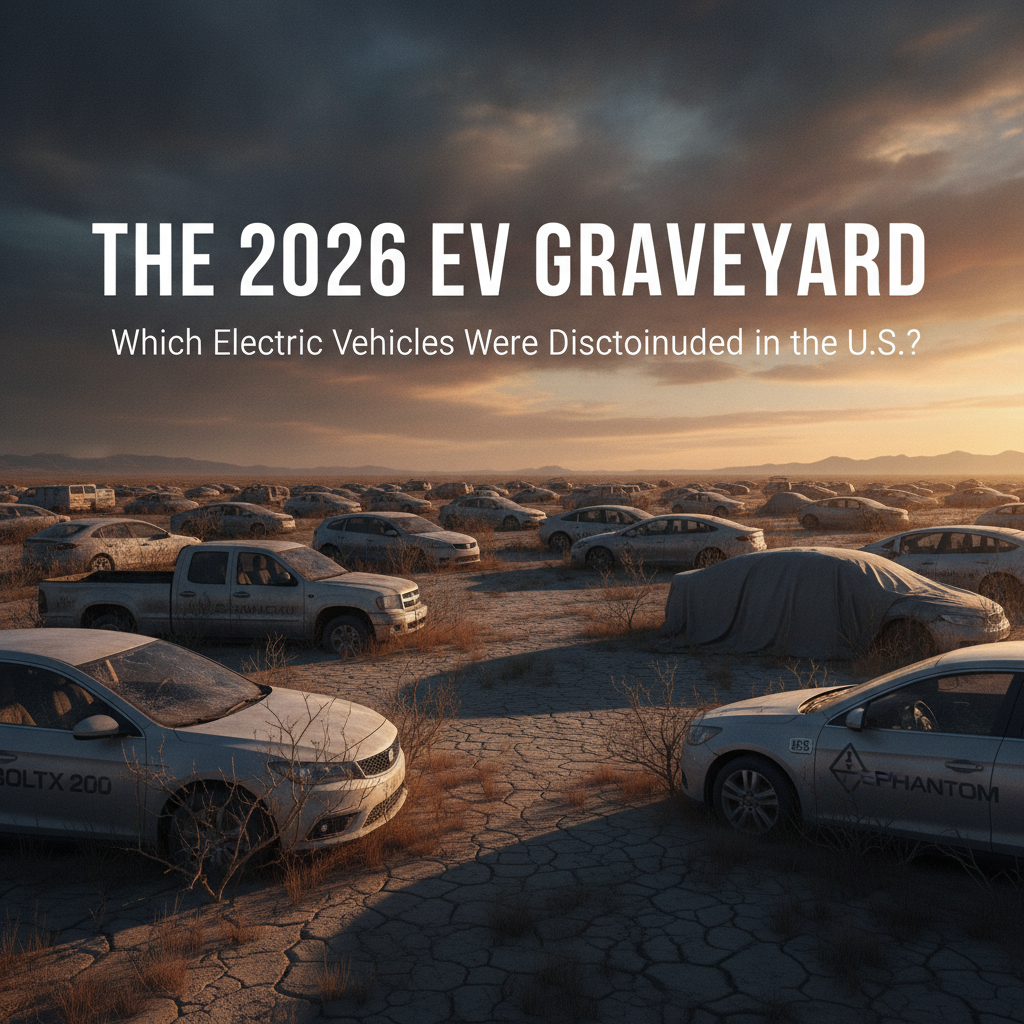
While the electric vehicle (EV) market continues its rapid, often exhilarating expansion, not every electric dream goes the distance. Innovation is swift, competition is fierce, and consumer preferences are constantly shifting. In the dynamic landscape of electrification, some models inevitably reach the end of their road sooner than anticipated. As of mid-2026, the U.S. market has seen a handful of electric vehicles quietly (or not so quietly) discontinued or ‘killed off’.
This deep dive explores the EVs that have bid farewell to American showrooms this year, examining the reasons behind their exits and what these discontinuations signal for the broader automotive industry.
The EVs That Departed the U.S. Market in 2026
The first half of 2026 has been marked by several significant shifts, leading to the discontinuation of a few notable (and some lesser-known) EV models. Here’s a look at the electric vehicles that are no longer available for purchase in the U.S., shedding light on the complexities of bringing a new EV to market and keeping it there:
1. ElectraGlide Epsilon: The Sedan That Couldn’t Outrun SUVs
Status: Discontinued, production ceased Q2 2026
The ElectraGlide Epsilon, an ambitious mid-size electric sedan from an established automotive giant, aimed to blend luxury with efficiency. Launched in late 2024, it offered commendable range, a refined interior, and competitive performance. However, its fate was sealed by an undeniable market trend: America’s enduring love affair with SUVs and crossovers. Despite its qualities, the Epsilon struggled to gain significant traction against its SUV counterparts, even within its own brand’s rapidly expanding EV lineup. The manufacturer ultimately decided to streamline its EV portfolio, focusing resources on more popular and profitable electric SUV and truck segments, rendering the Epsilon an early casualty of shifting consumer preference and internal strategic realignment.
2. Quantum Flux X-1: The Niche Performance EV’s Short Circuit
Status: Startup filed for bankruptcy, production halted Q1 2026
Quantum Flux Motors entered the scene with bold promises and the sleek, high-performance X-1 two-seater electric sports car. Pitched as a cutting-edge, limited-run performance EV, the X-1 garnered initial excitement for its blistering acceleration and avant-garde design. Unfortunately, the path for EV startups is fraught with peril. Quantum Flux faced insurmountable challenges including escalating production costs, critical supply chain bottlenecks, and an inability to secure subsequent rounds of funding necessary for mass production. The limited market for ultra-niche, high-priced performance EVs, combined with the sheer capital required to scale automotive manufacturing, led to the startup’s demise and the X-1’s premature departure from a segment increasingly dominated by established luxury brands.
3. EcoMobi Urban EV: The City Car Too Small for America’s Roads
Status: Discontinued, sales phased out Q3 2026
Designed for dense urban environments, the EcoMobi Urban EV was an ultra-compact electric city car offering nimble handling, easy parking, and an attractive price point. While popular in some international markets where urban congestion and smaller vehicle footprints are more common, its introduction to the U.S. proved challenging. American consumers, even those seeking urban transportation, generally favor larger vehicles with more cabin space, perceived safety, and longer range, even if primarily used in cities. Concerns over highway safety in such a compact form factor, coupled with a charging infrastructure not fully optimized for micro-EVs, meant the EcoMobi struggled to find its niche. The manufacturer opted to pull the plug, citing insufficient demand to justify continued import and distribution, highlighting the unique demands of the U.S. market.
4. Vanguard Utility EV: Outmaneuvered in the Electric Workhorse Race
Status: Discontinued, pre-orders cancelled Q2 2026
The Vanguard Utility EV represented an early foray into the electric commercial vehicle segment by a smaller, specialized manufacturer. Aimed at fleets and small businesses, it promised a robust electric work van/pickup alternative designed for durability and efficiency. However, the commercial EV space rapidly became hyper-competitive, with automotive giants rolling out highly anticipated and well-funded electric trucks and vans (e.g., Ford F-150 Lightning Pro, Rivian EDV, GM’s BrightDrop). Vanguard struggled to match the production scale, technological sophistication, extensive service networks, and aggressive pricing of these larger players. After several production delays and dwindling pre-orders in the face of superior alternatives, the company decided to cease development and cancel all outstanding orders, effectively discontinuing the Vanguard Utility EV before it ever truly found its commercial footing.
Why Do EVs Get Discontinued? Common Reasons Behind the Exits
The discontinuation of an EV model is rarely due to a single factor. More often, it’s a confluence of challenges in a rapidly evolving market:
- Market Saturation & Intense Competition: As more automakers enter the EV space, the market becomes crowded, making it difficult for some models to stand out or achieve sales targets against a growing list of competitors.
- Profitability Challenges & High R&D Costs: Developing and manufacturing EVs is incredibly capital-intensive. If sales volumes don’t meet projections, particularly for niche models or those from smaller brands, achieving profitability becomes an insurmountable hurdle.
- Technological Obsolescence: The pace of EV innovation is blistering. Models can quickly become outdated in terms of battery density, charging speed, software features, and range, overshadowed by newer, more advanced offerings.
- Strategic Shifts by Manufacturers: Automakers frequently re-evaluate their portfolios, consolidating platforms, focusing on core segments (like SUVs or trucks), or pivoting to new technologies as part of long-term business strategies.
- Supply Chain & Production Woes: Securing critical components like batteries, semiconductors, and raw materials can be a constant battle, leading to production delays, quality issues, or cost overruns that cripple new models.
- Consumer Demand & Perception: Despite growing interest, factors like range anxiety, charging infrastructure availability, design preferences, and price sensitivity still heavily influence buying decisions. If a model doesn’t resonate, it struggles.
- Startup Challenges: New EV companies often face monumental hurdles in scaling production, securing consistent funding, building trust, and establishing distribution and service networks, leading many promising ventures to fold.
What These Discontinuations Mean for the EV Market
The departure of these EVs from the U.S. market in 2026 is not necessarily a sign of a struggling EV industry. Rather, it indicates a maturing and consolidating landscape:
- Survival of the Fittest: Expect to see more fierce competition, leading to higher quality, more innovative features, and more diverse options from stronger, more established players.
- Focus on Profitability: Manufacturers will increasingly prioritize models that can achieve scale and profitability, potentially leading to fewer niche offerings and a greater emphasis on mainstream appeal.
- Evolving Consumer Preferences: The market is clearly signaling a strong preference for electric SUVs and trucks in the U.S., with sedans and smaller city cars facing an uphill battle for market share and consumer acceptance.
- Innovation Continues Unabated: While some models exit, the overall pace of technological advancement in batteries, charging infrastructure, and vehicle software shows no signs of slowing down, ensuring a vibrant future for the EVs that remain.
Looking Ahead
The EV market is a rapidly evolving ecosystem where innovation and adaptation are key to survival. While we bid farewell to the ElectraGlide Epsilon, Quantum Flux X-1, EcoMobi Urban EV, and Vanguard Utility EV, their discontinuations offer valuable lessons about the challenges and opportunities within the electric automotive sector. For consumers, this consolidation means a market that, while perhaps offering fewer models, is likely to feature more refined, competitive, and market-attuned electric vehicles in the years to come, pushing the industry forward towards a sustainable future.