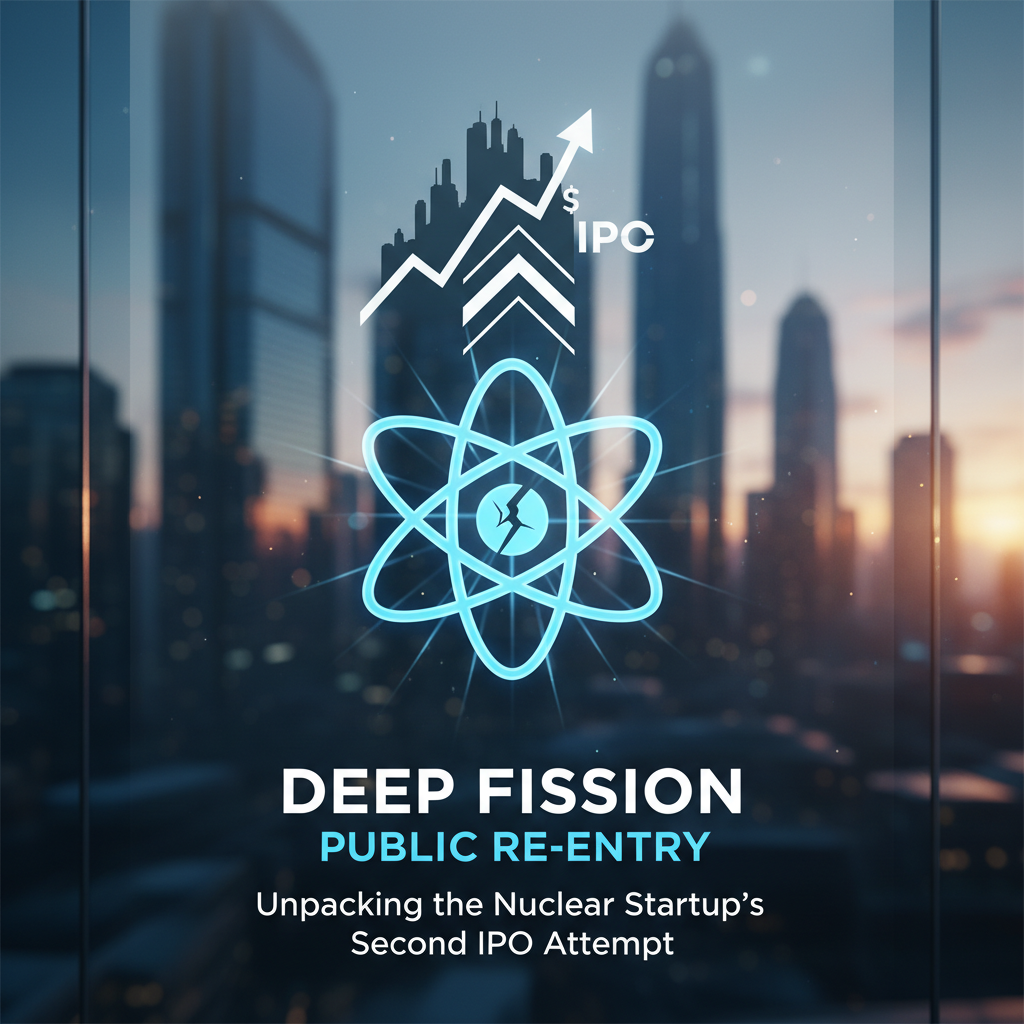
In the high-stakes world of advanced energy technology, a familiar name is once again making headlines. Deep Fission, the ambitious nuclear startup aiming to revolutionize the power sector, has announced its intention to go public – for the second time. This isn’t just a routine market entry; it’s a saga that prompts a close examination of its past, its present, and the pressing questions that surround its future. As investors, tech enthusiasts, and clean energy advocates watch closely, we delve into what this renewed push for a public listing means for Deep Fission and the broader nuclear energy landscape.
The Echoes of the Past: Why “Again” Matters for Deep Fission
The phrase “going public, again” immediately raises eyebrows and flags critical questions. For a startup to re-attempt a public listing suggests a previous endeavor that either failed, was withdrawn, or significantly underperformed. While the specific details of Deep Fission’s initial foray into the public markets (which we can infer occurred sometime before 2026) remain part of its complex narrative, common reasons for such withdrawals include:
- Unfavorable Market Conditions: A turbulent economy or a cooling investor appetite for high-risk, long-term ventures can scuttle even promising IPOs or SPAC mergers.
- Valuation Discrepancies: Startups often aim for ambitious valuations, which public market investors may deem unrealistic, leading to a clash.
- Regulatory Hurdles: The nuclear sector is heavily regulated, and unexpected compliance issues or delays can complicate a listing.
- Internal Challenges: Unmet technological milestones, leadership changes, or shifting strategic priorities can also prompt a retreat from public ambitions.
Understanding what transpired during their first attempt is crucial to evaluating the robustness and credibility of this current public offering. Investors will demand transparency regarding these past challenges and how they have been addressed.
Deep Fission’s Promise: Redefining Nuclear Power for a Sustainable Future
At its core, Deep Fission pitches itself as a pioneer in next-generation nuclear technology. While specific details of their proprietary reactor designs or fuel cycles are often shrouded in intellectual property secrecy, the general understanding is that they are developing advanced fission solutions, potentially including:
- Small Modular Reactors (SMRs): Scalable, factory-produced reactors that promise faster deployment, lower capital costs, and enhanced safety features compared to traditional gigawatt-scale plants.
- Advanced Fuel Cycles: Innovations in fuel sources or waste management that could reduce radioactive waste, improve efficiency, and potentially utilize spent fuel.
- Enhanced Safety Protocols: Passive safety systems and designs that are inherently safer and more resilient to operational upsets or external events.
Their mission aligns with a global push for clean, reliable, and dispatchable energy, positioning nuclear power as a critical component in the fight against climate change. The potential market for such innovation is enormous, provided the technology can be scaled and commercialized efficiently.
The Current Public Offering: What’s Different This Time Around?
Deep Fission’s renewed commitment to going public suggests that leadership believes conditions are now more favorable or that significant internal milestones have been achieved. Key areas to scrutinize for this second IPO attempt include:
- Refined Strategy: Has the company pivoted its business model, refined its technological roadmap, or secured new strategic partnerships since its last attempt?
- Market Readiness: Are investor appetites for deep-tech, long-horizon investments like advanced nuclear more robust now? The broader clean energy and sustainability trends could be playing in their favor.
- Technological Progress: Have they moved closer to commercialization? Perhaps a significant demonstration project, a key regulatory approval, or a substantial reduction in projected costs could be the catalyst.
- Funding Mechanism: Are they pursuing a traditional Initial Public Offering (IPO), a SPAC merger, or a direct listing? The choice of path can indicate confidence and market perception, as well as the company’s valuation strategy.
Any successful public re-entry hinges on a compelling narrative of progress, stability, and a clear path to profitability that definitively addresses previous shortcomings.
Pressing Questions and Lingering Concerns for Deep Fission Investors
Despite the potential, several critical questions remain for Deep Fission as it embarks on this public journey, reflecting the ‘questions’ aspect of the original title:
- The “Why Now?” Factor: What specific market or technological shifts make this attempt viable where the last one wasn’t? What new information warrants a different outcome?
- Valuation Justification: How is the current valuation being justified, especially given the capital intensity, long development cycles, and regulatory hurdles inherent in nuclear technology?
- Regulatory Pathway Clarity: Have they secured the necessary regulatory approvals or significantly de-risked their regulatory pathway, particularly in the notoriously slow-moving nuclear regulatory environment?
- Commercialization Timeline: What is a realistic timeline for their technology to move from demonstration to commercial deployment, and when can investors reasonably expect revenue generation and profitability?
- Competitive Landscape: How do they differentiate themselves from other advanced nuclear startups and established players in a sector that is seeing renewed interest but also significant competition?
These questions aren’t merely rhetorical; they represent the due diligence critical for any potential investor navigating the complexities of advanced nuclear energy ventures and assessing the true potential of Deep Fission.
The Broader Nuclear Renaissance: Opportunity and Caution
The global energy crisis, coupled with aggressive decarbonization targets, has undoubtedly sparked a renewed interest in nuclear power globally. Governments and private investors are pouring billions into advanced nuclear technologies, recognizing their potential for carbon-free baseload power. However, the sector is also notorious for high upfront costs, project delays, and persistent public perception challenges.
Deep Fission’s journey mirrors the broader challenges and opportunities within this renaissance. Its success or failure will not only impact its stakeholders but could also send ripples through the entire advanced nuclear industry, influencing future investment and regulatory decisions, making its current public offering a key event to watch.
Conclusion: A Second Chance, A High Bar for this Nuclear Startup
Deep Fission’s decision to go public, again, marks a pivotal moment for the company and a fascinating case study in the resilience and ambition of deep-tech startups. While the prospect of innovative nuclear solutions is exciting for the future of clean energy, the company faces a high bar – not just to prove its technological prowess, but to definitively address the questions raised by its history on the public markets.
As the details of its public offering unfold, one thing is clear: all eyes will be on Deep Fission to demonstrate that this time, their path to public success is built on a foundation as solid as the nuclear power they promise to deliver. We’ll be watching closely as this startup navigates its second attempt at the public spotlight.